9 August 2026
How to Organize Diamond Painting Drills: A Complete System
Table of Contents
- Why Organization Matters for Diamond Painting Projects
- Sorting Drills by Color and DMC Code
- Choosing the Right Diamond Painting Storage Containers
- How to Label Diamond Painting Drills Effectively
- Storing Leftover Diamond Painting Drills for Future Projects
- Setting Up Your Diamond Painting Workspace
- Common Organization Mistakes to Avoid
- Conclusion
Last Updated: August 10, 2026
Why Organization Matters for Diamond Painting Projects
A disorganized diamond painting drill collection turns a relaxing creative project into a frustrating treasure hunt. When you can't find the right color, you waste time searching through containers, interrupt your creative flow, and risk mixing up similar shades. Proper organization systems save hours and transform your entire crafting experience.
Poor organization costs more than wasted time. Drills spill and scatter across your workspace. Colors get confused, forcing you to restart sections or abandon projects halfway through. An effective organization system protects your investment in quality drills, simplifies your workflow during projects, and makes your workspace a place you actually want to spend time in.
Sorting Drills by Color and DMC Code
Sorting your diamond painting drills effectively requires understanding two complementary systems: color-based organization and DMC code classification. Most serious crafters use both methods simultaneously, with one serving as the primary system and the other as a backup verification tool.
Understanding DMC Codes
DMC codes are the standardized numerical system used to identify every diamond painting drill color. Each code represents a specific shade, allowing you to match drills across different kits and suppliers with absolute precision. Every diamond painting kit from quality manufacturers includes a color chart that maps each DMC code to the corresponding drill color in your kit. When you organize by DMC code, you're using the same system that manufacturers use to create kits, creating a permanent reference system that remains useful years after completing a project.
The practical advantage of DMC code organization becomes obvious when you work on multiple kits simultaneously or need to supplement drills from different sources. Instead of trying to eyeball whether two shades match, you simply check the code. This is particularly valuable when managing leftover drills from completed projects.
Color-Based Sorting Techniques
Color-based sorting works alongside DMC codes as your primary visual organization method. Most crafters group drills into color families, reds, blues, greens, yellows, purples, neutrals, then subdivide within each family by shade intensity. This approach mirrors how your eye actually works when selecting drills during a project.
Start with broad color categories: separate all warm tones from cool tones. Within warm tones, group reds separately from oranges and yellows. Within cool tones, keep blues distinct from greens and purples. Within each color family, arrange drills from lightest to darkest. This gradient organization makes it instantly obvious when you've picked up the wrong shade and helps you spot when you're running low on a particular color before you actually need it.
Choosing the Right Diamond Painting Storage Containers
Selecting appropriate storage containers depends on your collection size, workspace constraints, and how frequently you work on projects. The container system you choose directly impacts how quickly you can find drills and how well they stay organized over time.
Professional Container Options
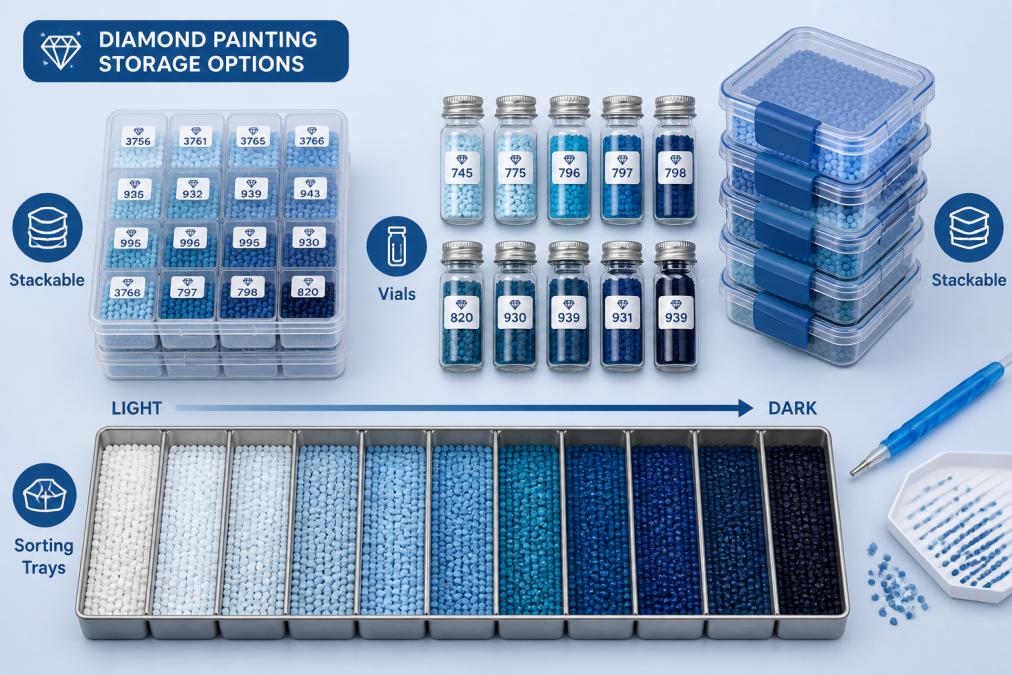
Clear stackable containers with dividers represent the most effective storage solution for serious collectors. These containers allow you to see drill colors without opening them, stack efficiently in limited spaces, and keep drills separated by color or DMC code. Look for containers with adjustable divider sections so you can customize compartment sizes based on your collection.
Bead vials and small jars work exceptionally well for long-term storage and display. Clear glass or plastic vials let you see the exact color at a glance. Label each vial with both the color name and DMC code using adhesive labels. Vials stack neatly in small spaces and protect drills from dust and static electricity.
Sorting trays with multiple compartments serve as active working stations during projects. These shallow trays keep your current project's drills organized and accessible while you work. Most serious crafters maintain both permanent storage containers and active project trays.
Budget-Friendly DIY Storage Solutions
If you're building your collection gradually, several household items create effective temporary storage. Egg cartons provide compartmentalized storage for small quantities of drills, with each cell holding one color. Tic-Tac boxes and similar small plastic containers offer compact storage that stacks vertically using a file organizer or magazine holder. Plastic fishing tackle boxes designed for organizing lures feature multiple drawers with adjustable compartments, scaling well as your collection expands.
How to Label Diamond Painting Drills Effectively
A labeling system transforms your storage containers from visually organized to actually functional. Without labels, you'll spend time verifying colors and second-guessing yourself.
Labeling Methods and Best Practices
Adhesive labels are the most practical labeling solution for diamond painting drill containers. Use a permanent marker or label maker to write the color name and corresponding DMC code on each label. Apply labels to the front of containers where they're immediately visible. For small vials, place labels on the side rather than the top so you can read them when containers are stacked.
Develop a consistent labeling format across your entire collection. If you label one container "Red DMC 666," label all similar containers in the same order: color name first, then DMC code. For works-in-progress storage, add the project name and date started to your labels. Color-coding your labels by using different colored stickers for different color families adds another layer of organization.
Digital Inventory Management
A simple spreadsheet tracking your drills by DMC code, color name, container location, and quantity provides a permanent reference system. Digital inventory becomes invaluable when you're shopping for new kits or supplementing drills for ongoing projects. Before purchasing additional drills, you can check your spreadsheet to confirm what you already have.
Photography-based digital systems offer another approach: take clear photos of each organized container and store them in a phone folder. When you're shopping or planning a new project, you can reference these photos to see exactly what you have without accessing your physical collection.
Storing Leftover Diamond Painting Drills for Future Projects
Every completed diamond painting project leaves you with leftover drills. Rather than discarding these, a strategic storage system preserves them for future projects and supplements.
Long-Term Preservation Techniques
Leftover drills remain viable for years if stored properly. Store your drills in a cool, dry location away from direct sunlight. Interior closets and drawers maintain stable conditions that preserve drills indefinitely.
Static electricity poses an underestimated threat to drill organization. Drills can cling to plastic containers and scatter when you open them. Combat this by storing drills in glass containers rather than plastic when possible. If you must use plastic, include a small piece of dryer sheet in the container to neutralize static buildup. Protect drills from dust accumulation by storing containers with lids or covers.
Managing Works-in-Progress Storage
Active projects require different storage considerations than completed leftover drills. A works-in-progress system keeps your current project accessible while protecting drills from spilling and mixing. Label your works-in-progress containers with the project name, start date, and completion percentage. Include the original color chart in the works-in-progress storage so you can verify colors without searching for the kit packaging.
Separate completed projects from active projects in your storage system. Once you finish a diamond painting, immediately transfer leftover drills to your permanent collection storage and remove the project from your active workspace.
Setting Up Your Diamond Painting Workspace
Your physical workspace directly influences how efficiently you work and how long you can comfortably craft without fatigue or frustration.
Ergonomic Organization for Comfort
Position your diamond painting canvas at eye level when seated in your normal working posture. An adjustable easel or propped canvas holder solves this problem and adapts to different working positions throughout your session.
Organize your active drill containers within arm's reach of your working position. An angled sorting tray positioned to your dominant side keeps frequently used colors immediately accessible. Lighting matters more than most crafters realize. Natural light is ideal, but if you work during evening hours, position a bright task light directly over your canvas to prevent eye strain and ensure you can see color differences clearly.
Your chair deserves as much attention as your canvas setup. You need a chair that supports your lower back and allows your arms to rest at a comfortable angle while working. An adjustable office chair or cushioned craft chair prevents the lower back pain that can develop during longer sessions.

Accessibility-Focused Setup
For crafters managing arthritis, hand weakness, or reduced dexterity, specialized drill pens and ergonomic tools transform comfort levels during extended sessions. Quality drill pens with cushioned grips reduce hand fatigue compared to basic pens. Kits from Jeanne Argent Atelier include specialized drill pens and trays designed to reduce repetitive strain.
Position your sorting tray at a slight angle toward your body rather than flat on the table. This angled position reduces wrist strain when picking up drills. Keep your wrist relatively straight rather than bent at extreme angles to prevent repetitive stress injuries. Consider a lazy Susan or rotating organizer for your active drill containers to eliminate awkward reaching movements.
Common Organization Mistakes to Avoid
Several organization patterns that seem logical actually create problems over time.
Mixing different storage systems without clear distinction creates confusion. Pick one primary system and stick with it. Secondary systems can supplement, but your core organization should follow a single logical pattern.
Organizing exclusively by DMC code without any visual color grouping makes projects harder. When you're actively working on a canvas, you think in colors, not numbers. Use DMC codes as a verification layer, but organize primarily by color.
Failing to label containers as you organize creates a system that only works while you remember where everything is. Label everything immediately after organizing.
Storing active projects in the same system as completed leftovers buries your current work under a mountain of inventory. Maintain physical separation between works-in-progress and permanent storage.
Ignoring static electricity leads to drills scattering and colors mixing. Prevent this frustration by using glass containers, including dryer sheets, or applying anti-static treatments to plastic containers.
Organization systems for diamond painting drills aren't just about tidiness, they're about protecting your creative investment and making every crafting session enjoyable rather than frustrating. A well-organized collection means you spend time actually painting rather than searching for colors. Start with the sorting method that makes sense for your collection size, choose containers that fit your workspace, and establish labeling habits immediately. As your collection grows, your system can evolve, but the organizational foundation you build now will support years of creative work. When you're ready to begin a new project with properly organized drills and a comfortable workspace, you'll understand why serious crafters prioritize this setup. It transforms diamond painting from a sometimes-frustrating hobby into a genuinely rewarding creative practice.
Frequently Asked Questions
What do you do with extra drills from diamond painting?
Store leftover drills in labeled containers organized by DMC code or color for future projects. Keep them in a cool, dry place away from direct sunlight to prevent fading. Use clear jars or bead vials so you can see remaining quantities at a glance. Consider maintaining a digital inventory to track which colors you have on hand, making it easier to plan new projects without repurchasing colors you already own.
How are diamond painting drills numbered?
Diamond painting drills are numbered using DMC codes, a standardization system that identifies specific colors across the diamond painting industry. Each DMC code corresponds to a unique color shade, allowing crafters to organize drills consistently and match them to their canvas symbols. Understanding DMC codes is essential for organizing drills by number and maintaining inventory across multiple projects.
What is the best way to store diamond painting beads?
Store diamond painting beads in stackable, clear containers that protect them from static electricity, dust, and moisture. Organize them by DMC code or color using a labeling system. Avoid cardboard boxes that absorb humidity, and keep containers in a climate-controlled space. Use bead vials or sorting trays for active projects, and reserve larger containers for long-term storage of leftover drills from completed pieces.
Should I label my diamond painting containers?
Yes, labeling your containers is essential for efficient organization and long-term inventory management. Use adhesive labels with DMC codes, color names, or both to quickly identify drill colors without opening containers. A clear labeling system saves time during projects and helps you manage leftover drills effectively. Consider adding quantities on labels and updating them as you use drills from storage.
This article was written using GrandRanker