Original Artwork Diamond Painting Kits: How to Check the Art
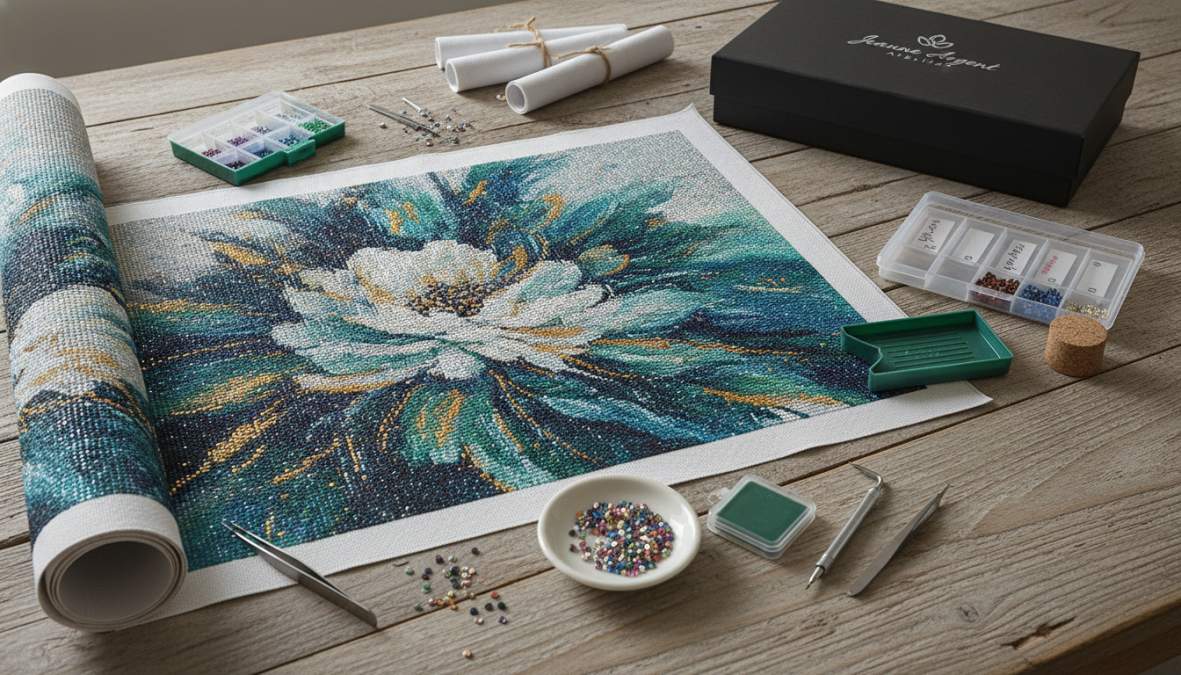
"Original artwork" is one of the most common phrases on diamond painting kit listings, and one of the least defined. One seller uses it for a painting by a named artist who licensed it for kits. Another uses it for stock art the shop has paid to use. Another uses it for images the shop created itself, sometimes with AI tools, and some listings use it with no explanation at all.
This guide explains what the phrase can mean, how to check an artwork claim before you buy, and where the artwork on Jeanne Argent kits comes from. It also covers the kit features that matter whatever the art source: the canvas, the drill shape and how complex the design is.
Quick answer: "Original artwork" has no standard meaning in diamond painting. To check a claim, look for a licensing statement, an artist credit and a clear statement on whether AI tools were used, and ask the seller if any of these are missing. Jeanne Argent kits use art licensed through Adobe Stock or C. Silver's AI-assisted original art, and every design is edited before it becomes a pattern.
What "original artwork" means in diamond painting kits
There is no industry rule for when a kit can be called original. In practice, the phrase on a listing usually points to one of these sources:
- Art by a named artist, licensed for kits. An illustrator or painter has agreed to let their work be turned into diamond painting patterns, usually in return for a fee or royalty.
- Stock art licensed for commercial use. The seller has paid a stock library for a license that covers products like kits. The license is usually not exclusive, so the same picture can appear on other products.
- Art created by the seller. The shop or its owner made the image, by hand, digitally or with AI tools, and holds the rights to use it.
- No stated source. The listing calls the design original but says nothing about who made it or how it is licensed.
The first three can all be legitimate. The fourth is the one to question, because "original" with no explanation tells you nothing about whether the image is being used with permission.
Licensed vs. unlicensed artwork: why it matters
Licensed artwork means the rights holder has given permission for the image to be used, often in return for payment. Unlicensed designs are copied without that permission, so the person who created the image gets nothing from your purchase. Copied images are also often taken from small files found online, which can leave the pattern blurry or blocky once the picture is broken into drills.
Original, stock-licensed and AI-assisted art
These labels describe where an image came from, not how good the finished kit will be. A licensed stock image can make a lovely pattern, and so can an AI-assisted design that has been edited with care. What matters for buyers is that the seller tells you which kind you are getting, so you can choose based on your own preferences. Some crafters want art made entirely by hand; others care more about the subject and how the finished canvas looks.
How to check an artwork claim before you buy
A few minutes of checking can tell you a lot about a listing's art claim:
- Look for a licensing statement. A clear line saying the art is licensed, and from whom or through what service, is a good sign. "Officially licensed" means more when the rights holder is named.
- Look for an artist credit. If a listing says the art is by an independent artist, the artist should be named. You can often find that artist's own website or portfolio and confirm the work is theirs.
- Look for an AI disclosure. More sellers now say whether AI tools were used. If it matters to you and the listing does not say, ask.
- Read the shop's art policy. Many shops explain their art sources on an about page or FAQ, which covers every kit at once.
- Try a reverse image search. If the same image shows up across many unrelated shops with no credit, it may have been copied. A licensed stock image can also appear in more than one place, so read the result alongside the seller's statement.
- Ask the seller. A shop that licenses its art should be able to tell you where a design came from.
Red flags in artwork claims
- "Original" or "exclusive" with no artist name, license or explanation anywhere in the shop.
- A famous painting, a well-known character or a photographer's work offered with no mention of a license.
- Claims of "real artist" or "non-AI" art with no artist named.
- Listing images with another site's watermark, or that look like screenshots.
Where Jeanne Argent kit artwork comes from
Jeanne Argent is a small studio in Alexander, North Carolina. We sell full-drill diamond painting kits with DMC-coded drills; we do not design, manufacture or print the kits themselves. The artwork on our kits comes from two sources:
- Art licensed through Adobe Stock. These images are used under commercial licenses from Adobe Stock.
- C. Silver's AI-assisted original art. These designs are original images by C. Silver, created with the help of AI tools.
Every design is edited before it becomes a pattern. We do not describe our kits as hand-drawn, and we do not offer custom kits made from your own photos or artwork. The full explanation is on our page about our commercially licensed art. If you would rather avoid AI-assisted art, read that page first and ask us about any design you are considering.
The range covers animals, florals, landscapes, food, fantasy and seasonal designs in round and square drill, from small framed kits for kids up to large-format kits such as the Peacock Blossom Branch diamond painting kit at 90 x 50 cm. Browse all diamond painting kits to see the current designs.
The studio also 3D prints diamond painting tools, such as the Drill Pen Station, drill packet trays and rulers. You can find them in our tools and accessories.
Choosing a kit beyond the artwork
Once you know where the art comes from, the rest of the decision is the same as for any kit.
Canvas and adhesive
The adhesive canvas holds every drill, so it is worth reading what a listing says about it. A good canvas feels tacky under the release film and keeps drills in place as you work and after the piece is finished. Keep the film on any section you are not working on, and store an unfinished canvas flat or loosely rolled, away from heat and dust, so the adhesive stays usable.
Round vs. square drills
Round drills are easier to place and give a softer sparkle. Square drills fit edge to edge for a tighter, more uniform finish that suits detailed designs, but they take more care to line up. Our square vs. round drill guide compares them in more detail.
Design complexity and your experience
Beginners usually do best with smaller canvases and designs with larger blocks of color. Experienced painters may enjoy designs with many similar shades and scattered single drills, often called confetti. Size matters too: a larger canvas holds more detail but takes many more hours to finish. If you are starting out, our budget and beginner kits are a good place to look.
Tools for longer sessions
Kits usually come with a basic drill pen, wax and a tray, which is enough to finish a project. On a large canvas, a pen that is comfortable to hold and a way to keep drill packets in order can make long sessions easier.
"Original artwork" on a kit listing is only as meaningful as the explanation behind it. Look for a licensing statement, an artist credit and an AI disclosure, and choose the kind of art you are comfortable with. For more on why licensing matters, read the benefits of licensed diamond painting art, and for a wider look at full-drill kits, see our premium full-drill diamond painting kits guide.
Frequently asked questions
What does "original artwork" mean on a diamond painting kit?
There is no standard definition. It can mean art by a named artist that is licensed for kits, stock art licensed for commercial use, or art the seller created, including with AI tools. Some listings use the phrase with no explanation, so look for a stated source.
Are Jeanne Argent kits made from original artwork?
Our kit artwork is either licensed through Adobe Stock or is C. Silver's AI-assisted original art, and every design is edited before it becomes a pattern. We do not describe our kits as hand-drawn. The details are on our page about our commercially licensed art.
How can I tell if a kit's artwork is licensed?
Look for a licensing statement that names the artist, rights holder or licensing service, read the shop's art policy, and ask the seller if the listing does not say. A reverse image search can show whether the same image appears across many shops with no credit.
Is AI-assisted art a problem in diamond painting kits?
It comes down to personal preference. Some crafters want art made entirely by hand, while others care more about the subject and the finished look. What matters is that the seller says clearly whether AI tools were used, so you can decide for yourself.
Can I order a Jeanne Argent kit made from my own photo or artwork?
No. We do not offer custom kits from photos or artwork. You can choose from the designs in our diamond painting kit collection.
Why do full-drill kits cost more than partial-drill kits?
A full-drill kit covers the whole canvas with drills, so it needs more drills than a partial-drill kit, where parts of the printed canvas are left bare. The result is a finished piece that sparkles from edge to edge.


