18 August 2026
Square vs Round Drill Diamond Painting: Which Is Best?
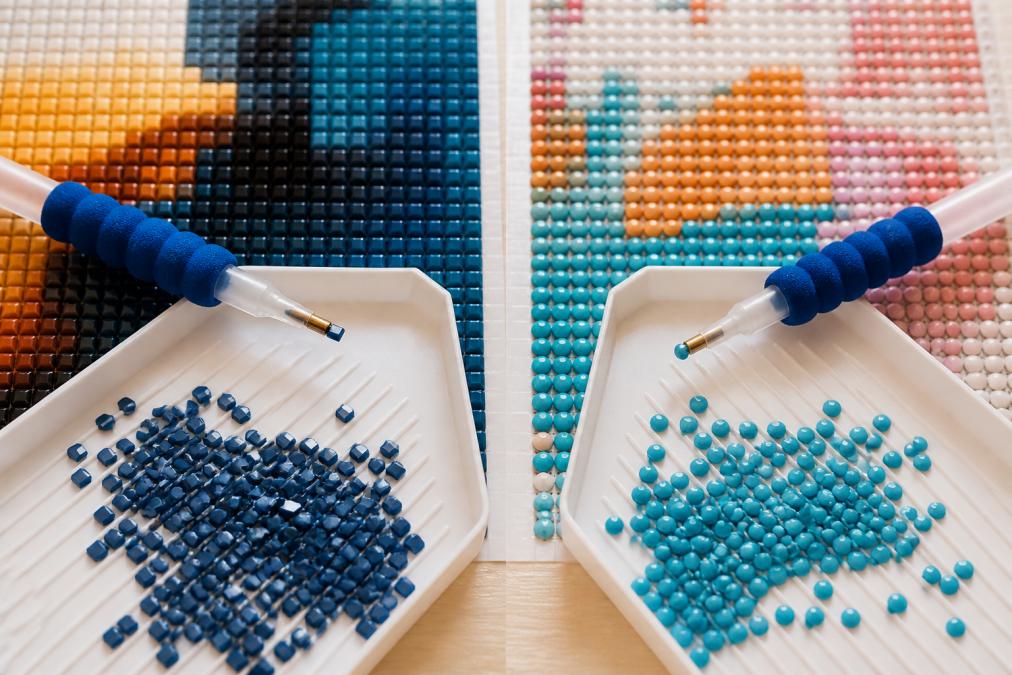
Table of Contents
- Square vs Round Drill Diamond Painting: The Core Differences
- Coverage and Visual Clarity: How Drill Shape Affects Your Finished Masterpiece
- Ease of Placement and Application
- Diamond Painting Tips for Beginners: Choosing Between Square and Round
- How to Straighten Diamond Painting Drills for Better Alignment
- How Long Does a Diamond Painting Take to Complete?
- Pros and Cons: Making Your Final Choice
- Conclusion
Last Updated: August 19, 2026
Square vs Round Drill Diamond Painting: The Core Differences
The choice between square and round drills fundamentally shapes your entire diamond painting experience. Square drills fit together like tiles, leaving virtually no gaps when properly placed. Round drills are circular and leave visible spaces between each stone, what crafters call "gapping." This single difference affects how quickly you complete the project, how professional the finished piece looks, and how much precision the work demands.
Understanding these core differences helps you select the right kit before investing hours of work. The decision isn't about which is objectively "better", it's about matching the drill type to your skill level, patience, and vision for the final piece.
Coverage and Visual Clarity: How Drill Shape Affects Your Finished Masterpiece
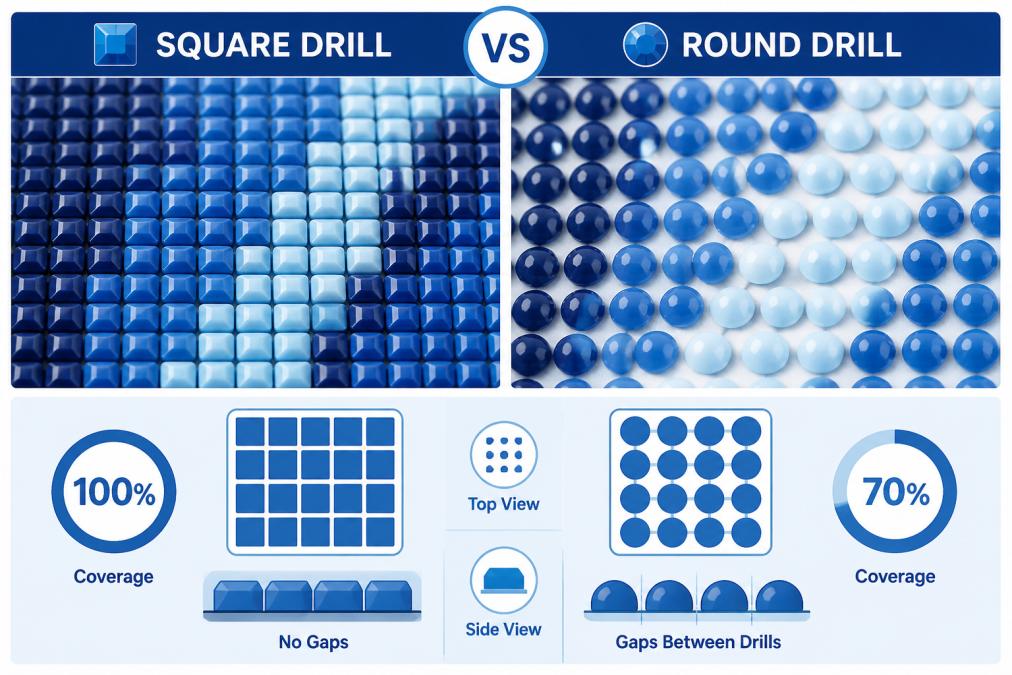
Square drills deliver "full coverage" because they pack edge-to-edge with no gaps. When light hits a completed square-drill painting, it reflects uniformly across the entire surface, creating a smooth, polished appearance. The canvas underneath becomes completely invisible, and the image reads with sharp clarity.
Round drills create the opposite effect. Because they're circular, they naturally leave small gaps between each stone where the canvas shows through. This creates a subtle checkerboard-like pattern when viewed from a distance. Light bounces differently off round drills, producing a softer, more textured shimmer.
Square Drills and Full Coverage
Square drills are engineered to eliminate gaps entirely. When placed correctly in straight rows, they touch on all four sides, creating a seamless surface. This matters most for images with large blocks of solid color, where any canvas visibility would be distracting. Portraits, landscapes, and detailed artwork all benefit from the full coverage that square drills provide.
The visual payoff is immediate: your finished piece looks complete and professional. Achieving that full coverage requires precision, however. Each drill must sit perfectly aligned with its neighbors. Slight misalignments become visible because gaps between them would break the seamless appearance.
Round Drills and the Gapping Question
Round drills leave small spaces between each stone by design. The circular shape means only the center point of each drill touches the canvas adhesive. The edges float slightly above the surface, creating characteristic gaps.
This gapping effect divides opinion among diamond painters. Some find it charming; the subtle checkerboard pattern adds visual texture. Others find it distracting, especially in images with large monochromatic areas where gaps become more noticeable.
One advantage of round drills: they're more forgiving of slight placement errors. Because gaps are expected, a drill that's slightly off-center doesn't ruin the overall appearance. This makes round drills genuinely easier for beginners and for crafters with limited fine motor control.
Ease of Placement and Application
Square drills demand precision in placement. Because they sit edge-to-edge, each drill must align with its neighbors. If one square drill is rotated or placed at an angle, it creates visible misalignment that disrupts the grid pattern.
With square drills, you're fitting them into a grid like solving a puzzle where each piece must align perfectly. With round drills, you're simply pressing circles onto the canvas.
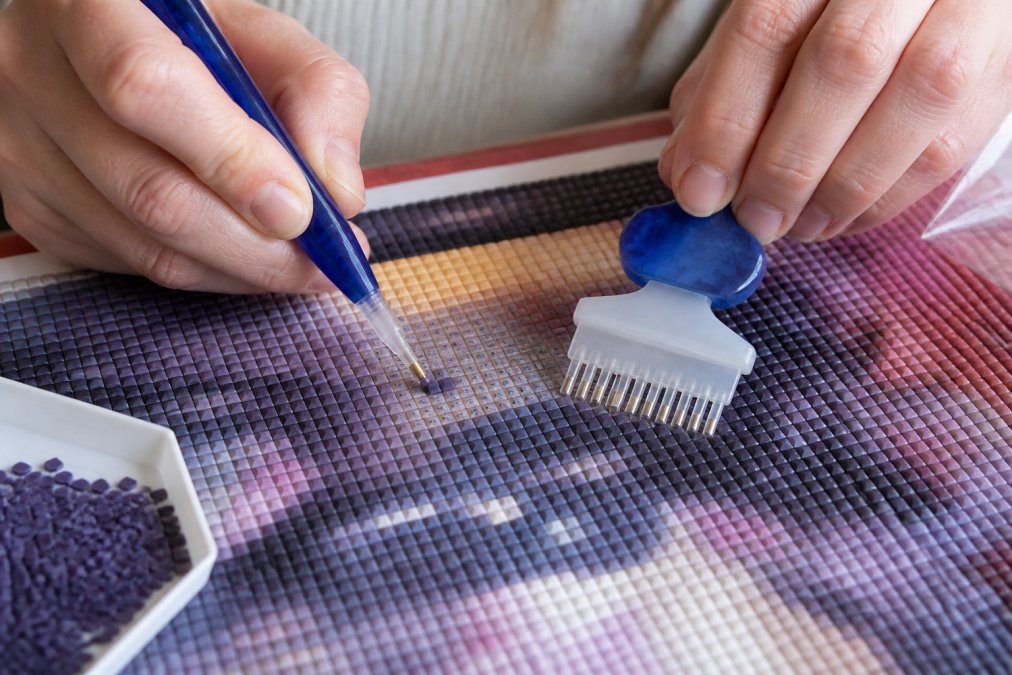
For crafters with arthritis or hand fatigue, round drills offer a real advantage. You can work faster because you don't need to verify alignment with each placement. Square drills require a slower, more deliberate approach. Many experienced crafters work methodically in rows, checking alignment frequently.
Multi-placer tools work more efficiently with round drills because alignment isn't critical. With square drills, you're often better off placing one at a time to ensure proper alignment.
Diamond Painting Tips for Beginners: Choosing Between Square and Round
If you're new to diamond painting, the choice between square and round drills shapes your entire learning curve.
Start with your patience level. Round drills let you complete a kit faster because placement is more forgiving. Square drills reward patience and precision. If you tend toward impatience or have limited dexterity, square drills will feel tedious.
Consider the image subject. Large blocks of solid color look noticeably better with square drills because full coverage eliminates canvas visibility. Images with varied colors are more forgiving with round drills because gapping is less noticeable.
Evaluate your workspace. Square-drill projects benefit from organized storage and a dedicated work surface where you can work systematically. Round drills are more flexible and require less organization.
Test your comfort level. If this is your first kit, consider starting with a smaller project (under 500 drills) regardless of shape. This lets you experience the actual work without committing to a 30-hour project.
How to Straighten Diamond Painting Drills for Better Alignment
Misaligned drills happen to everyone, and they're more noticeable with square drills because proper alignment is essential to the finished look.
Identify the problem. Misaligned square drills appear rotated or offset from their neighbors. You'll notice them because edges don't align with adjacent drills, creating visible gaps where there shouldn't be any.
Use a straightening tool. Many crafters use a small flat tool, ruler edge, craft knife handle, or specialized drill straightener to gently press misaligned drills back into position. The key is gentle pressure; you're rotating or shifting it slightly, not prying it off the canvas.
Work systematically. If you notice several misaligned drills in one section, fix them as you go rather than waiting until the end. It's easier to make small adjustments while the adhesive is fresh.
Prevent misalignment. Work slowly, verify alignment before pressing each drill down, and use a drill tray to keep stones organized. Some crafters place drills in small groups rather than individually, which reduces the chance of rotation.
How Long Does a Diamond Painting Take to Complete?
Completion time depends on kit size, drill type, and your pace. A small kit (500-1,000 drills) typically takes 5-15 hours. A medium kit (2,000-5,000 drills) takes 20-50 hours. Large kits (10,000+ drills) can take 100+ hours.
Square drills generally take longer than round drills because precision placement slows you down. An experienced crafter might place 100-150 square drills per hour. Round drills allow faster work, with 150-250 per hour being common.
Your pace also depends on your work style. Some crafters work in focused 2-3 hour sessions; others prefer 30-minute daily sessions. Consistency matters more than speed. Environmental factors like good lighting, comfortable temperature, and organized supplies all contribute to faster, more enjoyable work.
Pros and Cons: Making Your Final Choice
| Aspect | Square Drills | Round Drills |
|---|---|---|
| Coverage | Full, seamless surface | Visible gaps between stones |
| Alignment Difficulty | Requires precision placement | Forgiving of placement errors |
| Completion Speed | Slower (100-150 drills/hour) | Faster (150-250 drills/hour) |
| Finished Appearance | Professional, polished look | Subtle shimmer, textured feel |
| Best For | Detail work, solid colors, display pieces | Relaxation, beginners, speed |
| Learning Curve | Steeper; demands patience | Gentler; more forgiving |
Square drills excel when:
- You're creating a display piece or gift where professional appearance matters
- The image contains large blocks of solid color
- You enjoy methodical, detail-oriented work
- You have good lighting and a comfortable workspace
Round drills excel when:
- You prioritize the relaxing, meditative aspect of the craft
- You want to complete a project quickly
- You have limited fine motor control or hand mobility
- The image has varied colors and lots of detail
- You're new to diamond painting
Neither is objectively better. Your choice should reflect what you value in the crafting experience. If you've never done diamond painting before, consider your personality. Are you someone who finds satisfaction in precision and perfection, or someone who values relaxation and speed?
Jeanne Argent Atelier offers a curated selection of premium full-drill diamond painting kits designed for the serious artist. Each kit is crafted from original artwork, providing a high-quality creative experience for hobbyists looking to elevate their craft. By combining artistic integrity with essential tools like specialized drill pens and trays, we ensure that every project is both enjoyable and rewarding. Discover our diverse collections and find the perfect kit to bring your next masterpiece to life.
Round drills: Beginners, crafters seeking relaxation, those with hand mobility concerns, anyone prioritizing completion speed over precision.
Conclusion
The square versus round drill decision shapes your entire diamond painting experience, from how quickly you work to how satisfied you feel with the finished piece. Square drills deliver professional, seamless coverage but demand precision and patience. Round drills offer forgiving, faster work with a subtly textured shimmer that many crafters find charming.
Neither choice is wrong. The best decision aligns with your personality, workspace, and what you value in the crafting process. When you're ready to start, research shows that high-quality adhesive and canvas clarity directly impact your enjoyment. Jeanne Argent Atelier's premium kits address both with original artwork, specialized tools, and canvas designed for clarity and durability. Whether you choose square or round drills, the foundation of your project matters as much as the stones themselves.
Frequently Asked Questions
Is a round or square diamond better for diamond painting?
Neither is universally 'better', it depends on your priorities. Square drills provide superior coverage with minimal gaps, creating a seamless, polished finished masterpiece with no checkerboard effect. Round drills offer easier placement and faster completion, though they leave small gaps between drills that some crafters find acceptable. If visual perfection and shimmer are your goals, square drills win. If speed and comfort during long crafting sessions matter most, round drills are the stronger choice.
Do square drills provide better coverage than round drills?
Yes. Square drills have flat, perpendicular edges that fit together like tiles with virtually no gaps. Round drills have a circular underside, which means they don't touch edge-to-edge, creating small spaces between each drill. This gapping is especially noticeable when light hits the canvas. For a polished, professional look with complete coverage, square drills are the clear advantage. Round drills work well for designs where minor gaps don't detract from the overall image.
Which drill shape is easier to place during long crafting sessions?
Round drills are generally easier to place, especially for beginners. Their circular shape means slight misalignment doesn't disrupt the overall pattern as noticeably as with square drills. Round drills also require less precision with your wax pen or multi-placer tool, reducing frustration and hand fatigue. However, square drills demand more attention to alignment and straight rows, which can be tiring over extended sessions. If you have arthritis or hand sensitivity, round drills' forgiving placement may be more comfortable for hours of work.
How does drill shape affect the final clarity and shimmer of my diamond painting?
Square drills create a unified, sharp-edged mosaic look with maximum light reflection across the entire surface. The tight, edge-to-edge fit means every facet catches light uniformly, producing a cohesive shimmer. Round drills have a softer shimmer effect because light passes through the gaps between drills, reducing the intensity of the popping drills effect. If you want your finished piece to sparkle dramatically and display like professional artwork, square drills deliver superior visual impact.
How long does a diamond painting take to complete with each drill type?
Round drills typically complete 15-25% faster than square drills because they require less precision during placement and alignment. Most crafters finish a medium-sized round drill kit in 8-15 hours of active work, while square drill projects of the same size take 10-20 hours. The difference grows with larger canvases and more complex designs. Your personal pace, the kit's design complexity, and your experience level also affect completion time significantly. Premium full-drill kits with quality tools and clear canvas grids can speed up either type.
The real question isn't which drill type is best, it's which one will keep you engaged and satisfied through completion. Choose the one that matches how you want to spend your creative time, and you'll find the work rewarding regardless of shape.
This article was written using GrandRanker