Diamond painting for activity directors: complete 2026 guide

Activity directors’ diamond painting is a guided craft that matches small faceted beads to an adhesive picture, with the aim of offering residents an enjoyable, self-directed creative activity. This 2026 guide explains diamond painting for senior care activities, where individual vision, hand control, preferences, and supervision needs matter more than age alone.
- Diamond painting for senior care activities starts with individual interest, safe handling, and a readable canvas—not a large group purchase.
- Jeanne diamond painting kits suit adult hobbyists; assess each resident’s needs before introducing small drills.
- Offer round drills, a supported workspace, and one color at a time for an introductory trial.
- Measure enjoyment and willingness to return, not completion speed or unverified health benefits.
Why diamond painting matters for activity directors
Diamond painting gives you a concrete sequence to demonstrate: find a symbol, match its drill color, pick up a drill, and place it. Residents can choose the picture, participate in selected steps, or decide that another craft feels better.
That flexibility matters in senior care. A shared table does not mean shared abilities, and a resident who enjoys choosing colors does not necessarily enjoy placing tiny pieces. The diamond painting guide for beginners offers a starting point for understanding the craft; your activity plan still needs individual adjustments.
Plan diamond painting as an optional leisure activity, not a treatment. Do not promise improvements in memory, dexterity, anxiety, or other health outcomes from participation.
For your 2026 activity calendar, begin with a supervised trial rather than a room-wide commitment. The useful question is whether the person enjoys the actual process—not whether the finished picture looks appealing on a noticeboard.
How to introduce diamond painting in senior care
1. Assess interest and safe participation first
Begin with conversation and a demonstration using materials you already have. Ask whether the resident wants to try placing drills, selecting colors, or simply watching before joining in. Consent includes the freedom to stop without explaining why.
Small loose drills require particular care. If a resident mouths objects, has a known ingestion risk, or cannot handle the materials safely with the support available, do not introduce loose drills. Follow the resident’s care plan and your facility’s procedures; involve the care team when suitability is uncertain.
An adult craft label does not establish suitability for every resident. Neither does a diagnosis automatically tell you what someone enjoys or can manage.
- Ask permission before setting up the activity.
- Check relevant care-plan restrictions with the care team.
- Observe whether the resident can distinguish the working symbols.
- Confirm safe handling of drills, pens, and other small components.
- Offer a different activity when safe participation is not possible.
2. Choose the picture and drill shape together
Use a sample canvas or clear product photograph first. Let the resident choose between subjects rather than assigning a picture because it seems appropriate for their age. Flowers, animals, cottages, and seasonal scenes are preferences, not ability categories.
Round drills do not need rotational alignment. Square drills need their edges aligned with neighboring pieces, adding another placement task. Neither shape changes the need to assess readability and safe handling.
Jeanne diamond painting kits include a 40×30 cm round-drill Winter Reading Nook design, 45×45 cm round-drill floral designs, and a 60×80 cm square-drill owl design. Those dimensions describe the listed formats, not a guaranteed level of accessibility. A smaller canvas also does not automatically have larger symbols.
- Ask the resident to choose a subject they genuinely like.
- Inspect the printed symbols before committing to the project.
- Favor round drills when rotational alignment is an unwanted task.
- Check how the canvas fits the actual working surface.
- Reserve large projects for residents who want an ongoing activity.
3. Arrange the table around the resident
Start with the chair, table, and lighting already in the room. Position the canvas so the resident can reach the working area without stretching across it. Move the project toward the person rather than asking the person to keep leaning forward.
Check visibility from the seated position. Adhesive canvas and faceted drills reflect light, so reposition a lamp when glare hides the symbols. Keep the active tray within easy reach and leave a clear resting place for the pen.
Use separate areas for covered supplies, active materials, and completed work. This arrangement makes it easier to see what belongs in the session and what should remain closed.
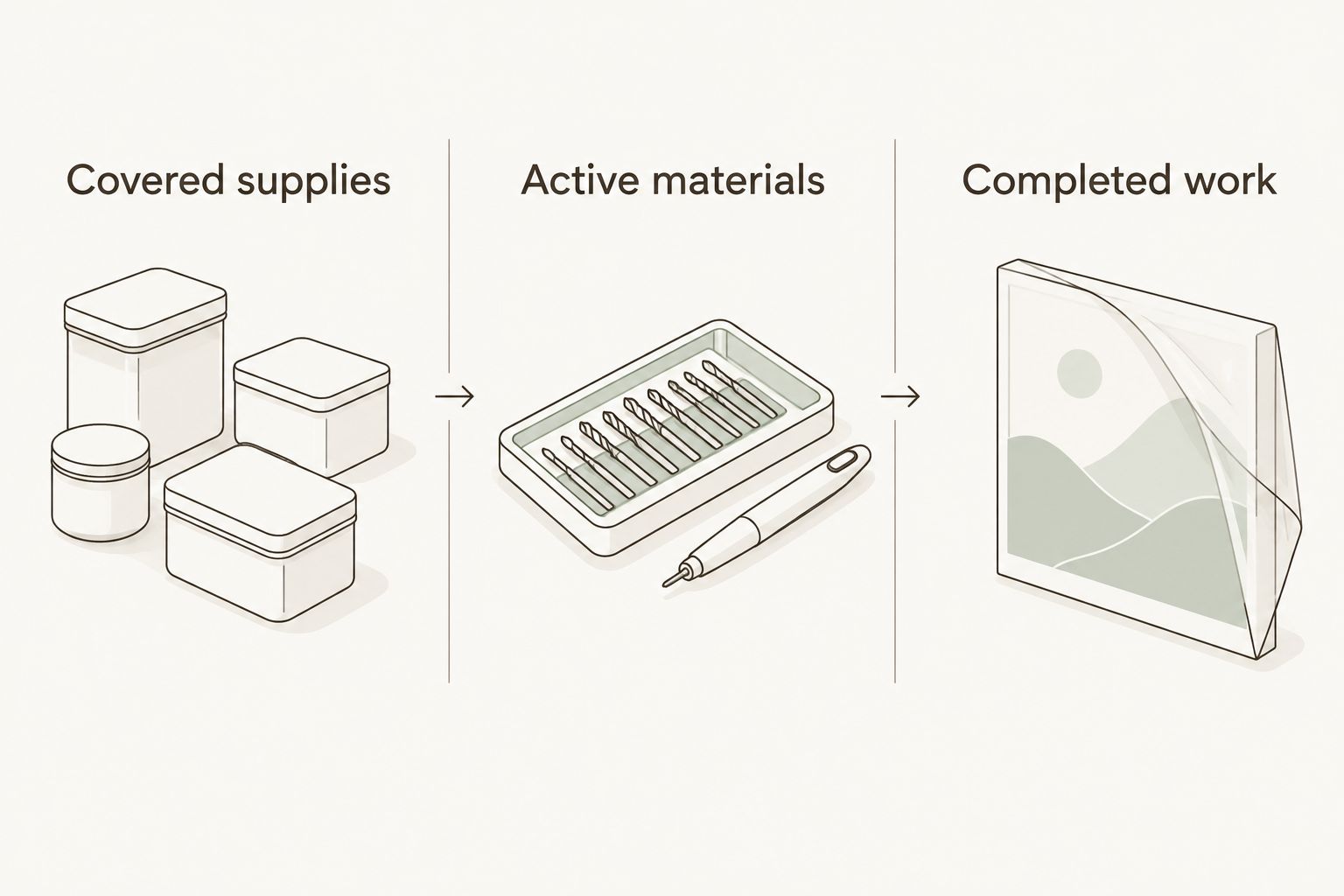
A tidy layout is not a demand for perfect order. It gives you a consistent place to return things when the conversation wanders or the activity pauses.
- Support the canvas on a stable surface.
- Adjust lighting from the resident’s seated viewpoint.
- Keep drinks and food separate from loose drills.
- Put the tray and pen within comfortable reach.
- Keep unused colors closed and outside the active area.
4. Demonstrate a small, repeatable sequence
Demonstrate slowly using the resident’s chosen canvas. Identify a symbol in the legend, find the matching drill packet, and pour a small amount into the tray. Gently shake a grooved tray to help drills settle flat-side down, with their faceted surfaces facing up.
Load the applicator according to its instructions. Pick up a drill from its faceted side and place its flat side onto the matching adhesive symbol. Reveal only the protective covering needed for the working section, following the canvas instructions.
Then let the resident try. Avoid correcting every slightly uneven placement; intervene when help is requested or when a mismatch would make the next step confusing. The picture belongs to the participant, including its small irregularities.
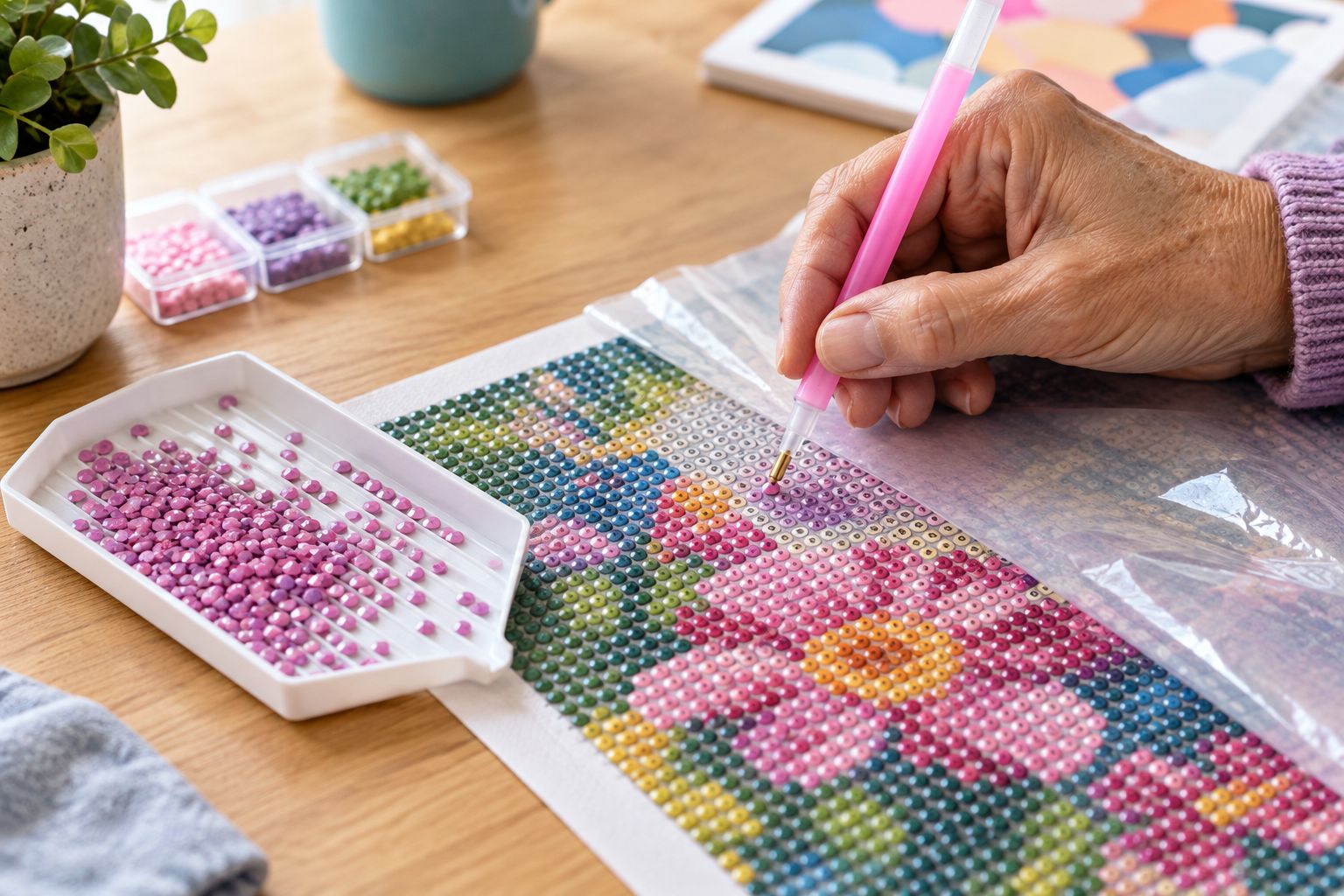
Keep spoken instructions attached to the action. A brief prompt about the next placement is easier to follow than a full explanation delivered before the resident touches the pen.
- Match the symbol to the canvas legend.
- Open only the selected drill color.
- Demonstrate picking up and placing a drill.
- Let the resident repeat the action at their own pace.
- Offer assistance before taking over the pen.
5. Build a pause-and-pack routine
Try a labeled pouch or existing container before buying specialist storage. Keep each resident’s canvas, legend, drill packets, and session notes together. The next session should begin with recognition, not a search through mixed supplies.
For repeated sessions, Jeanne offers The Tool Keeper, a padded organizer case with elastic loops for drill pens and mesh pockets for wax, tweezers, and tips. It is best for keeping tools together between sessions; it is an empty case, not a kit or a substitute for a facility-approved secure storage arrangement.
Make cleanup part of the activity plan for 2026, including staff handoffs. Never assume that closing a tool case accounts for every loose drill on a chair, tabletop, or floor.
- Label the resident’s project and containers clearly.
- Return each color to its matching labeled packet.
- Cover the working canvas according to its instructions.
- Inspect the table, chair, clothing, and floor for loose pieces.
- Store materials according to your facility’s procedures.
6. Adapt the role before changing the whole activity
First reduce the demands within the existing activity. You can handle the legend while the resident places drills, pour a selected color while the resident manages the pen, or invite the resident to choose where the next section begins. Explain the shared role rather than quietly completing the picture yourself.
Choosing a different craft is also a valid outcome. In choosing an art medium, the meaningful distinction is the action someone enjoys: placing tiny pieces is a different experience from drawing a broad line or brushing color across paper.
For your 2026 program, keep those alternatives available without treating them as lesser activities. If manipulating small drills is frustrating or unsafe, use a larger-format medium consistent with the resident’s care plan and preferences.
- Offer help with symbol matching without taking over placement.
- Let the resident choose colors or picture sections.
- Ask whether shared work still feels satisfying.
- Stop when discomfort, frustration, or loss of interest appears.
- Offer larger-format drawing or painting when it better fits the person.
7. Record the experience rather than the output
Use your existing activity notes rather than creating a score for how many drills someone places. Record what the resident chose, what support helped, what caused difficulty, and whether they wanted to return. Describe observations, not clinical conclusions.
A resident who places a few drills and enjoys the conversation has not failed the session. Another resident might prefer quiet concentration and dislike repeated questions. Both preferences should shape the next invitation.
When reviewing your 2026 activity plan, separate individual enjoyment from operational demands. A popular activity still needs a workable setup, supervision, and cleanup routine; a neatly finished canvas does not establish that those conditions were met.
- Record the chosen picture and preferred participation role.
- Note lighting, seating, or instruction adjustments that helped.
- Describe observable signs of enjoyment or frustration.
- Record the resident’s request to continue, pause, or stop.
- Share practical setup notes with the next facilitator.
Compare formats before choosing a kit
Jeanne is best for adult hobbyists seeking diamond painting kits and tool storage, not a standardized senior-care activity package. Select materials for the individual resident, then decide whether the setup fits your staffing and storage arrangements.
The listed dimensions below describe particular products. Check the canvas and instructions directly before introducing either kit; dimensions alone do not establish symbol readability, handling comfort, or completion time.
| Option | Best for | Practical advantage | Key limitation |
|---|---|---|---|
| Winter Reading Nook – Quiet Hours, 40×30 cm, round drill | Residents who choose a smaller-format winter scene | Smaller listed format than the floral option below | Still requires handling tiny drills and reading symbols |
| Golden Hour Floral – Sunny Butterfly Daisy, 45×45 cm, round drill | Residents who choose flowers and an ongoing project | Round drills avoid rotational alignment | Full-drill coverage means the whole patterned area requires placement |
| Staff-assisted diamond painting | Residents who enjoy placement but want help with preparation | Divides sorting and placement between participants | Requires staff attention and an agreed shared role |
| Larger-format drawing or painting | Residents who prefer broad marks over small-piece placement | Offers a different physical action and creative process | Requires its own material and care-plan suitability checks |
These kits are examples to assess, not universal recommendations for senior care. Choose the image with the resident and inspect the materials before planning a group session.


Common mistakes activity directors make
- Buying by age label instead of individual fit. An adult kit still uses small components. Assess interest, visibility, safe handling, and support needs separately.
- Equating canvas size with accessibility. A larger picture does not establish larger printed symbols. Inspect the actual working surface rather than relying on dimensions.
- Mixing drill colors to simplify preparation. Similar shades become difficult to identify once packet labels are lost. Keep colors separated and retain the canvas legend.
- Making a seasonal deadline the resident’s obligation. A holiday picture does not need to be finished before the holiday. Offer continuation, a pause, or a different project without pressure.
- Reporting therapeutic outcomes from craft participation. Record what happened during the activity. Do not translate enjoyment or task completion into claims about cognitive or physical improvement.
FAQ
Is diamond painting suitable for everyone in senior care?
No, diamond painting is not suitable for every resident. Interest, vision, hand control, safe handling of small pieces, and available support determine whether to offer it; follow individual care plans and facility procedures.
Are round or square drills better for a first session?
Round drills remove the need to rotate each piece into alignment. They still require small-piece handling and readable symbols, so assess the actual canvas and the resident’s response rather than relying on drill shape alone.
Can residents with dementia take part in diamond painting?
A dementia diagnosis alone does not determine suitability for diamond painting. Consult the care team and individual care plan, and do not introduce loose drills when mouthing, ingestion risk, or other safety concerns make participation unsafe.
How long should a senior care diamond painting session last?
Let the resident’s comfort, interest, and care needs determine when the session ends. Prepare for an easy pause instead of requiring a fixed amount of work or a completed section.
What should an activity director buy first?
Assess a sample canvas and a basic placement setup before buying group quantities. Confirm readable symbols, safe handling, suitable seating, and a workable cleanup routine before adding storage accessories or larger projects.
Does Jeanne provide a clinical senior-care diamond painting program?
Jeanne sells adult hobby diamond painting kits and craft accessories, not a clinical senior-care program. Activity directors must assess materials against each resident’s preferences, care plan, and facility requirements.
What should I record after a diamond painting activity?
Record the resident’s choices, participation role, support needs, and expressed interest in returning. Use observable descriptions and avoid claiming health improvements from a leisure session.
One last thing
Make the next session easy to recognize. Before packing away, ask the resident which part they would like to work on next, then record that choice with the project.
Returning to a flower they selected is a more personal invitation than being handed an unfinished task. Leave room for them to change their mind.