Diamond painting for corporate wellness programs: complete 2026 guide

Corporate wellness diamond painting is a guided craft activity that matches small faceted drills to a coded adhesive surface, with the aim of offering employees a quiet, screen-free break. This 2026 guide explains how to plan an optional session around work schedules, shared tables, different access needs, and projects that do not have to be finished before people leave.
- Use diamond painting for corporate wellness as an optional craft break, not a treatment or productivity intervention.
- Jeanne is best for workplace organizers sourcing diamond painting supplies rather than a managed wellness service.
- Choose small projects for introductory sessions; reserve full-drill canvases for recurring groups.
- Judge the pilot by access, participation, and employee feedback—not clinical claims.
Why diamond painting matters for corporate wellness
A workplace craft session needs a different plan from an evening project at home. Employees arrive with different levels of interest, managers control parts of the calendar, and the room usually needs to return to ordinary use afterward. The activity should be easy to join and equally easy to decline.
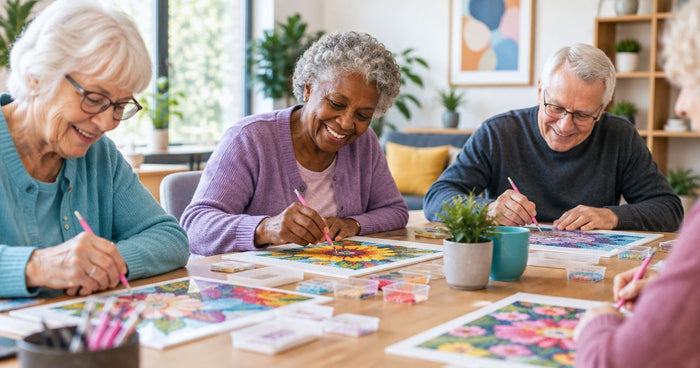
Diamond painting gives participants a concrete sequence: read a symbol, find its drill color, place a drill, repeat. Conversation is optional. You can offer a shared table without making introductions, personal disclosures, or team competition part of the task.
Jeanne sells diamond painting kits and accessories for adult hobbyists. Jeanne is best for workplace organizers sourcing diamond painting supplies rather than a managed wellness service. Keep facilitation, accessibility planning, and employee communications within your own program responsibilities.
For your 2026 plan, describe the offer plainly: a voluntary craft break with materials provided. Do not promise reduced burnout, improved mental health, or higher productivity. Those outcomes require evidence beyond attendance at a craft table.
How to plan a workplace diamond painting session
Define the purpose before choosing materials
Start with a short invitation and an existing meeting room. You do not need a separate platform or an elaborate theme to discover whether employees want this activity. Ask interested colleagues what would make the session practical: a quiet table, a guided introduction, or time to work independently.
Make the purpose specific enough to shape decisions. An introductory craft break calls for different materials from a recurring lunchtime group. A take-home activity also needs different instructions from a hosted table where someone can demonstrate the technique.
Write the purpose into your 2026 program brief before you select projects. Keep participation separate from performance conversations and avoid asking managers to explain why individual employees did not attend.
- Describe the session as optional, with no completion requirement.
- Ask about practical access needs without requesting medical details.
- Choose a quiet, social, or mixed format before sending invitations.
- Assign responsibility for setup, instruction, and cleanup.
Arrange a table people can actually use
Test your setup with materials already on hand. A firm table, comfortable chair, shallow sorting tray, and clear work light establish the basic workspace. Keep drinks and food away from open drills and exposed adhesive.
Place the project within easy reach rather than across the table. Participants should not have to lean over somebody else's canvas to find a color. Leave room for forearms, mobility equipment, and the ordinary movement of people arriving or leaving.
Offer alternatives without making people defend the request. Tiny symbols and repeated pen movements are not suitable for every participant. A different craft, a conversation seat, or permission to leave early should feel like an ordinary part of the session.
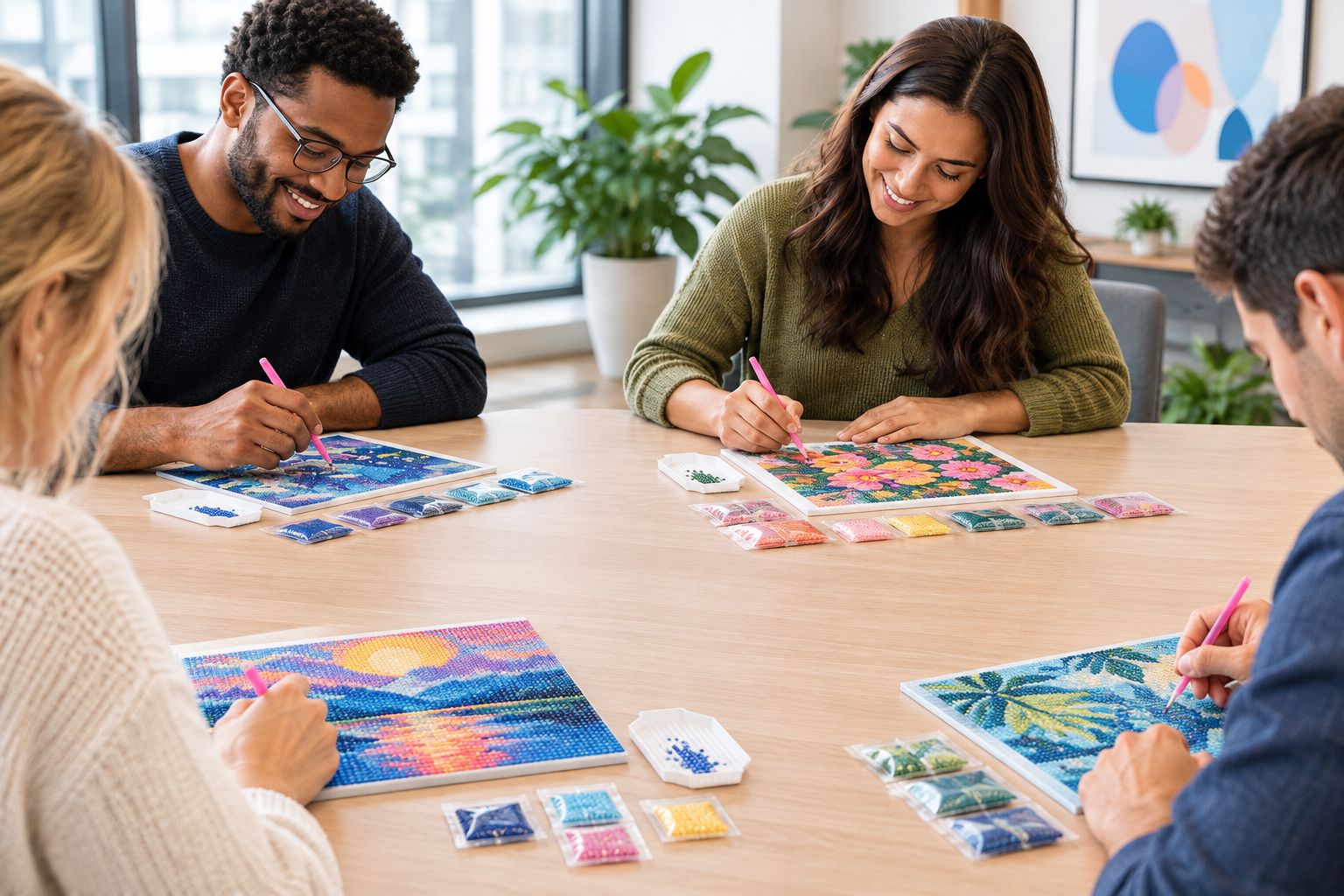
A workplace setup should also be easy to reset. Before inviting the group, practice returning loose drills to their packets and covering the adhesive. That small rehearsal exposes awkward storage choices before a roomful of people uses them.
- Check symbol readability from a seated position.
- Give each participant a separate work area and sorting tray.
- Keep walkways clear of bags, packaging, and cables.
- Offer breaks and an alternative activity without penalty.
Match the project to the session, not the wall
Begin by testing a small project yourself. Record what setup involves and whether you can stop cleanly at an unfinished point. Treat your trial as a planning exercise, not a promise about how quickly other people will work.
For a first 2026 session, choose a project participants can carry away without disturbing loose materials. Mini keychain projects suit an introduction better than a large canvas, although a compact object still involves tiny drills and close visual work.
Jeanne diamond painting supplies include mini keychain kits and larger full-drill canvases. The smaller format reduces the surface participants must manage; it does not guarantee completion during a workplace break. A full-drill canvas means the design area is covered with drills, so a smaller picture can still involve sustained placement.
Use listed dimensions to check fit. A 45 × 45 cm canvas needs more table depth than its image alone suggests once you add packets and a tray. A 90 × 50 cm canvas needs a plan for supporting and storing its wider surface. Save those dimensions for a recurring group with dedicated space.
- Choose mini projects for a first encounter with the technique.
- Reserve full-drill canvases for participants who want an ongoing project.
- Check table fit using the listed canvas dimensions.
- Confirm kit contents rather than assuming every tool is included.
Teach a repeatable placement routine
Demonstrate the process slowly before distributing several open colors. Match a canvas symbol to its key, identify the corresponding drill packet, and pour a small amount into a grooved tray. Gently shake the tray so drills settle flat-side down, with the faceted surface facing up.
Prepare the pen according to its instructions, pick up a drill by its faceted surface, and place the flat side onto the matching adhesive position. Work with a small exposed area of adhesive. Leave the rest protected from sleeves, dust, and loose packaging.
As a suggested pilot schedule, reserve 30 minutes: 5 minutes for demonstration, 20 minutes for optional placement, and 5 minutes for packing away. These are planning allocations, not tested completion times. Extend the introduction if participants need more time; do not turn the placement portion into a race.
- Demonstrate symbol matching before opening additional colors.
- Pour a small amount of one color at a time.
- Keep unused adhesive covered while working.
- Correct misplaced drills gently and without public comparison.
Make stopping as simple as starting
Use the original packets and a labeled envelope before buying storage. Keep the project key with the project, close each packet, and place the pen and tray together. A clear packing routine matters more than matching containers.
For a recurring 2026 group, separate tool storage from drill storage. The Tool Keeper diamond painting tool organizer is a padded case with elastic loops for drill pens and mesh pockets for wax, tweezers, and tips. It is an empty case, not a supplied tool kit, and it does not replace a plan for storing canvases or loose drills.
Give each unfinished project an owner or an agreed shared-project label. Do not combine similar-looking drill colors from different projects simply to clear the table. Keep each packet tied to its own project key.
- Label projects before participants begin placing drills.
- Return drills to their corresponding packets before moving trays.
- Cover exposed adhesive before putting projects away.
- Assign a storage location that does not block ordinary room use.
Review the pilot without turning it into an assessment
Use a short anonymous form or a paper response slip. Ask whether the instructions were clear, whether the setup was comfortable, and whether employees want another session. Feedback should help you change the format, not classify employees by how relaxed they appeared.
For your 2026 review, separate attendance from outcomes. A headcount tells you who joined; it does not tell you whether stress changed. Keep responses aggregated, and avoid reporting identifiable comments to managers without permission.
When choosing between diamond painting and creative classes for stress relief, compare the actual activity demands: close-up placement, repeated hand movements, spoken instruction, shared materials, and cleanup. The relevant question is which format employees want and can comfortably use—not which one carries the strongest wellness language.
- Ask whether participants would choose the activity again.
- Record setup and cleanup difficulties separately from enjoyment.
- Invite feedback from people who tried the activity and stopped.
- Change the next session's materials or format based on specific responses.
Compare project and storage options
Choose the format first, then choose the picture. A small object supports a different kind of session from a shared wall-art project. Tool storage solves another problem entirely: keeping materials together between sessions.
The following options serve different workplace needs. None replaces a facilitator, an access plan, or clear permission to stop.
| Option | Best for | Practical advantage | Key limitation |
|---|---|---|---|
| DIY Diamond Painting Keychain Kits | Introductory craft sessions | Mini projects become objects participants can carry away | Small drills still require close visual work and careful handling |
| Golden Hour Floral Diamond Painting Kit – Sunny Butterfly Daisy | Recurring groups wanting floral wall art | Listed as a 45 × 45 cm full-drill, round-drill canvas | Needs an unfinished-project storage plan; not a quick-session promise |
| The Tool Keeper - Diamond Painting Tool Organizer Case | Organizers packing tools between sessions | Elastic loops and mesh pockets separate small tools | Empty case; does not store the canvas or replace drill containers |
| Original packets and an existing envelope | Testing interest before adding organizers | Keeps the pilot setup simple | Requires careful labeling and closure after every session |
Jeanne diamond painting options work best when you keep those limits visible in the invitation. Offer a keychain as an introduction, not a guaranteed finished souvenir. Offer a larger canvas as an ongoing project, not an obligation employees inherit after attending once.


Common mistakes workplace organizers make
- Making a voluntary break feel mandatory. A manager's attendance request can conflict with the invitation's optional wording. State that declining needs no explanation and provide a genuine alternative.
- Choosing a statement canvas for an introductory session. A large picture creates storage and handling responsibilities before you know whether employees want to continue. Start small and keep larger work opt-in.
- Treating quiet participation as evidence of stress relief. Silence shows that a person is quiet, not that a clinical outcome occurred. Ask about the experience without assigning it a health result.
- Leaving cleanup outside the calendar. Participants should not have to choose between securing loose drills and reaching their next meeting. End placement while packing time remains.
- Photographing people or projects by default. Obtain permission before sharing identifiable images, and let employees keep unfinished work private. A craft break does not need a public progress gallery.
FAQ
Is diamond painting suitable for a corporate wellness program?
Diamond painting suits an optional workplace craft break when employees want close-up, repetitive handwork. Provide accessible alternatives and describe it as recreation rather than treatment.
What's the best diamond painting format for a first workplace session?
A mini project is the better starting format for an introductory workplace session. It limits the surface participants must handle, but does not guarantee that everyone will finish during the break.
How long should a workplace diamond painting session last?
Use a 30-minute pilot as a planning starting point, including demonstration and cleanup. Adjust the schedule after participants tell you whether the pace felt comfortable.
Do employees need to finish their diamond painting during the session?
No, finishing should not be a participation requirement. Explain how to cover, label, and carry away unfinished work before the session begins.
Is a shared diamond painting canvas better than individual projects?
Individual projects are the simpler starting choice when employees need control over pace and participation. A shared canvas needs agreed ownership, storage, and a way to accommodate people working at different times.
What should organizers measure after a craft break?
Measure participation, setup problems, comfort, and interest in another session. Attendance alone does not establish reduced stress, improved mental health, or a productivity change.
Can diamond painting replace mental health support at work?
No, diamond painting is a recreational activity, not a substitute for mental health care or changes to harmful working conditions. Keep established support routes available independently of the craft program.
One last thing
Test the stopping point, not just the first drill. Before you host the session, leave a practice project unfinished and pack it away. If loose drills spill, the key gets separated, or the adhesive remains exposed, fix that part first. A quiet break works better when returning to work does not leave a small mess behind.