11 August 2026
Why Use Specialized Diamond Drill Pens
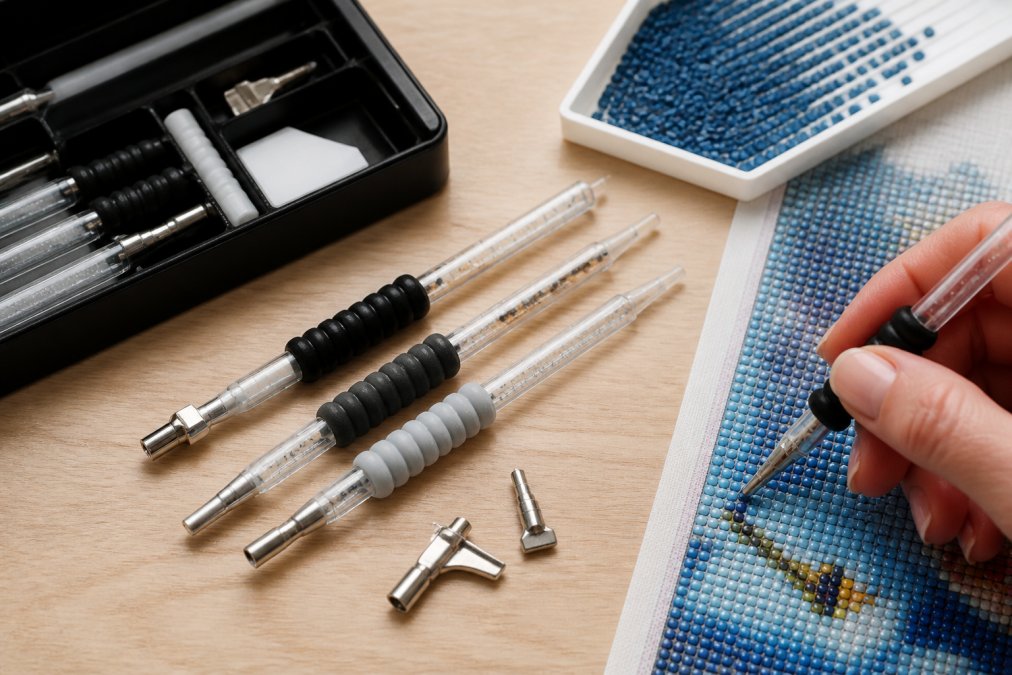
Table of Contents
- How Diamond Painting Pens Work
- The Case for Specialized Diamond Drill Pens
- Ergonomic Diamond Painting Tools and Hand Fatigue Relief
- Precision Placement and Accuracy
- How to Use Multi-Placer Tips
- Material and Durability Differences
- Compatibility with Square and Round Drills
- Common Mistakes to Avoid
Last Updated: August 12, 2026
How Diamond Painting Pens Work
A diamond painting pen is a handheld tool designed to pick up small resin drills and place them onto a sticky canvas. The mechanism is simple: a hollow tip contains wax or adhesive that holds the drill temporarily. When you press the tip against a drill, the wax creates contact. As you position the drill on the canvas and release pressure, the adhesive releases the piece onto the canvas's permanent sticky surface.
A standard pen consists of a barrel (the handle), a replaceable or refillable tip, and an internal wax reservoir. The tip material, metal or plastic, determines placement accuracy and functional longevity. Most hobbyists start with kit-included pens, which work adequately for casual projects but reveal limitations during extended sessions: grip fatigue, unpredictable tip wear, and frustrating precision on detailed sections.
Understanding the mechanics explains why specialization matters. Wax formulation affects how long a drill stays attached during placement. Tip material determines whether it handles square drills, round drills, or both. Barrel weight and grip texture directly influence hand comfort after hours of continuous work.
The Case for Specialized Diamond Drill Pens
Specialized diamond drill pens exist because standard tools create unnecessary friction in an otherwise meditative craft. During a typical session, your hand repeats the same motion hundreds of times: dip, position, release, move. Over two or three hours, a poorly designed pen creates cumulative stress on your wrist, fingers, and forearm. A well-designed specialized pen distributes that repetitive load to minimize fatigue.
Specialized pens also solve precision problems generic tools cannot address. A worn or poorly manufactured tip creates inconsistent contact with drills. On a 30,000-drill project, this variability wastes hours. Specialized pens use durable materials and tight tolerances that maintain consistent performance across thousands of placements.
Serious crafters completing multiple projects per year universally prefer specialized tools. When working with original artwork and premium canvases, the pen becomes the limiting factor. A specialized tool matches the canvas and design quality. The investment pays dividends across multiple projects, a quality pen lasts through dozens of canvases, while generic pens degrade noticeably within a single large project.
Ergonomic Diamond Painting Tools and Hand Fatigue Relief
Hand fatigue is the silent project-killer in diamond painting. You start enthusiastically, but by hour three, your hand aches. By hour four, you're gripping harder to compensate, which accelerates fatigue further. Most people abandon projects not from lost interest, but from unbearable physical discomfort.
Ergonomic diamond painting tools address this by redesigning the relationship between your hand and the tool. A properly ergonomic pen distributes pressure across your palm and fingers rather than concentrating it in your fingertips. The barrel diameter matches your hand's natural curve. The weight sits balanced so your hand isn't fighting gravity. These design choices extend your comfortable working sessions by hours.
Grip Design and Anatomical Impact
The grip design directly affects which muscles and tendons bear the workload during repetitive placement. A thin, cylindrical grip forces your fingers into a narrow pinch, concentrating control pressure in your fingertips. A specialized ergonomic grip distributes the task across multiple muscle groups through a wider barrel, textured surface, and slightly tapered design.
Crafters with arthritis or hand sensitivity report dramatic differences with ergonomic specialized pens. Reduced grip pressure means less joint stress and inflammation. The grip material also matters, soft-touch rubber or silicone absorbs vibration and distributes pressure evenly, while hard plastic creates pressure points that become sore over hours.
Weight Distribution and Long-Session Endurance
The ideal weight sits between 0.5 and 1 ounce, where the tool feels substantial without requiring muscular effort to hold steady. Weight distribution matters as much as total weight. A pen heavier toward the tip creates constant downward torque on your wrist. A pen heavier toward the barrel sits naturally and requires minimal muscular compensation.
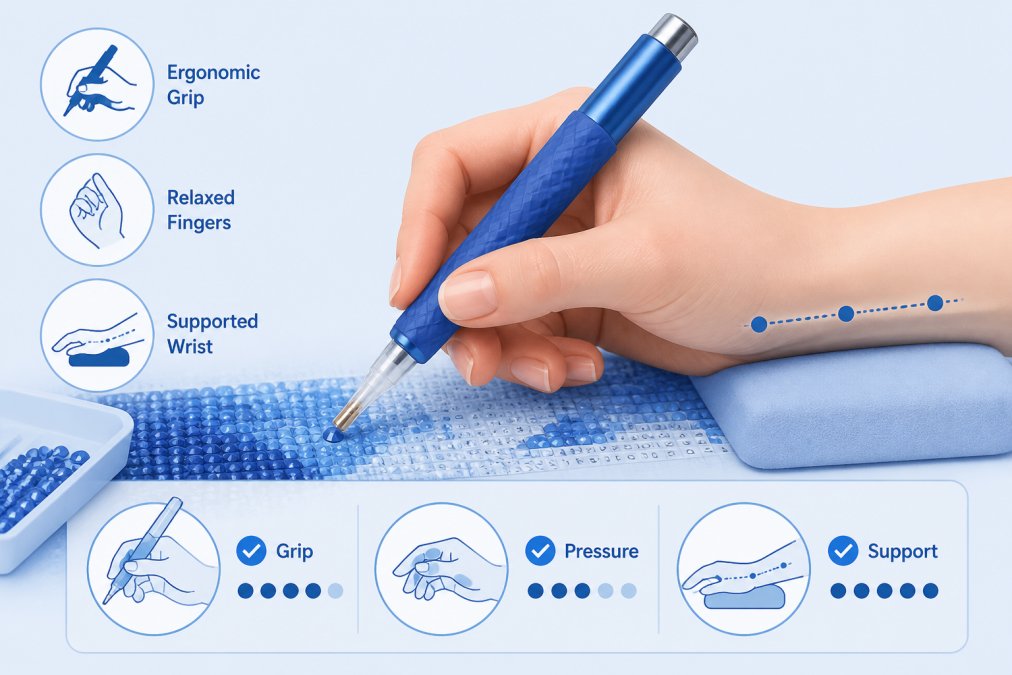
Long-session endurance, working comfortably for three, four, or five hours, separates specialized tools from generic ones. Crafters report that switching to a properly weighted, well-balanced specialized pen extends their comfortable working window by 50-100%, translating directly to faster project completion and more enjoyable crafting.
Precision Placement and Accuracy
Precision in diamond painting means placing each drill exactly where it belongs on the canvas grid. Generic pens struggle with precision due to inconsistent tip contact and poor drill release control. Specialized diamond drill pens solve these problems through precision engineering of the tip and consistent wax formulation.
A quality tip maintains uniform contact with drills across thousands of placements. The wax holds the drill securely during positioning but releases cleanly when needed. This consistency makes every placement predictable and reliable, particularly on detailed sections with small design elements where dozens of tip changes and hundreds of placements are required.
The accuracy benefit compounds across large projects. A 30,000-drill canvas with even a 2% error rate means 600 misplaced drills. Specialized pens reduce error rates significantly by making correct placement the path of least resistance.
How to Use Multi-Placer Tips
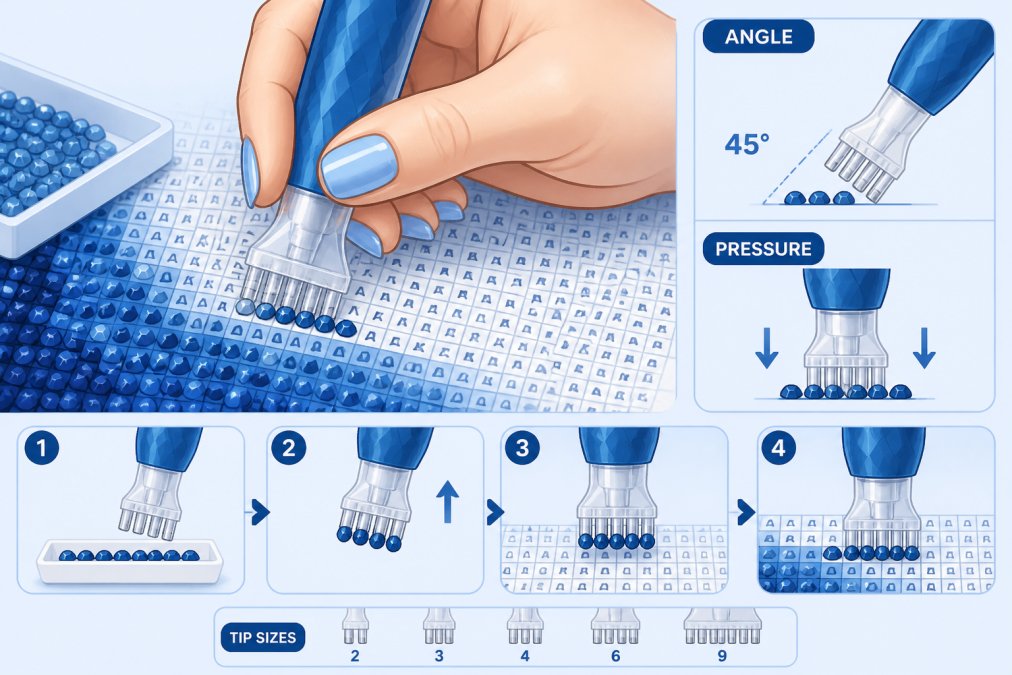
Multi-placer tips hold multiple drills simultaneously, allowing you to place several pieces in one motion. This dramatically accelerates work on sections with repeated colors or patterns. Instead of dip-place-dip-place-dip-place, you dip once, position multiple drills, and move forward.
Using a multi-placer tip requires slightly different technique than single-placer work. The tip has multiple contact points, usually arranged in a grid pattern matching common drill configurations. You dip the entire tip into your wax, ensuring all contact points pick up drills, then position all drills simultaneously on the canvas grid with gentle pressure.
The efficiency gain is substantial on projects with large blocks of single color. A section with 100 drills of the same color takes 100 placements with a single-placer tip; with a 4-placer tip, that same section takes 25 placements. Multi-placer tips require practice to master, the key is ensuring all contact points make equal contact with drills during the dip.
When to Choose Single-Placer vs Multi-Placer
Single-placer tips excel at detailed work where drills are scattered or color changes frequently. Multi-placer tips excel on sections with large blocks of single color or repeated patterns. Most serious crafters use both, keeping a single-placer tip for detailed work and switching to multi-placer tips when the design permits.
Material and Durability Differences
The materials used in diamond drill pens directly affect functional longevity and performance consistency.
Metal vs Plastic Construction
Metal tips, typically stainless steel or brass, outperform plastic tips across every durability metric. Metal maintains its shape through thousands of placements. A metal tip might remain functional through 50,000+ placements; a plastic tip might degrade noticeably by 10,000 placements.
Metal barrels provide additional benefits. Metal distributes heat better than plastic, so your hand stays cooler during extended sessions. Metal resists wear from repeated gripping better than plastic, maintaining surface texture longer. Plastic construction has one advantage: cost. For serious crafters completing multiple projects per year, metal construction's durability pays for itself through extended tool life.
Wax-Holding Tip Longevity
Quality specialized pens use wax formulations that maintain tackiness through thousands of placements without becoming gummy or too stiff. Lower-quality wax hardens over time, losing its grip on drills. Quality wax resists this degradation, maintaining consistent performance across extended use.
The wax also affects release behavior. Wax that's too sticky holds drills too long, making placement difficult. Wax that's too loose doesn't hold drills during positioning. Specialized pens use formulations that balance holding drills securely during placement while releasing cleanly when you want them to stay on the canvas.
Refillable tips extend tool life indefinitely. Once the wax depletes or the tip wears, you replace just the tip, not the entire pen.
Compatibility with Square and Round Drills
Diamond drills come in two primary shapes: square and round. Square drills have flat edges and sit flush against adjacent drills, creating a seamless, mosaic-like appearance. Round drills are spherical and leave small gaps between pieces.
Square drills require more precise tip contact because their edges create specific pickup points. A tip designed for square drills has geometry optimized for these contact points. Round drills are more forgiving because their spherical shape provides contact points from multiple angles.
Specialized pens are typically designed for one or the other, allowing optimization for that specific drill type. Most serious crafters choose to specialize and keep pens matched to their preferred drill type.
Common Mistakes to Avoid
The most common mistake is assuming all diamond painting pens are interchangeable. Overloading the tip with wax doesn't mean better grip; it means drills stick too long and become difficult to release. Using the wrong tip for your drill shape creates constant frustration.
Neglecting tip maintenance shortens tool life. Wiping your tip regularly with a soft cloth keeps it functional. Pressing too hard during placement damages both the tip and canvas, gentle, consistent pressure is all that's needed. Switching between pens constantly without understanding the differences creates confusion about what's causing problems.
Choosing specialized diamond drill pens comes down to recognizing that diamond painting is an extended, repetitive activity where tool quality directly affects your comfort and results. A generic pen might get you through a small project, but a specialized pen transforms larger projects from endurance tests into enjoyable creative experiences.
Jeanne Argent Atelier includes specialized drill pens with every premium kit because original artwork deserves tools matched to its quality. The pens are ergonomically designed to support extended sessions, precision-engineered for consistent placement, and built from durable materials that maintain performance across multiple projects. When you invest in a kit featuring original designs, the specialized pen ensures that investment pays off through completed projects and genuine satisfaction with the finished piece.
Frequently Asked Questions
What are the main benefits of using a specialized diamond painting pen?
Specialized diamond drill pens offer ergonomic grip design that reduces hand cramping during long sessions, improved precision placement for better bead alignment, multi-placer tips that speed up confetti-heavy areas, and superior wax application that keeps drills adhered to the sticky canvas. They're engineered specifically for diamond painting, unlike generic craft tools, making the entire experience more comfortable and producing higher-quality results.
How do ergonomic diamond painting tools reduce hand fatigue?
Ergonomic diamond painting tools feature contoured grips that distribute pressure evenly across your palm and fingers, reducing strain on specific pressure points. The balanced weight distribution prevents your hand from tiring quickly, and the proper grip angle decreases tension in your wrist and forearm. For crafters with arthritis or those doing long-session projects, these design features make it possible to work for hours without pain or cramping.
What is the difference between single-placer and multi-placer tips?
Single-placer tips pick up and place one drill at a time, offering maximum control and precision for detailed work or square drills that require exact alignment. Multi-placer tips hold multiple drills simultaneously, making them ideal for round drills and confetti-heavy areas where speed matters more than perfect placement. Choosing the right tip for your project section saves time and reduces hand fatigue by matching the tool to the task.
Are specialized drill pens compatible with all diamond painting kits?
Specialized diamond drill pens work with most standard diamond painting kits, but compatibility depends on whether your canvas uses square or round drills and the drill pen's tip calibration. Premium kits like those from Jeanne Argent Atelier are specifically designed to work seamlessly with quality drill pens, ensuring optimal bead pickup and canvas adhesion. Always check your kit's specifications to confirm your pen matches the drill type included.
This article was written using GrandRanker