21 August 2026
Diamond Painting vs Cross Stitch: A Complete 2026 Comparison
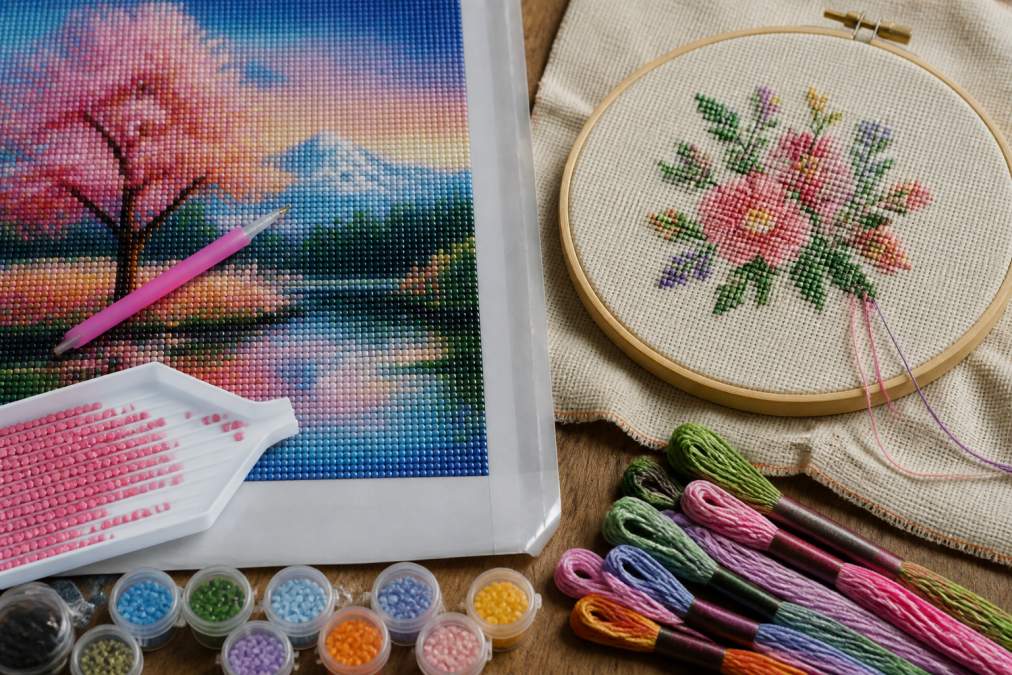
Table of Contents
- Diamond Painting Kits vs Cross Stitch: An Overview
- Side-by-Side Comparison Table
- Key Differences in Technique and Materials
- How Long Does a Diamond Painting Take vs Cross Stitch
- Best Diamond Painting Tools and Cross Stitch Equipment
- Cost Comparison: Kits, Materials, and Long-Term Investment
- Skill Level, Learning Curve, and Physical Comfort
- Cross Stitch Patterns for Diamond Painting and Hybrid Approaches
Last Updated: August 22, 2026
Diamond Painting Kits vs Cross Stitch: An Overview
Diamond painting and cross stitch are two distinct fiber crafts that have captivated millions of hobbyists seeking mindful, screen-free creative outlets. While both involve placing small materials onto fabric to create finished artwork, the techniques, tools, time commitments, and physical demands differ significantly. Understanding these differences helps you choose the craft that aligns with your skill level, budget, and lifestyle.
At Jeanne Argent Atelier, we've worked extensively with serious diamond painting enthusiasts who value the meditative quality of the craft combined with stunning, gallery-worthy results. The distinction between diamond painting vs cross stitch comes down to fundamentals: diamond painting uses resin drills and an applicator tool on adhesive canvas, while cross stitch relies on embroidery floss and needle work on counted fabric. Each offers unique rewards and challenges.
This guide covers everything you need to make an informed decision: the mechanics of each craft, time investment, material costs, ergonomic considerations, and which approach suits different skill levels and artistic goals. Whether you're drawn to the sparkle of finished diamond art or the textured elegance of cross-stitched needlework, the right choice depends on your priorities.
Side-by-Side Comparison Table
| Aspect | Diamond Painting | Cross Stitch |
|---|---|---|
| Primary Material | Resin drills (full or partial) | Embroidery floss (DMC thread) |
| Canvas/Fabric | Adhesive canvas with printed grid | Aida cloth or evenweave fabric |
| Primary Tool | Applicator tool with wax caddy | Needle and embroidery hoop |
| Skill Entry Level | Beginner-friendly, minimal learning curve | Beginner-friendly with practice |
| Average Project Time | 20-60 hours (varies by size) | 40-120+ hours (varies by complexity) |
| Physical Demands | Repetitive hand/wrist motion, eye strain | Finger dexterity, hand tension, posture |
| Finished Aesthetic | Sparkly, mosaic-like, reflective | Textured, matte, traditional textile look |
| Kit Cost Range | Varies; premium kits offer original art | Typically lower entry cost |
| Learning Curve Steepness | Gentle; most complete first project successfully | Moderate; pattern reading required |
| Best For | Those seeking quick completion and sparkle | Those valuing traditional textile arts |
Key Differences in Technique and Materials
Diamond Painting Process
Diamond painting involves placing small resin drills onto an adhesive canvas using a specialized applicator tool. The canvas comes pre-printed with a color-coded grid system that guides placement. Each drill corresponds to a color symbol on the chart, making the process straightforward: pick up a drill with the wax caddy, place it onto the applicator tool, and press it firmly onto the canvas.
The process requires minimal technical skill. Even first-time crafters complete their projects successfully because the grid system eliminates guesswork. Full-drill designs cover the entire canvas with diamonds, creating a complete, sparkly mosaic. Partial-drill designs leave some background canvas visible, reducing time and material cost while still producing striking results.
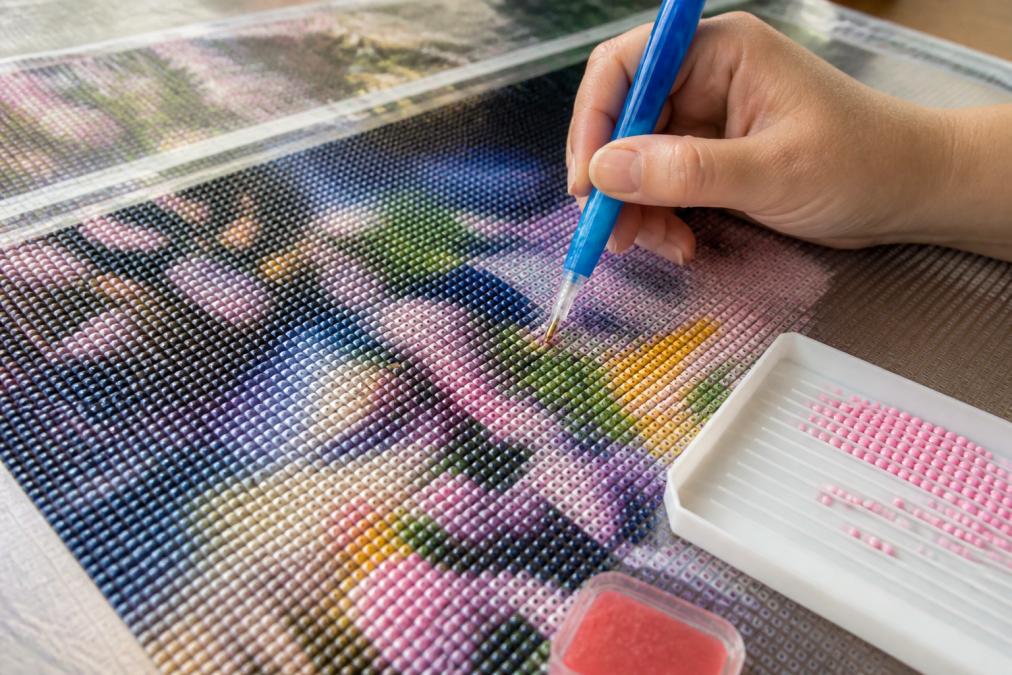
The repetitive nature of diamond painting, pick, place, press, creates a meditative rhythm that many crafters find deeply relaxing. The sensory feedback of handling the drills and watching the canvas transform provides immediate gratification. Quality matters significantly here: premium kits like those from Jeanne Argent Atelier use original artwork and higher-quality adhesive canvas, ensuring drills stay securely in place and the finished piece displays true color accuracy.
Cross Stitching Process
Cross stitch requires threading embroidery floss through a needle and making X-shaped stitches on counted fabric. The crafter follows a printed pattern chart, counting fabric threads to determine stitch placement. Each symbol on the chart corresponds to a specific floss color, and the pattern guides the sequence of stitches.
Unlike diamond painting, cross stitch demands active pattern reading and spatial awareness. You must track your position on the chart, count threads accurately, and maintain consistent tension throughout. The learning curve is gentler than it appears, most beginners grasp the basic X stitch within minutes, but mastering tension, managing thread tangles, and completing larger projects requires practice and patience.
Cross stitch kits from established manufacturers like DMC and Caterpillar Cross Stitch include pre-sorted floss, printed patterns, needles, and Aida fabric. The community aspect of cross stitch is notable: many crafters participate in stitch-a-long events and online groups, creating a social dimension absent from solitary diamond painting sessions.
How Long Does a Diamond Painting Take vs Cross Stitch
The time commitment differs substantially between these crafts, influencing which suits your lifestyle and project expectations.
Diamond painting typically requires 20 to 60 hours for completion, depending on canvas size and whether you choose full-drill or partial-drill designs (peer-reviewed research). A small 8x10 inch canvas might take 15-20 hours, while a large 16x20 inch full-drill piece demands 50-80 hours. The straightforward process, pick, place, press, means consistent progress without technical slowdowns. Many crafters report completing a project in 2-4 weeks of casual evening work.
Cross stitch projects demand significantly more time. A simple beginner kit might require 40-60 hours, while complex designs with fine detail and intricate color work easily exceed 100-150 hours (peer-reviewed research). The pattern-reading requirement and stitch count complexity extend timelines. A 14-count Aida cloth design with 100,000+ stitches represents a multi-month commitment for most crafters working casually.
If you seek faster completion and visible progress, diamond painting delivers more immediate satisfaction. If you value the meditative, long-form journey of building something stitch by stitch, cross stitch offers deeper immersion. The choice reflects your relationship with time: do you want a finished piece quickly, or do you prioritize the extended creative process?
Best Diamond Painting Tools and Cross Stitch Equipment
Diamond Painting Tools
Quality tools dramatically improve the diamond painting experience. The applicator tool, the primary instrument, comes in various designs: some use a hollow tip that picks up drills via static, while others employ a wax-coated tip for grip. The wax caddy holds the adhesive substance that helps drills stick to the applicator.
Premium kits include ergonomically designed applicator pens that reduce hand fatigue during extended sessions. Jeanne Argent Atelier includes specialized drill pens and trays in their full-drill kits, ensuring precise placement and comfort. Additional helpful tools include:
- Multi-placer tools for faster coverage (pick up multiple drills at once)
- Tray organizers to separate drills by color and prevent mixing
- Light pads or magnifying lamps to reduce eye strain
- Canvas roller or frame to manage large pieces and maintain tension
The canvas itself matters. Adhesive quality determines whether drills stay permanently affixed or gradually pop off. Premium kits use stronger adhesive formulations that ensure long-term durability, making the finished piece suitable for framing and display.
Cross Stitch Tools
Cross stitch requires fewer specialized tools but demands quality in what you use. Essential equipment includes:
- Embroidery needle (size varies by fabric count)
- Embroidery hoop or frame to maintain fabric tension
- Scissors for thread cutting
- Needle threader (helpful for beginners)
- Pattern chart and color guide
The embroidery hoop keeps fabric taut, preventing puckering and ensuring even stitch tension. Wooden hoops provide better grip than plastic. Many cross stitchers invest in scroll frames or Q-snaps for larger projects, which distribute tension more evenly than traditional hoops.
Thread quality affects the finished piece's appearance. DMC floss, included in quality kits, offers colorfast, durable thread that maintains vibrancy through years of display. Caterpillar Cross Stitch kits pre-sort floss by color, eliminating the frustration of matching thread colors yourself.
Cost Comparison: Kits, Materials, and Long-Term Investment
Understanding the financial commitment helps align your choice with your budget and crafting frequency.
Diamond painting kits vary widely in price depending on canvas size, drill quality, and whether the design uses original artwork. The advantage of diamond painting is predictability: a kit includes everything needed, and additional supplies (extra drills, adhesive) cost minimal amounts. Long-term investment remains low because you're not continuously repurchasing materials for new projects.
Cross stitch kits typically offer lower entry costs than premium diamond painting kits. A quality DMC kit ranges from approximately $12.99 to $54.99+, making cross stitch accessible for budget-conscious crafters. However, serious cross stitchers accumulate costs over time: specialty threads, additional hoops, frames, and pattern charts add up. If you pursue cross stitch extensively, the lifetime investment can exceed diamond painting, even though individual kits cost less.
Consider this: a single large diamond painting project from Jeanne Argent Atelier, with premium original artwork, quality drills, and specialized tools, represents a one-time investment in a finished masterpiece. Cross stitch, while cheaper per kit, often becomes a ongoing hobby requiring continuous material purchases and frame investments.
For gift-giving, diamond painting kits offer clear value: the recipient receives a complete, premium experience. Cross stitch requires the giver to understand the recipient's skill level and preferences, making kit selection more nuanced.
Skill Level, Learning Curve, and Physical Comfort
Beginner Accessibility
Both crafts welcome beginners, but they differ in difficulty curves.
Diamond painting is genuinely beginner-friendly. The color-coded grid system and straightforward pick-place-press process mean first-time crafters complete projects successfully. No prior artistic experience required. Most people grasp the technique within minutes and achieve satisfying results immediately. This accessibility explains diamond painting's explosive popularity among people seeking creative outlets without intimidation.
Cross stitch has a gentler initial learning curve than its reputation suggests. The basic X stitch is simple to learn, most beginners master it in their first session. However, maintaining consistent tension, reading complex patterns, and managing thread tangles present challenges that emerge after the first few hours. Beginners often struggle with puckered fabric or uneven stitches before developing muscle memory.
For absolute beginners or those with limited crafting experience, diamond painting offers faster gratification and lower frustration. For crafters willing to invest in the learning process, cross stitch's moderate learning curve leads to deeper skill development.
Ergonomics and Long-Term Health Impact
Extended crafting sessions demand attention to posture and physical strain, particularly for those with arthritis, carpal tunnel, or chronic pain.
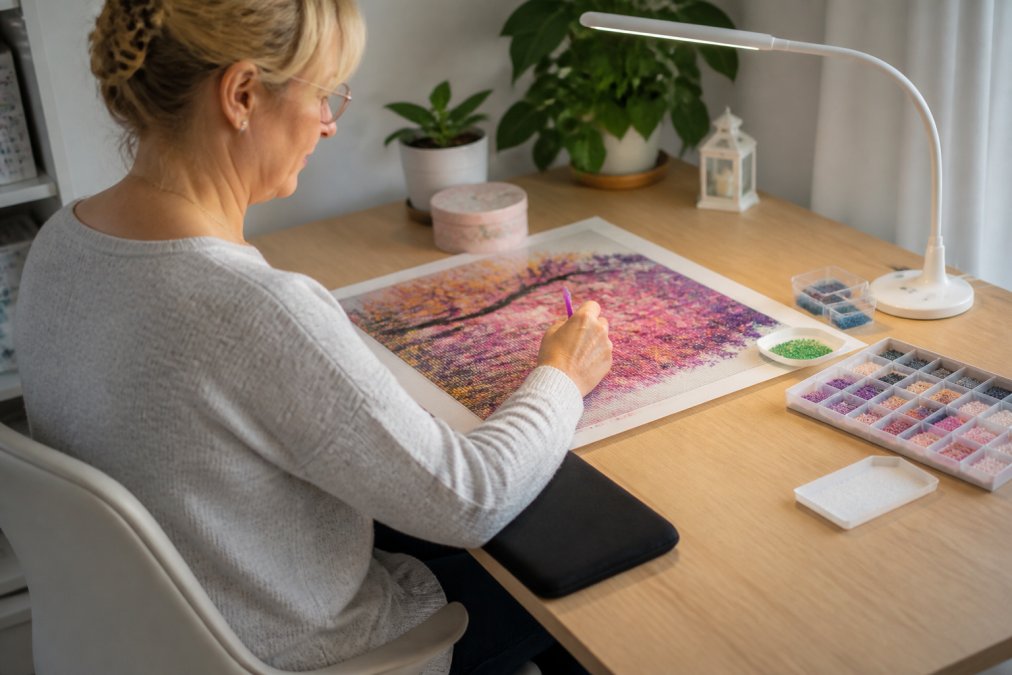
Diamond painting creates repetitive strain primarily in the wrist, hand, and fingers. The pick-place-press motion, performed thousands of times per project, can cause tendonitis or exacerbate existing carpal tunnel syndrome (the CDC). However, the motion is gentler than cross stitch stitching because it doesn't require gripping tension or finger dexterity. Quality applicator tools with ergonomic design reduce strain significantly. Taking frequent breaks, using wrist supports, and maintaining proper posture mitigate risk.
Cross stitch demands sustained grip tension on the needle and careful finger positioning to control stitch depth. The repetitive needle-threading and pulling motion can stress the hands, wrists, and shoulders. Crafters with arthritis often report pain after extended sessions. The fabric tension required by hoops can also create shoulder and neck strain if posture isn't carefully managed.
For crafters with existing hand or wrist conditions, diamond painting is generally the gentler choice, especially when using premium ergonomic tools. Cross stitch requires more careful attention to breaks, stretching, and postural support. Neither craft is inherently harmful, but individual tolerance varies significantly based on existing conditions and tool quality.
Cross Stitch Patterns for Diamond Painting and Hybrid Approaches
A growing trend among experienced crafters involves hybrid techniques that combine elements of both crafts or adapt cross stitch patterns for diamond painting.
Some crafters convert cross stitch patterns into diamond painting designs by treating each counted stitch as a diamond placement. This approach allows you to use beloved cross stitch charts while enjoying the faster completion and sparkly aesthetic of diamond painting. The conversion requires translating the pattern grid and color palette, but the result is a unique, personalized diamond painting.
Jeanne Argent Atelier's original artwork designs can inspire similar hybrid thinking: the structured color palettes and grid systems in diamond painting share conceptual DNA with counted cross stitch. Crafters familiar with both techniques often appreciate how each emphasizes different aspects of the same fundamental principle: translating a visual design onto a substrate through repetitive, meditative placement.
Another hybrid approach involves using cross stitch techniques on diamond painting canvases, creating mixed-media pieces that combine resin drills with embroidery floss accents. While unconventional, this allows artistic expression beyond the boundaries of either craft alone.
For crafters seeking novelty or looking to deepen their creative practice, exploring hybrid techniques offers fresh engagement with familiar tools and processes.
Choosing between diamond painting and cross stitch ultimately reflects your priorities: speed versus journey, sparkle versus texture, meditative simplicity versus active skill-building. If you value stunning finished pieces created quickly with minimal technical challenge, diamond painting delivers immediate gratification. Jeanne Argent Atelier's full-drill kits with original artwork and specialized tools make the experience premium and rewarding. Visit Jeanne Argent Atelier to explore curated collections designed for serious artists seeking high-quality creative experiences.
=== FAQ ANSWERS (audit these too, same rules) ===
[1] Q: Which is easier for beginners: diamond painting or cross stitch? A: Diamond painting is generally easier for beginners. The process is more intuitive, you apply resin drills to a numbered canvas using an applicator tool, similar to paint-by-numbers. Cross stitch requires learning proper stitching technique, understanding color coding, and maintaining consistent tension on embroidery floss. Most beginners complete their first diamond painting project successfully, while cross stitch has a steeper initial learning curve.
[2] Q: How long does a diamond painting take compared to cross stitch? A: Diamond painting typically takes 20-40 hours for a standard full-drill kit, depending on size and detail. Cross stitch projects of similar finished dimensions often require 40-80+ hours because each stitch must be individually placed and tied off. Smaller cross stitch projects may take less time, but the repetitive nature of stitching makes cross stitch generally slower than the rhythmic placement of diamond drills.
[3] Q: Can you use cross stitch patterns for diamond painting projects? A: Cross stitch patterns can be adapted for diamond painting, but direct conversion is not straightforward. Cross stitch patterns use symbol charts and typically feature more intricate color gradations. Diamond painting patterns use numbered grids. Some crafters use hybrid techniques, combining elements of both, but most diamond painting kits are designed specifically for the medium. Jeanne Argent Atelier's full-drill kits, for example, are crafted from original artwork optimized for diamond placement, not cross stitch conversion.
[4] Q: What are the main differences in tools between diamond painting and cross stitch? A: Diamond painting requires an applicator tool (drill pen), wax caddy, multi-placer for efficiency, and a tray for organizing resin drills. Cross stitch needs embroidery needles, embroidery floss (often DMC thread), an embroidery hoop for tension control, and scissors. The best diamond painting tools include ergonomic drill pens and trays that reduce hand strain during long sessions. Cross stitch tools focus on precision needlework and thread management.
[5] Q: Is diamond painting considered needlework like cross stitch? A: Diamond painting and cross stitch are both fiber and decorative arts, but they are distinct crafts. Cross stitch is traditional needlework, you use needle and thread to create stitches on Aida cloth or evenweave fabric. Diamond painting uses resin drills and adhesive canvas, making it more similar to mosaic or pixel art. Both offer the same mindfulness benefits and stress relief, but diamond painting is not technically needlework in the traditional embroidery sense.
Frequently Asked Questions
Which is easier for beginners: diamond painting or cross stitch?
Diamond painting is generally easier for beginners. The process is more intuitive, you apply resin drills to a numbered canvas using an applicator tool, similar to paint-by-numbers. Cross stitch requires learning proper stitching technique, understanding color coding, and maintaining consistent tension on embroidery floss. Most beginners complete their first diamond painting project successfully, while cross stitch has a steeper initial learning curve.
How long does a diamond painting take compared to cross stitch?
Diamond painting typically takes 20-40 hours for a standard full-drill kit, depending on size and detail. Cross stitch projects of similar finished dimensions often require 40-80+ hours because each stitch must be individually placed and tied off. Smaller cross stitch projects may take less time, but the repetitive nature of stitching makes cross stitch generally slower than the rhythmic placement of diamond drills.
Can you use cross stitch patterns for diamond painting projects?
Cross stitch patterns can be adapted for diamond painting, but direct conversion is not straightforward. Cross stitch patterns use symbol charts and typically feature more intricate color gradations. Diamond painting patterns use numbered grids. Some crafters use hybrid techniques, combining elements of both, but most diamond painting kits are designed specifically for the medium. Jeanne Argent Atelier's full-drill kits, for example, are crafted from original artwork optimized for diamond placement, not cross stitch conversion.
What are the main differences in tools between diamond painting and cross stitch?
Diamond painting requires an applicator tool (drill pen), wax caddy, multi-placer for efficiency, and a tray for organizing resin drills. Cross stitch needs embroidery needles, embroidery floss (often DMC thread), an embroidery hoop for tension control, and scissors. The best diamond painting tools include ergonomic drill pens and trays that reduce hand strain during long sessions. Cross stitch tools focus on precision needlework and thread management.
Is diamond painting considered needlework like cross stitch?
Diamond painting and cross stitch are both fiber and decorative arts, but they are distinct crafts. Cross stitch is traditional needlework, you use needle and thread to create stitches on Aida cloth or evenweave fabric. Diamond painting uses resin drills and adhesive canvas, making it more similar to mosaic or pixel art. Both offer the same mindfulness benefits and stress relief, but diamond painting is not technically needlework in the traditional embroidery sense.
This article was written using GrandRanker