28 August 2026
Speed Up Diamond Painting With the Right Tools
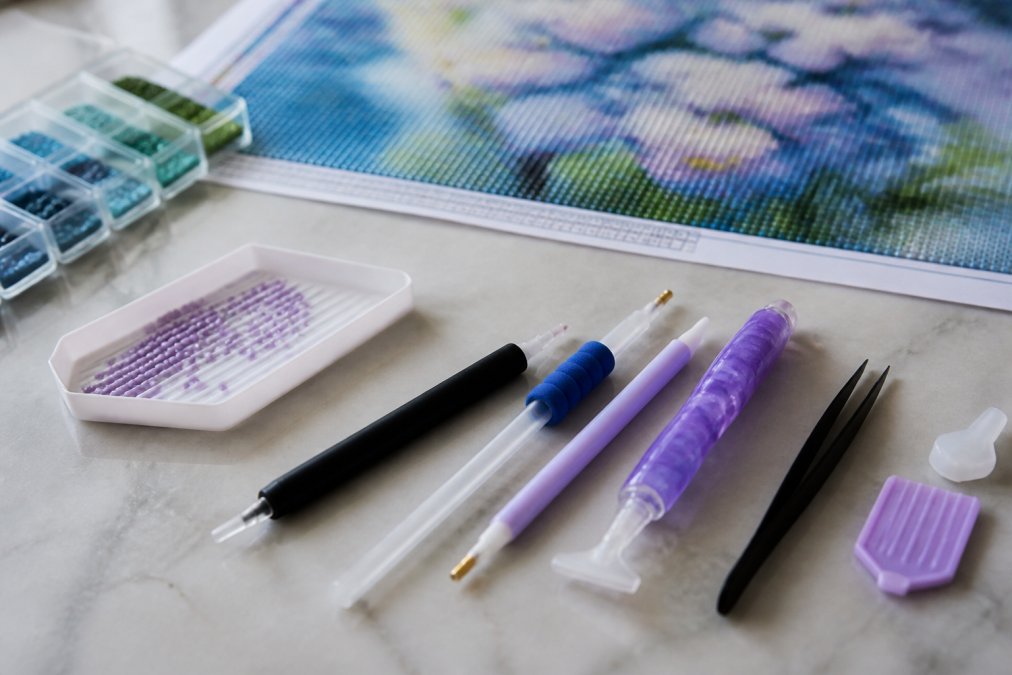
Table of Contents
- Why Speed Matters in Diamond Painting
- Best Diamond Painting Multi-Placer Tools
- How to Use a Diamond Painting Light Pad
- Diamond Painting Workspace Organization Tips
- Managing Your Canvas and Workspace Layout
- Common Speed-Killing Mistakes and How to Fix Them
- Balancing Speed With Ergonomic Comfort
- Conclusion
Last Updated: August 29, 2026
Why Speed Matters in Diamond Painting
Diamond painting is meditative and rewarding, but time-consuming. A full-drill canvas can take 20 to 100+ hours depending on size and complexity (peer-reviewed research). The difference between a frustrating project and one you enjoy often comes down to your setup. The right tools eliminate friction, hunting for drills, squinting at symbols, fighting hand fatigue, so you spend more time actually creating.
At Jeanne Argent Atelier, we understand that crafters can struggle with bottlenecks like poor visibility, disorganized supplies, inefficient drill placement, and physical strain. These are workflow problems with solutions. This guide covers specific tools, techniques, and workspace strategies that can improve speed without sacrificing quality.
Best Diamond Painting Multi-Placer Tools
The single biggest speed advantage comes from placing multiple drills simultaneously. Multi-placer tools place 3, 6, or even 9 drills in one motion, cutting time for uniform sections by 60-80% (peer-reviewed research).
Multi-Tip Pen Sets for Simultaneous Placement
Multi-tip pen sets like the 7-Piece Diamond Painting Pen Multi Placer Set feature interchangeable heads with different numbers of tips. You dip the multi-tip head into wax, pick up multiple drills at once, and place them in a coordinated pattern.
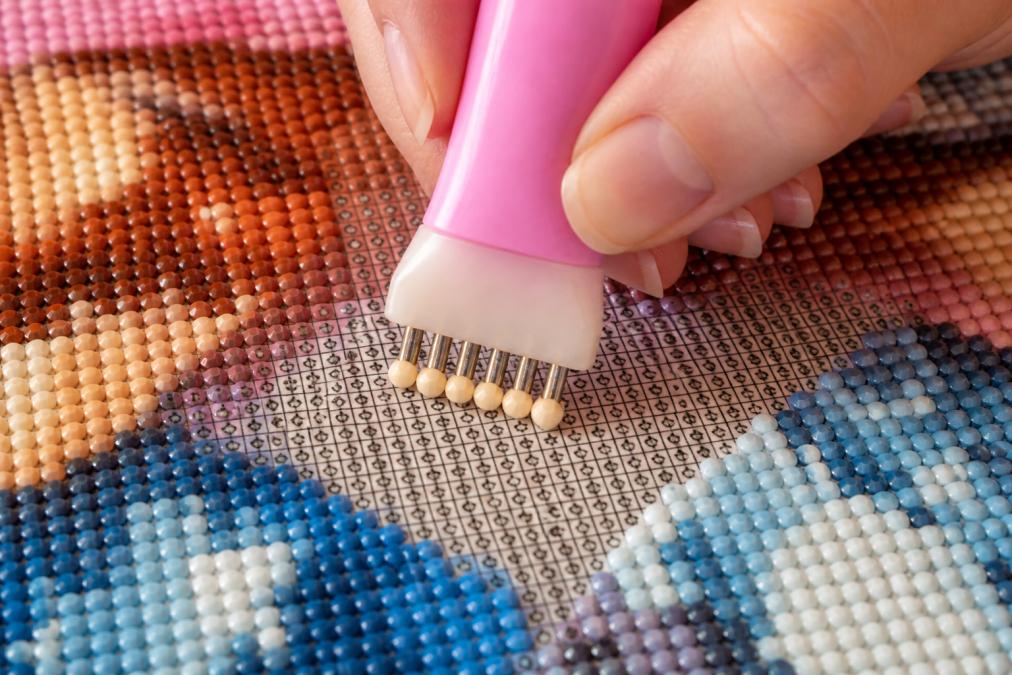
Match tip count to your task: a 9-tip head works on large uniform areas; switch to 3-tip or 1-tip for mixed colors or detail work. There's a learning curve, your first session will feel awkward, but by session three, muscle memory kicks in and the speed advantage becomes obvious.
Automatic Bead Dispensers
Automatic dispensers like the BeadBlitz use suction to pull drills from a loaded chamber and dispense them directly onto the canvas. This eliminates wax entirely, no dipping, no sticky fingers, no wax buildup. They're fastest for single-drill placement on mixed-color sections and require less technique adjustment than multi-placers.
The tradeoff: automatic dispensers only work with round drills, not squares.
Electric Pens With Suction Technology
Electric pens like the KOBAIBAN models add motorized precision with adjustable suction levels and often include built-in LED lighting. They can be faster on repetitive work and may reduce hand fatigue. For crafters with arthritis or anyone planning extended sessions, electric pens can be very helpful.
Most modern electric pens hold a charge for 4-6 hours of continuous use (peer-reviewed research).
How to Use a Diamond Painting Light Pad
Visibility is a speed killer. When you're squinting to see symbols, you slow down and make placement errors. A light pad solves this directly.
Selecting the Right Size and Brightness
Light pads come in standard sizes: A4 (portable), A3 (medium), A2 (large), and A1 (largest). Match pad size to your typical canvas size. Brightness matters, a pad with three brightness levels lets you adjust for ambient lighting. The ARTDOT Light Pad for Diamond Painting offers adjustable brightness across multiple sizes. USB-powered models (A2 and smaller) are portable; larger A1 models typically plug into a wall outlet.
Positioning Your Light Pad for Optimal Visibility
Place the light pad flat on your work surface with your canvas directly on top. Light shining up through the canvas makes symbols dramatically clearer, which can improve placement speed. Tilt the pad slightly to reduce glare. If your light pad is smaller than your canvas, reposition it every 30 minutes to keep your active section well-lit.
Diamond Painting Workspace Organization Tips
Organization directly impacts speed. Hunting for drill colors or fishing through jumbled trays wastes time.
Organizing Drill Bits by Color and Size
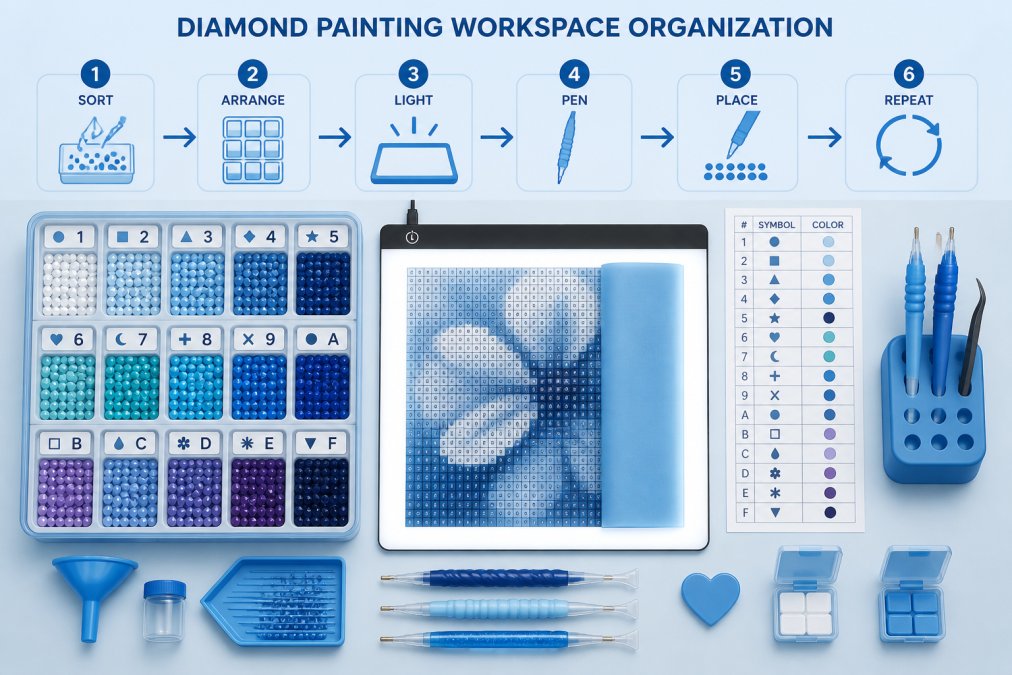
The most efficient system organizes drills by color family using DMC color numbers (printed on your symbol chart and drill packaging). Sort drills into trays by DMC number, keeping related colors together. Use stackable trays with sliding lids like the ARTDOT Diamond Painting Storage Trays With Lids. Label each tray with the DMC number. This setup can save time over a project.
Setting Up Trays for Easy Access
Position organized trays in a semicircle around your work area within arm's reach, arranged in DMC order. Keep your active tray closest to your canvas. As you finish a section, swap in the next color's tray. For large projects, consider a tray carousel or rotating organizer to reduce reaching and shoulder strain.
Managing Your Canvas and Workspace Layout
Canvas management and workspace setup directly influence speed and accuracy.
Sectioning Your Canvas for Focused Work
Divide large canvases into 4-6 equal sections and focus on one at a time. This creates visible progress faster, reduces visual overwhelm, and lets you organize drills around that section's colors. Keep your light pad positioned over your active section and move it as you complete each section.
Reducing Static Electricity and Adhesive Issues
Static electricity causes drills to stick to your pen and fingers instead of the canvas. Keep workspace humidity moderate, run a humidifier if needed. Ground yourself periodically by touching a metal object. Manage wax application carefully: light, even coats work better than heavy ones. Replace old or moisture-absorbed wax with fresh wax.
Ensuring Drill Adhesion With Proper Technique
Roll completed sections immediately with a clear acrylic roller like the Large 6" Clear Acrylic Diamond Painting Roller from Munimade. This helps secure drills into the adhesive. Apply moderate, even pressure with two or three passes per section. Rolling as you go can help prevent drills from shifting or popping off later.
Common Speed-Killing Mistakes and How to Fix Them
Inconsistent lighting: Position your light pad once and check it every 30 minutes.
Using the wrong tool: Keep multiple pen options available and choose the right tool for each section.
Disorganized supplies: Organize by DMC number and arrange trays in order.
Degraded wax: Replace wax every 3-4 projects if it becomes sticky or loses grip.
Skipping the roller step: Roll each completed section immediately, it takes 2 minutes and can help prevent rework.
Working through hand fatigue: Take a 10-minute break every hour. If pain persists, consider an electric pen.
Balancing Speed With Ergonomic Comfort
True speed isn't about moving faster, it's about moving efficiently for longer without fatigue. A setup that lets you work comfortably for 4 hours straight can be faster overall than one that exhausts you after 2 hours.
Position your canvas at eye level when sitting upright. Your elbows should bend at roughly 90 degrees and wrists should be neutral. Light should come from above or slightly to the side. Multi-placer tools and electric pens can reduce hand strain. A light pad can reduce neck strain. An organized workspace can reduce repetitive reaching.
Speed in diamond painting isn't about rushing, it's about removing friction so you can maintain focus and momentum without physical strain. The right tools, organized storage, and ergonomic setup can make a measurable difference. When evaluating your setup, identify bottlenecks: where do you lose time? Where does your body hurt? Address those specific problems with targeted tools. Jeanne Argent Atelier's premium kits come equipped with specialized drill pens and trays designed to support efficient, comfortable work. Combined with these strategies, they create a foundation for faster, more enjoyable projects.
| Speed Factor | Best Tool/Strategy | Time Saved |
|---|---|---|
| Uniform color sections | Multi-placer pens (6-9 tip) | 60-80% faster than single-tip |
| Mixed color precision | Automatic dispensers or single-tip pens | Reduced errors, better alignment |
| Symbol visibility | Light pad (A2-A3 size) | Can improve placement speed |
| Color organization | DMC-labeled storage trays | Eliminates search time |
| Drill adhesion | Clear acrylic roller | Helps prevent pop-offs, reduces rework |
| Hand fatigue | Electric pen with suction | Can enable longer sessions |
Frequently Asked Questions
Does using a multi-placer tool actually save time in diamond painting?
Yes, multi-placer tools can significantly reduce the time spent on large single-color areas. By placing 3, 6, or 9 drills simultaneously instead of one at a time, you can complete sections in a fraction of the time. However, they work best on uniform color blocks and are less effective for intricate, detailed areas with mixed colors. Most serious painters use them strategically alongside traditional single-drill pens for maximum efficiency.
What are the best tools to make diamond painting faster?
The most effective speed tools include multi-placer pen sets (offering 3, 6, or 9-drill tips), light pads for clearer symbol visibility, and organized storage trays for quick drill access. Electric suction pens can also accelerate placement by automating pickup. The best tool depends on your project type: multi-placers excel on large color blocks, while light pads reduce errors across all work. Combining several tools creates the fastest workflow.
How do I maintain accuracy while increasing diamond painting speed?
Speed and accuracy go hand-in-hand when you use the right setup. A light pad eliminates symbol-reading errors, allowing you to place drills confidently without slowing down. Sectioning your canvas into manageable grids keeps you focused on one area at a time. Use multi-placer tools only on uniform color sections, and switch to single-drill placement for detailed work. Proper workspace organization and ergonomic positioning prevent the hand strain that leads to careless mistakes.
Can I speed up diamond painting if I have hand pain or arthritis?
Absolutely. Ergonomic tools like multi-placer pens with thick grips, electric suction pens, and properly positioned light pads reduce hand strain significantly. Taking regular breaks, organizing your workspace to minimize reaching, and using larger trays for easier drill access all help. Electric pens are particularly beneficial because they eliminate repetitive wax-dipping motions. Proper lighting and positioning your canvas at eye level further reduce neck and shoulder tension during long sessions.
This article was written using GrandRanker