29 July 2026
How to Read Diamond Painting Symbols: A Complete Guide
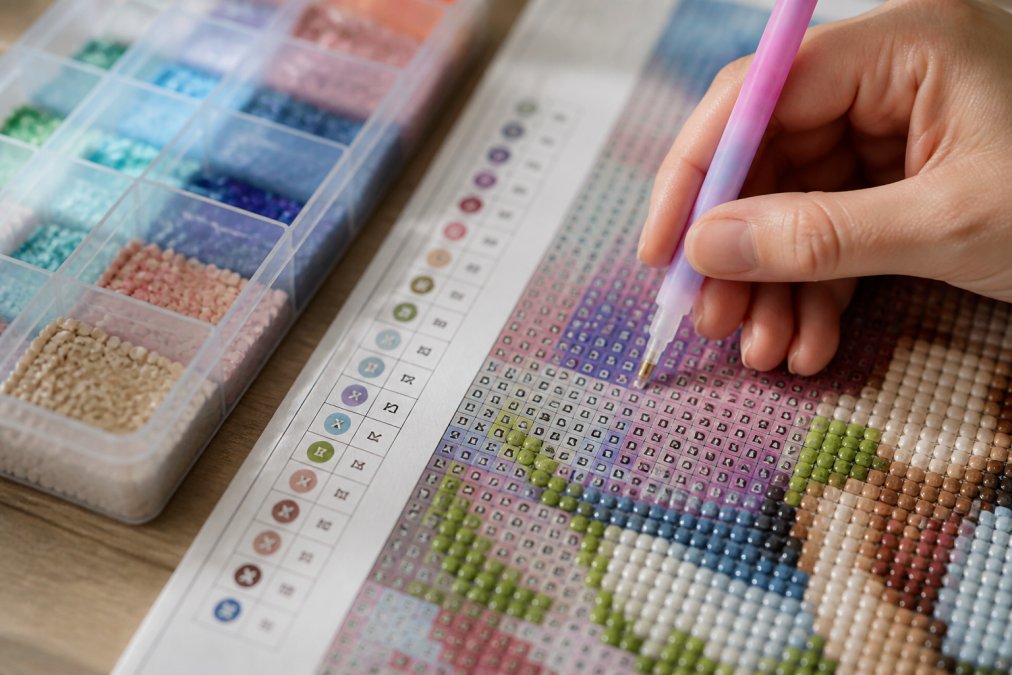
Table of Contents
- Understanding Diamond Painting Symbols and the Legend Key
- DMC Color Chart and Diamond Painting Color Codes
- Organizing Diamond Painting Drills by Symbol
- Reading Diamond Painting Kit Instructions and Symbol Charts
- Diamond Painting Tips for Beginners: Reading Symbols Correctly
- Troubleshooting Blurry, Misprinted, or Confusing Symbols
- Diamond Painting Terminology and Symbol Abbreviations
- Conclusion
How to Read Diamond Painting Symbols: A Complete Guide
Last Updated: July 30, 2026
Learning how to read diamond painting symbols is the foundation of completing any diamond painting project successfully. Once you understand the system, reading symbols becomes second nature. This guide breaks down exactly how to decode those tiny markings on your canvas so you can work with confidence from start to finish.
Understanding Diamond Painting Symbols and the Legend Key
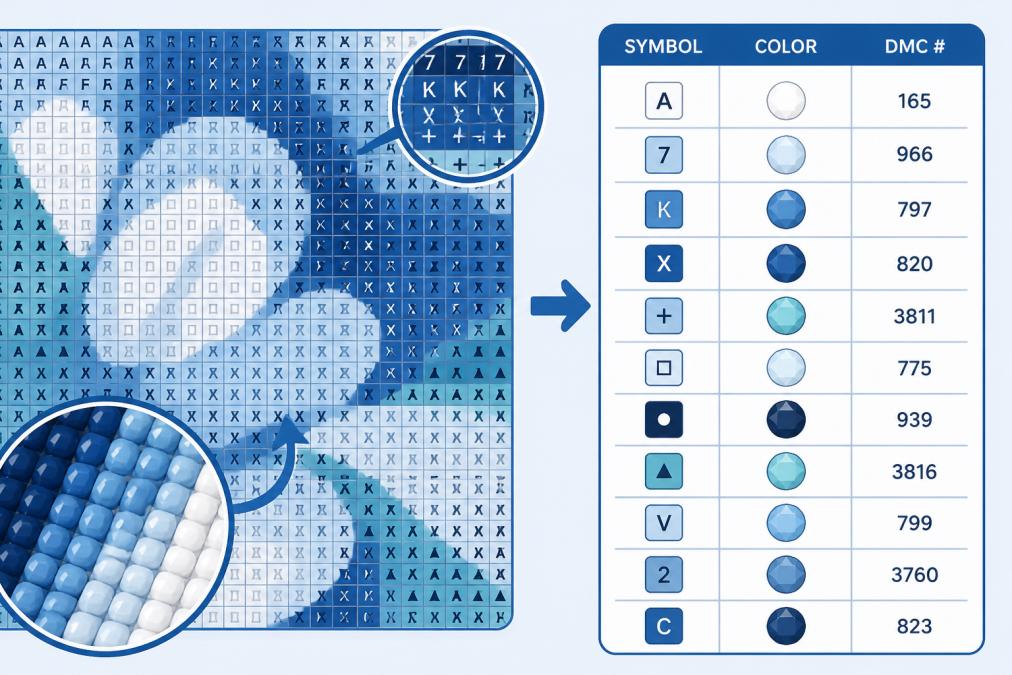
Diamond painting symbols are the visual language connecting your canvas to the drills you'll place. Each symbol represents a specific color of diamond drill, allowing you to know exactly which shade to pick up and where to place it.
The symbol key (also called a legend or color chart) is printed on your kit documentation or canvas margins. It maps every symbol on the canvas to a corresponding DMC color code and drill color. When you first open your kit, spend a few minutes familiarizing yourself with the legend and note which symbols appear most frequently on your canvas.
What Symbols Represent on Your Canvas
Symbols on your canvas are tiny printed marks, usually letters, numbers, or small pictographs, that occupy the same grid space as the adhesive area where you'll place a drill. A single symbol covers one cell of the canvas grid, and each cell corresponds to one diamond drill. There's no universal standard across manufacturers, but what matters is that the symbol on your canvas matches the symbol in your legend.
How the Symbol Key Works
The symbol key is organized with the symbol on one side and the corresponding DMC code and color swatch on the other. To use the key, locate a symbol on your canvas, find that symbol in the key, note the corresponding DMC code and color, then locate that drill in your organized inventory and apply it to the canvas.
DMC Color Chart and Diamond Painting Color Codes
DMC stands for Dollfus-Mieg et Compagnie, a French embroidery thread manufacturer. The DMC color numbering system has become the standard across the diamond painting industry. Each DMC number corresponds to a specific color shade, making it possible to order replacement drills or cross-reference colors across different kits. DMC codes are six-digit numbers (sometimes shown as three digits). For example, DMC 310 is black, DMC 666 is bright red, and DMC 959 is medium blue.
Decoding DMC Numbers
Each DMC number is unique to a color. The best approach is to match the DMC code to the actual drill color in front of you, not to memorize what the number means. When you see a DMC code in your legend, cross-reference it with the actual drill color provided in your kit.
Matching Colors to Your Drill Inventory
Before you start drilling, sort your drills by symbol, by DMC code, or by color family. Many crafters use small trays or containers labeled with the corresponding symbol or DMC code. When you pick up a drill, visually confirm it matches the color swatch in your legend. Lighting matters, natural daylight or a bright LED lamp reveals true colors, while dim lighting can make similar shades look identical.
Organizing Diamond Painting Drills by Symbol
How you organize your drills directly impacts your speed and accuracy. A chaotic drill setup means constant searching and increases the chance of placing the wrong color.
Sorting Drills Before You Start
Before opening your adhesive canvas, lay out all your drills in the order they appear in your legend. If your legend lists symbols A through Z, arrange your drill containers in that same sequence. Some kits come with drills pre-sorted in a tray with labeled compartments; if yours does, keep them in that tray during your project. If not, transfer drills into small containers, pill organizers, or bead trays and label each with the corresponding symbol and DMC code.
Using Trays and Labels for Easy Reference
A multi-compartment tray is essential during diamond painting. Each compartment holds one drill color, labeled with the symbol and DMC code. Position the tray next to your canvas so you can reference it without looking away from your work. Labels should be clear and large enough to read from arm's length. Some crafters use color-coded stickers to match the actual drill color, creating a visual shortcut.
Reading Diamond Painting Kit Instructions and Symbol Charts
Your kit's instruction sheet contains vital information: the complete symbol key, canvas dimensions, drill count, and sometimes troubleshooting tips.
What to Look for in Your Kit Documentation
Start by reading the instruction sheet completely. Note the canvas size, total number of drills, and number of unique colors. Examine the symbol key carefully for clarity and accuracy. Some crafters photograph the legend or make a photocopy to keep at their workspace, reducing the need to handle the original sheet repeatedly.
Round Drills vs. Square Drills: Symbol Differences
Round drills and square drills are placed using the same symbol system but create different visual effects. Round drills are slightly smaller and leave small gaps between drills, creating a sparkly appearance. Square drills fit tightly together, producing a more uniform, paint-like finish. The symbol on your canvas doesn't change based on drill shape, what changes is the visual result.
Diamond Painting Tips for Beginners: Reading Symbols Correctly
Reading symbols becomes easier with practice, but beginners often make preventable mistakes.
Common Mistakes When Reading Symbols
The most frequent mistake is misidentifying similar symbols. Letters like O and 0 (zero), or 5 and S, can look nearly identical when printed small. Numbers 6 and 9 are also easily confused, especially when working quickly or in poor lighting. Another common error is losing your place on the canvas, use a pointer to mark your position as you work. Develop a habit of double-checking: look at the symbol on the canvas, find it in the legend, visually confirm the color swatch, and only then pick up the drill.
Best Practices for Symbol Accuracy
Work in good lighting. Natural daylight or a bright LED lamp (at least 5000K color temperature) reveals symbols and colors clearly. Use magnification if needed, especially for detailed designs. Take breaks regularly, fatigue leads to careless mistakes. Keep your legend visible and accessible next to your workspace.
Troubleshooting Blurry, Misprinted, or Confusing Symbols
Despite quality control efforts, some canvases arrive with printing issues. Symbols might be faint, blurry, overlapping, or partially missing.
Identifying Symbol Printing Errors and Quality Issues
Inspect your canvas carefully when you open the kit. Look for symbols that are faint, blurry, smudged, overlapping with adjacent symbols, partially cut off, or inconsistent in size or darkness. If you spot issues, photograph them and compare the affected area to your legend. Most printing errors affect only a small portion of the canvas.
Solutions for Unclear or Overlapping Symbols
When a symbol is too faint to read, use magnification and bright light. If it's still illegible, cross-reference the surrounding symbols with your legend. Most designs follow a logical color pattern, so you can often deduce what a problem cell should be. If two symbols overlap, carefully examine each one using your pointer to isolate which symbol belongs to which cell.
Accessibility Considerations for Visually Impaired Crafters
Diamond painting can be adapted for crafters with low vision or color blindness. For low vision crafters, magnification is essential. A magnifying lamp or high-power reading glasses makes symbols readable. For color-blind crafters, the DMC numbering system is invaluable. Instead of relying on color perception, reference the DMC codes and organize drills by DMC code number rather than by visual color.
Diamond Painting Terminology and Symbol Abbreviations
Diamond painting has its own vocabulary. Understanding common terms and abbreviations prevents confusion.
Common Abbreviations and What They Mean
DMC: Dollfus-Mieg et Compagnie color code system. When you see "DMC 310," it refers to a specific color shade.
Canvas: The base fabric with adhesive and printed symbols.
Drills: The small diamond-shaped or round beads you place on the canvas. Also called "diamonds" or "beads."
Legend: The symbol key that maps symbols to colors. Also called "color chart" or "symbol key."
Full drill: A canvas completely covered with symbols, requiring drills across the entire surface.
Partial drill: A canvas with symbols only in certain areas, leaving some canvas uncovered.
Round drills: Circular drills that leave small gaps between placements, creating a sparkly effect.
Square drills: Square-shaped drills that fit tightly together, creating a uniform appearance.
Applicator pen: The tool used to pick up and place drills on the canvas.
Wax: The waxy substance on the applicator pen tip that helps drills adhere to the pen.
Tray: A divided container for organizing drills by color or symbol.
Adhesive: The sticky layer on the canvas that holds drills in place.
Lexicon of Diamond Art Terms
Bleed: When the adhesive on the canvas becomes less sticky over time.
Color count: The total number of unique colors in a kit.
Design: The artwork or image that the diamond painting represents.
Drill count: The total number of individual drills required to complete the kit.
Finished size: The dimensions of the completed diamond painting, usually measured in inches.
Inventory: Your collection of organized drills, ready to use.
Kit: The complete package containing the canvas, drills, applicator pen, wax, and instructions.
Misprints: Printing errors on the canvas, such as faint or missing symbols.
Placement: The act of positioning a drill on the canvas.
| Term | Definition | Context |
|---|---|---|
| DMC code | Six-digit color identifier | "This drill is DMC 310" |
| Legend | Symbol-to-color reference guide | "Check the legend for the symbol" |
| Round drills | Circular bead shapes | "This kit uses round drills" |
| Square drills | Square bead shapes | "Square drills create a uniform look" |
| Applicator pen | Tool for placing drills | "Use the applicator pen to pick up drills" |
| Adhesive | Sticky canvas layer | "The adhesive holds drills in place" |
| Tray | Drill organization container | "Organize drills in a multi-compartment tray" |
| Bleed | Loss of canvas stickiness | "Adhesive bleed occurs over time" |
| Full drill | Entire canvas covered with symbols | "Full-drill kits are most common" |
| Partial drill | Only some areas have symbols | "Partial-drill kits leave canvas uncovered" |
Conclusion
Learning how to read diamond painting symbols is straightforward once you understand the system: symbols on your canvas correspond to colors in your legend, and you match them using the DMC code system. The process is logical and becomes intuitive quickly. Quality matters in every step of diamond painting, especially in the clarity of your symbols and legend. Jeanne Argent Atelier's premium kits feature sharp symbol printing, high-contrast legends, and carefully curated original artwork designs. By combining clear symbols with specialized tools like ergonomic applicator pens and organized drill trays, Jeanne Argent Atelier makes the entire process smoother and more enjoyable. Start your next project with confidence: explore Jeanne Argent Atelier's collection and experience how premium-quality materials transform the diamond painting craft.
Frequently Asked Questions
What do the symbols on a diamond painting canvas actually represent?
Symbols on your diamond painting canvas represent specific drill colors. Each unique symbol or abbreviation in the legend key corresponds to a DMC color code and a particular shade of diamond drill. When you place a drill on a symbol, you're filling that area with the color that symbol represents. Think of it like a paint-by-number system, the symbols guide you to use the correct color in each location to build your complete artwork.
How do I match diamond painting symbols to the correct drills using the DMC color chart?
Start by locating the legend key in your diamond painting kit instructions. Find each symbol listed there and note its corresponding DMC color code number. Then match that DMC number to your drill inventory, most kits organize drills by DMC code. Cross-reference the color chart to ensure the physical drill color matches the legend. This three-step process, symbol to DMC, DMC to drill, drill to canvas, ensures accurate color placement throughout your project.
What should I do if my diamond painting symbols are blurry, misprinted, or hard to read?
Quality control issues do occur with printed canvases. First, check your kit's legend key to verify the symbol, sometimes the legend is clearer than the canvas itself. If symbols are consistently blurry or appear to have printing errors, contact the kit manufacturer about replacement. For temporary clarity, try placing a magnifying glass over the canvas or adjusting your lighting. Some crafters use a light box or adjust their applicator pen angle to better see faint symbols. Accessibility aids like magnifying lamps can help significantly.
Are diamond painting symbols different for round drills versus square drills?
The symbols themselves remain the same, they represent the same DMC color codes whether you're using round or square drills. However, the visual appearance of the finished area may differ slightly because round drills leave small gaps between them while square drills fit together more tightly. The legend key and symbol-to-color matching process is identical for both drill types. Your kit documentation should specify whether you're using round or square drills, but the symbol reading method stays consistent.
This article was written using GrandRanker