30 August 2026
How to Flatten Diamond Painting Canvas Rolls
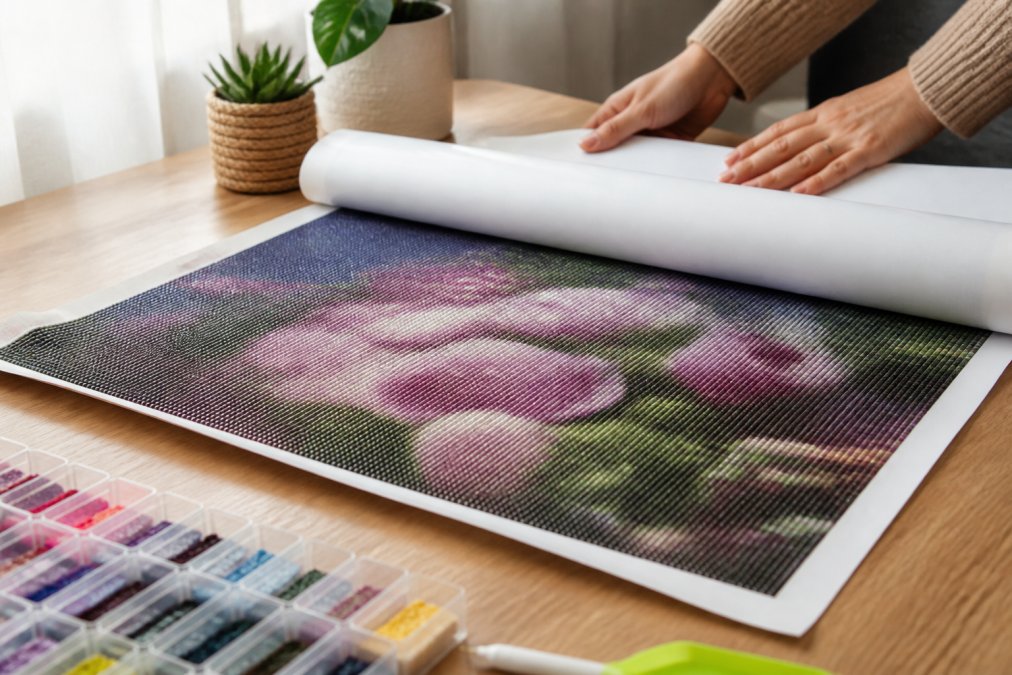
Table of Contents
- Preparing the Canvas Before Starting
- How to Flatten Diamond Painting Canvas Rolls Safely
- How to Remove Wrinkles from Diamond Painting
- Diamond Painting Tools for Beginners
- Diamond Painting Canvas Storage
- Troubleshooting Stubborn Wrinkles
- Safety Precautions for Canvas Materials
- Conclusion
Last Updated: August 30, 2026
Preparing the Canvas Before Starting
Before flattening a diamond painting canvas roll, proper preparation is essential. The canvas arrives tightly rolled, which creates creases and wrinkles that won't disappear on their own.
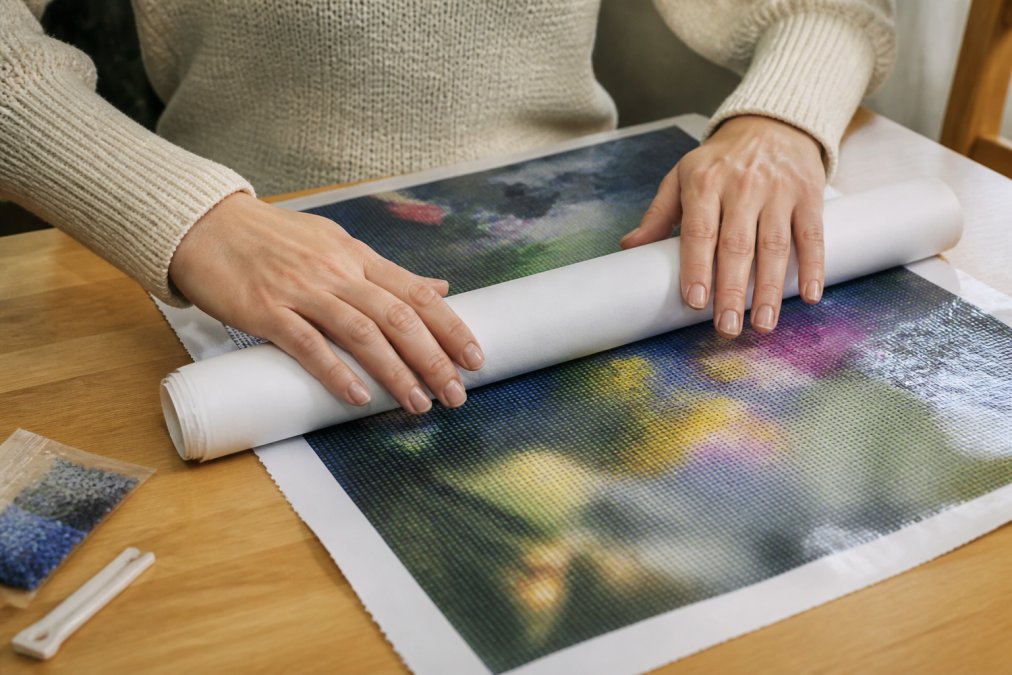
Inspect your canvas in natural light for deep creases, air bubbles, and uneven adhesive. At Jeanne Argent Atelier, we recommend unrolling your canvas slowly and laying it flat on a clean, dry work surface for at least 24 hours before placing diamonds. This resting period allows the canvas to relax and the adhesive to settle.
Clear your work area of dust, debris, and loose fibers that could stick to the adhesive. A smooth, flat table works best. Check that room temperature stays between 65-72°F and humidity remains below 60%, as extreme conditions affect the adhesive and canvas (peer-reviewed research). Gather your flattening tools, a ruler, heavy books, and a soft cloth, before starting.
How to Flatten Diamond Painting Canvas Rolls Safely
The reverse roll method is the safest way to flatten a diamond painting canvas without damaging the adhesive or protective film.
The Reverse Roll Method
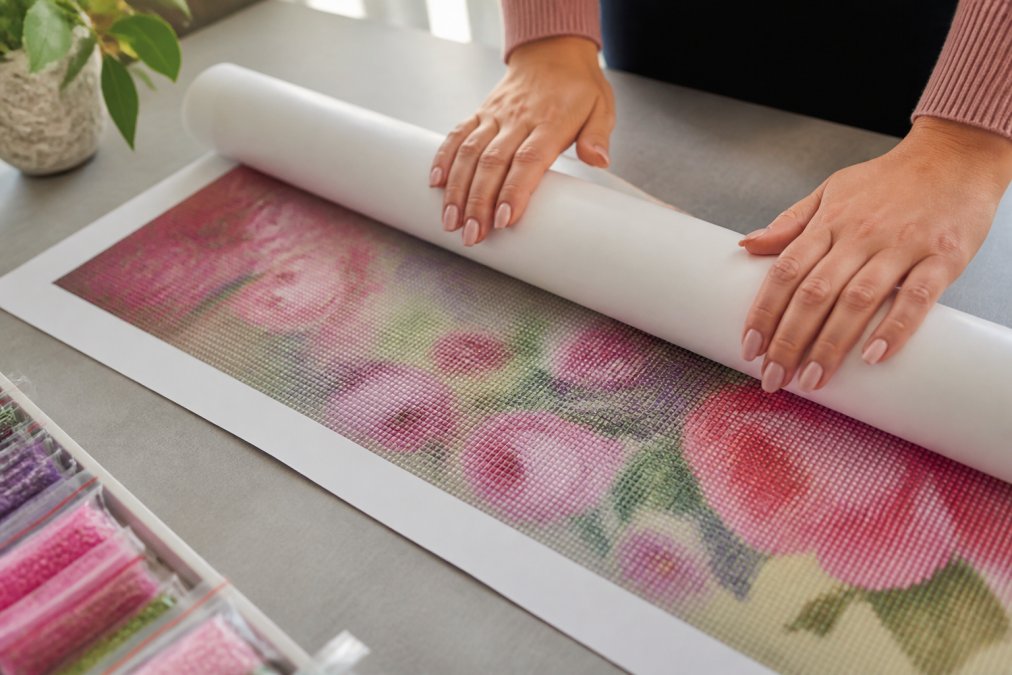
Gently unroll your canvas about one-third of the way, then place your hands flat and apply even pressure from the center outward. Reverse roll the canvas in the opposite direction from its original packaging. This releases tension and helps the synthetic fabric relax into a flatter position.
Unroll completely and lay it flat. Leave it undisturbed for 2-4 hours while the adhesive settles and canvas fibers continue to relax. Wrinkles will be significantly reduced, though not entirely eliminated by this method alone.
Using Heavy Objects to Flatten
Once your canvas is unrolled and resting flat, weighted pressure helps push out remaining wrinkles. Stack books weighing at least 2-3 pounds each across the canvas, focusing on creased areas (the CDC). Distribute weight evenly across the entire surface rather than concentrating it in one spot.
Leave weights in place for 6-8 hours or overnight. The longer the canvas sits under gentle pressure, the more wrinkles relax. For stubborn creases, carefully add more weight, but avoid anything with sharp edges that could mark the canvas.
Heat-Based Methods: Hairdryer and Ironing
A hairdryer on low heat is the safest heat-based approach. Hold it 6-8 inches away and move it slowly across the surface in sweeping motions (the FDA). Work in sections, spending 30-45 seconds on each area.
Ironing is riskier but possible with extreme caution. Set your iron to the lowest heat setting without steam, place a thin cloth between the iron and canvas, and keep it moving constantly. Most crafters find the hairdryer method safer and nearly as effective. Heat works best on light creasing; combine it with the reverse roll method and weighted pressure for deep wrinkles.
How to Remove Wrinkles from Diamond Painting
Wrinkles and creases affect both visual appearance and your ability to place diamonds accurately, as canvas symbols become harder to read on uneven surfaces.
Removing Air Bubbles from Adhesive
Air bubbles trapped under the protective film create visible bumps. Locate them by running your hand gently across the canvas and mark their locations lightly.
For small bubbles, apply gentle pressure directly over the bubble using your fingertip or a ruler's rounded end for 10-15 seconds. For larger bubbles, use a smooth, flat tool like a credit card edge, applying slow, steady pressure while moving in small circles. If a bubble persists, leave it alone, it likely won't affect diamond placement once the canvas is flat.
Working with Creased Canvases
Deep creases require combining multiple techniques. Start with the reverse roll method, then apply weighted pressure for 8-12 hours. After removing weights, use a ruler perpendicular to the crease, applying gentle, steady pressure while sliding along its length.
For remaining creases, try the hairdryer method while simultaneously using the ruler technique. Some creases from tight original rolling may never fully disappear but will become nearly invisible once you start placing diamonds, as the three-dimensional drill beads cover imperfections.
Diamond Painting Tools for Beginners
A metal ruler is your most important flattening tool, it's heavier than plastic and won't bend under pressure. A 12-inch ruler is ideal for precise work.
Heavy hardcover books between 2-3 pounds serve as your primary weighting method. A soft, lint-free cloth protects your canvas during heat-based flattening. A hairdryer on low heat is optional but useful.
Jeanne Argent Atelier includes specialized tools with our premium diamond painting kits. Our drill pens and trays are designed with ergonomics in mind, reducing hand strain during long crafting sessions.
Diamond Painting Canvas Storage
Keep your canvas in a cool, dry place. Heat and humidity create wrinkles and weaken adhesive. Store canvases flat rather than rolled whenever possible. If you must roll them, do so loosely in the opposite direction from original packaging.
Keep the protective film on until you're ready to place diamonds, it protects the adhesive and canvas from dust, moisture, and damage. Store away from direct sunlight, which fades colors and weakens adhesive. Avoid temperature fluctuations by using a closed drawer, cabinet, or climate-controlled closet.
When storing multiple canvases, layer them with acid-free paper between them to prevent the protective film from sticking and to prevent moisture from being trapped.
Troubleshooting Stubborn Wrinkles
If wrinkles persist after 24 hours of weighted pressure, extend the weight application to 48 hours. Combine multiple techniques simultaneously, apply weighted pressure while using the hairdryer on low heat for more effectiveness.
For linear creases, try rolling the canvas loosely in the opposite direction and leaving it rolled for 4-6 hours, then unroll slowly and lay flat again. Focus your effort on problem zones using targeted ruler pressure.
Accept that some minor wrinkles may remain. Once you start placing diamonds, these imperfections become nearly invisible. The three-dimensional texture of the diamond beads covers surface irregularities and creates visual interest that masks minor flaws.
Safety Precautions for Canvas Materials
Never use sharp tools on the canvas surface, smooth, rounded tools are safer. Your fingertips are actually one of your safest flattening tools because you can control pressure precisely.
Avoid excessive heat, which can soften adhesive or damage synthetic fabric. Don't use solvents or moisture on your canvas, as these weaken adhesive and cause the protective film to separate. Be gentle with the protective film and never deliberately peel it back before you're ready to place diamonds.
Avoid storing your canvas in direct contact with materials that could stick to it. If you have sensitive skin, wear latex-free gloves while handling the canvas.
Conclusion
Flattening a diamond painting canvas roll requires patience, proper techniques, and gentle handling. The reverse roll method combined with weighted pressure solves most creasing problems within 24-48 hours. Heat-based methods can accelerate the process but require careful temperature control.
Most wrinkles disappear or become nearly invisible once you start placing diamonds. The three-dimensional texture of the drill beads masks minor surface imperfections.
Jeanne Argent Atelier's premium diamond painting kits arrive with carefully prepared and protected canvases. When you combine proper flattening methods with our high-quality kits, you're setting yourself up for a rewarding, frustration-free crafting experience that produces a beautiful, display-worthy finished piece.
Flattening your canvas properly is the foundation for a successful diamond painting project. Start with Jeanne Argent Atelier's premium kits, which feature specialized tools designed for comfort during extended crafting sessions. Our full-drill designs made from original artwork deserve the care and attention these preparation techniques provide. Get started today and discover how quality materials and proper technique transform your diamond painting experience.
Frequently Asked Questions
What is the best way to flatten a diamond painting canvas?
The reverse roll method is safest for most canvases. Gently roll the canvas in the opposite direction from how it arrived, applying light pressure as you unroll it flat. For stubborn creases, combine this with the heavy book method: place smooth, flat objects on top for 24-48 hours. Avoid heat on synthetic fabrics unless testing adhesive integrity first on a small, hidden area.
How long does it take to flatten a diamond painting canvas?
Most canvases flatten within 24 hours using the heavy objects method. The reverse roll technique works immediately when done correctly. Heat-based methods (hairdryer on low or iron on synthetic setting) can flatten wrinkles in 5-15 minutes, but require careful adhesive testing beforehand. Patience prevents accidental damage to the protective film and tacky surface.
Can you iron a diamond painting canvas to flatten it?
Yes, but only with extreme caution. Use a low synthetic fabric setting and test adhesive integrity on a hidden corner first. Place a thin cloth between the iron and canvas to protect the surface. Keep the iron moving constantly to avoid concentrating heat in one spot. This method works best for minor wrinkles on canvases with proven heat-resistant adhesive. Many crafters prefer safer methods like heavy books or the reverse roll technique.
Is it safe to use heavy books to flatten a diamond painting canvas?
Yes, heavy books are one of the safest flattening methods. Stack smooth, flat books evenly across the canvas for 24-48 hours on a clean work area. Avoid stacking books unevenly, which creates tension in certain areas. This method preserves adhesive integrity and the protective film without risk of heat damage. It works well for both minor and moderate creases, especially on premium canvases with quality synthetic fabric.
This article was written using GrandRanker