15 August 2026
High Quality Diamond Painting Supplies: A Buyer's Guide
Table of Contents
- What Makes High Quality Diamond Painting Supplies Worth the Investment
- Full Drill vs Partial Drill Kits: Which Is Right for You
- Essential Diamond Painting Accessories for Better Results
- Diamond Painting Storage Solutions That Protect Your Investment
- Canvas Quality and Adhesive: The Foundation of Success
- How to Choose High Quality Diamond Painting Kits for Beginners and Advanced Artists
- Troubleshooting Common Quality Issues
- Conclusion
Last Updated: August 16, 2026
What Makes High Quality Diamond Painting Supplies Worth the Investment
The difference between a frustrating craft project and a rewarding one often comes down to materials. When your diamonds pop off mid-project, when your light pad flickers, or when your storage system collapses, you're experiencing poor planning rather than a hobby.
High quality diamond painting supplies solve real problems that budget alternatives create. Serious artists don't settle for weak adhesive or generic tools that cause hand cramps and frustration. The investment in quality protects your time and effort.
What separates high quality supplies from the rest? Three things: adhesive that holds, canvas clarity that reduces eye strain, and accessories designed by people who've spent hours on projects. A premium kit includes specialized drill pens that grip without fatigue, light pads engineered for consistent illumination, and storage systems that keep hundreds of colors organized.
The real cost of cheap supplies isn't the lower price tag. It's abandoned projects, re-gluing sessions, wasted drills, and physical discomfort that turns a hobby into a chore. When you invest in quality materials, you're investing in completing what you start.
Full Drill vs Partial Drill Kits: Which Is Right for You
Full drill kits cover your entire canvas with diamonds from edge to edge. Partial drill kits leave portions of the canvas blank, typically the background, and only diamond focal subjects.
The choice depends on three factors: time commitment, visual impact, and skill level.
Full drill kits demand more time but deliver maximum sparkle. A full drill canvas might take 40-80 hours depending on size, whereas a partial drill of the same dimensions could be finished in 15-30 hours. Every square inch glitters, creating a gallery-quality finish. If you're creating a display piece and have patience for longer projects, full drill is the premium choice.
Partial drill kits suit beginners or those with limited time. They're faster to complete, which means you experience satisfaction sooner. Completed projects build confidence. Partial drill also works well for designs where the background should recede visually.
The adhesive quality matters equally in both formats. A weak canvas will lose diamonds whether you're placing 500 or 5,000 of them.
| Kit Type | Time Investment | Best For | Sparkle Level | Beginner-Friendly |
|---|---|---|---|---|
| Full Drill | 40-80 hours | Display-worthy masterpieces | Maximum | Requires patience |
| Partial Drill | 15-30 hours | Quick completions, focal subjects | Moderate | Yes, faster wins |
Essential Diamond Painting Accessories for Better Results
The right accessories transform diamond painting from tedious to enjoyable. The most overlooked factor is ergonomic health. Diamond painting requires repetitive hand and wrist motion for hours. Without proper tools, you risk developing tendonitis, carpal tunnel syndrome, or chronic neck and shoulder pain.
Light Pads and Visibility Tools
A quality light pad cuts eye strain dramatically. Many crafters report that a quality light pad adds 2-3 hours of comfortable working time before fatigue sets in.
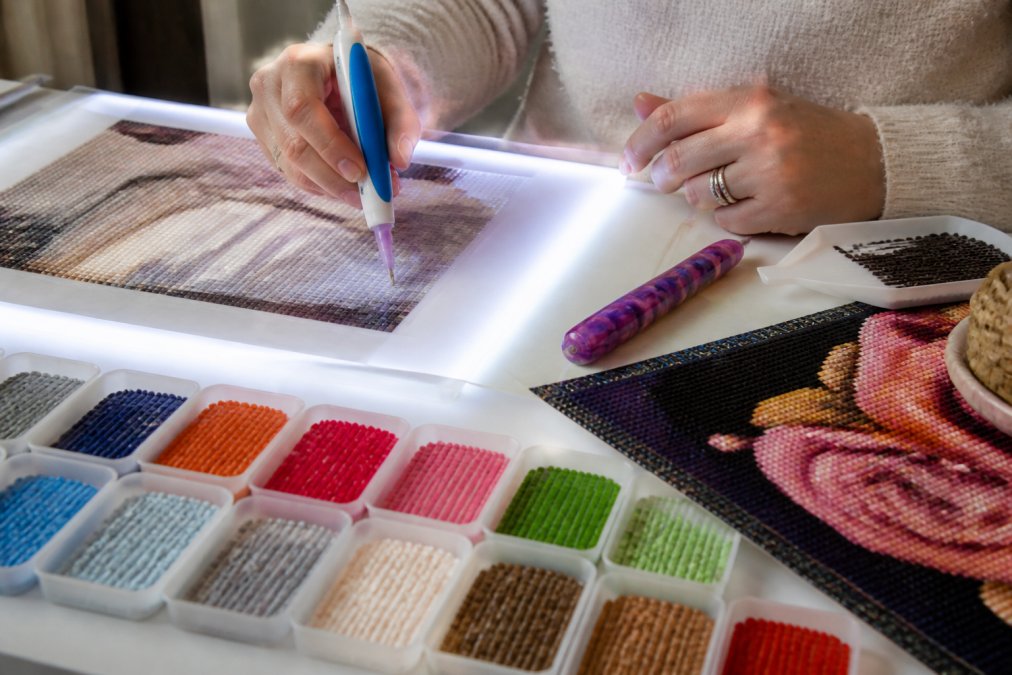
Look for light pads with flicker-free LEDs; cheaper models cause headaches during long sessions. USB-powered options work best since you won't drain batteries mid-project.
Ergonomically, light pads matter more than aesthetics. When you can't see symbols clearly, you lean closer to the canvas, creating forward head posture that strains your neck, shoulders, and upper back. A bright, flicker-free light pad lets you maintain neutral head position, reducing cumulative strain over months of projects.
Electric Diamond Pens and Ergonomic Grips
Electric pens use vacuum suction to grab diamonds and release them with a button press.
Quality electric pens prevent injury. For 3-4 hour sessions, a poorly designed pen creates tension that builds into genuine pain. Look for these features:
- Grip diameter between 0.75-1 inch: Pens that are too thin force your hand muscles to work harder. Too thick causes fatigue.
- Weight under 3 ounces: Heavier pens increase shoulder and wrist strain.
- Contoured, non-slip grip material: Rubber or silicone grips with finger indentations reduce grip force needed.
- Balanced weight distribution: Weight should feel centered in your hand, not top-heavy.
People with arthritis or repetitive strain injury history report that electric pens with proper ergonomic design make longer sessions possible without discomfort. The efficiency gain also means you complete projects in fewer total hours, reducing cumulative strain.
The tradeoff: wireless electric pens cost more upfront and require charging. For beginners or casual crafters, a quality traditional pen with an ergonomic grip offers a lower-cost entry point.
Posture and Workspace Setup
Accessories alone won't prevent injury if your workspace setup is poor:
- Work surface height: Your elbows should bend at roughly 90 degrees when your hands rest on the canvas.
- Canvas angle: Tilting your canvas 15-20 degrees toward you reduces forward head posture required to see symbols.
- Chair support: A chair with lumbar support and armrests reduces back and shoulder strain.
- Lighting: Ensure adequate ambient lighting beyond the light pad. Working in dim conditions forces your eyes to work harder.
These setup changes cost nothing but prevent cumulative strain that turns a beloved hobby into a source of pain.
Protective Sealers and Finishes
Once your diamond painting is complete, protect it. Applied as a thin brush-on coat, it locks diamonds in place and protects against dust and bumps. The formula dries clear and flexible, maintaining sparkle without yellowing.
Apply sealant carefully; too thick and the finish looks plastic, too thin and you lose protection. One thin coat is ideal. Allow 2-3 hours drying time before framing or displaying.
Diamond Painting Storage Solutions That Protect Your Investment
Disorganized drills waste time and create frustration. You'll spend 20 minutes hunting for the right shade instead of 30 seconds with a solid system.
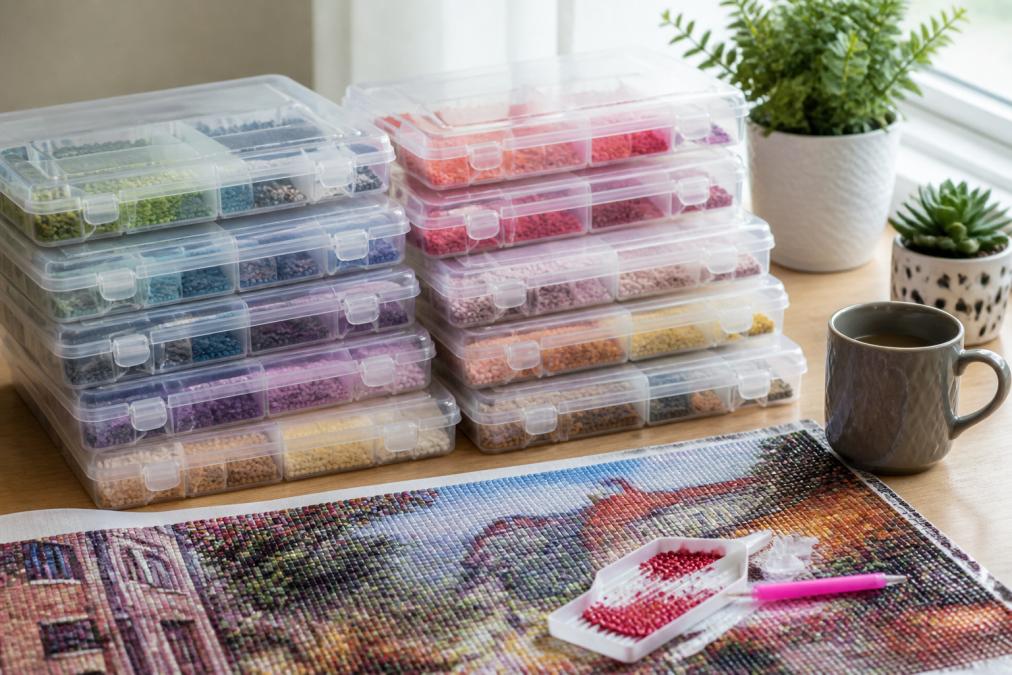
For serious crafters with multiple projects, these trays are essential. The alternative, loose drills in bags or boxes, creates chaos and wastes hours searching. The modest investment in a quality storage system pays for itself in recovered time on your first two projects.
Best practice: label trays with DMC color numbers if your kit uses that system.
Canvas Quality and Adhesive: The Foundation of Success
Everything depends on this: your canvas must have strong, consistent adhesive and clear, accurate symbol printing.
Low-quality canvases use weak adhesive that loses tackiness within hours of opening. Diamonds fall off during application, and the problem worsens as you work. Premium canvases maintain consistent stickiness throughout the project. High-definition laser-printed symbols on quality canvas let you work confidently.
If your canvas feels slick and slightly tacky when you unroll it, that's the sign of quality adhesive. If it feels papery and dry, expect problems. Always test a small section before committing to a full project.
How to Choose High Quality Diamond Painting Kits for Beginners and Advanced Artists
Your skill level and time availability should guide your choice, but quality standards apply equally to all kits.
For beginners: Start with partial drill kits in smaller sizes (8x10 inches or smaller). Look for kits with round drills rather than square; they're more forgiving for placement mistakes. Ensure the kit includes a basic light pad and ergonomic pen to prevent frustration.
For advanced artists: Full drill kits on larger canvases (16x20 inches and up) showcase your skill. Seek kits with square drills, which create sharper and more precise finishes. Advanced artists benefit most from premium accessories, electric pens, professional-grade light pads, and high-quality storage systems.
Regardless of level, verify that your kit includes:
- High-definition printed canvas with clear symbols
- Consistent, strong adhesive
- Resin diamonds in 445+ colors (for full drill kits)
- Specialized drill pen with ergonomic grip
- Bead tray for organizing drills
- Wax caddy for pen maintenance
Quality kits include these items as standard. Budget alternatives skimp on one or more, and that's where problems start.
Troubleshooting Common Quality Issues
Even with quality supplies, problems occasionally arise. The difference between a minor inconvenience and a ruined project is knowing how to diagnose and fix it correctly.
Identifying Adhesive Problems Before They Spread
Diamonds popping off mid-project: The canvas adhesive has weakened. This happens if the kit was stored in heat (above 75°F), if the protective film was removed too early, or if the adhesive was low-quality from the start.
Diagnosis: Press your finger gently on an unworked section of canvas. Quality adhesive feels slightly tacky and holds your finger briefly when you lift it. Weak adhesive feels papery and dry.
Prevention: Store unopened kits in a cool, dry place (below 70°F). Do not remove the protective film until you're ready to begin work. If working over several weeks, re-cover unworked sections between sessions.
Solution: Use Diamond Dotz Stick Adhesive or similar reactivating adhesive to re-adhere diamonds. Apply a small amount with a brush to the canvas, wait 30-60 seconds for tackiness to return, then place diamonds. For large areas, contact the seller for a replacement canvas if more than 10% of the surface has lost adhesion.
Uneven adhesion across the canvas: Some areas grip diamonds firmly while others feel loose. This indicates inconsistent manufacturing or storage damage.
Diagnosis: Test adhesion in multiple locations, corners, center, and edges. If tackiness varies significantly, the canvas has a quality defect.
Solution: Contact the seller immediately with photos. Reputable suppliers replace canvases with uneven adhesion.
Canvas Printing and Symbol Clarity
Blurry or hard-to-read symbols: Either your light pad needs adjustment, or the canvas printing is low-quality. First, try brightening your light pad or adjusting your viewing angle.
Diagnosis: Examine the canvas under bright light without the light pad. Quality printing is crisp and dark, with clean edges around each symbol. Blurry printing has soft, fuzzy edges and faint color.
Solution: Contact the seller. Quality suppliers replace canvases with printing defects.
Diamond Quality and Appearance Issues
Drills looking dull or discolored: Resin diamonds fade if exposed to direct sunlight during storage or after completion.
Prevention: Store completed pieces away from direct sunlight. Once sealed with Polycrylic, diamonds resist fading better.
Solution: There is no reliable way to restore faded diamonds. Prevent this by storing and displaying finished pieces away from sunlight.
Drills with inconsistent color or finish: Occasionally, a batch contains drills with slightly different shades or a matte finish instead of sparkle.
Diagnosis: Examine drills from the same color tray under light. Quality drills are uniform in color and have a consistent glossy finish.
Solution: Sort out defective drills and set them aside. If the defect affects more than 5% of a single color, contact the seller for replacement drills or a partial refund.
Application and Coverage Issues
Uneven sparkle or incomplete coverage: You've missed diamonds during application, or diamonds are sitting at angles instead of flat.
Diagnosis: Step back and view your work from 3-4 feet away. Gaps appear as dark spots where the canvas shows through.
Solution: Go through systematically with your light pad on, checking for gaps. Use tweezers to adjust any diamonds sitting at angles; they should sit flush and perpendicular to the canvas.
Prevention: Work in small sections (4-6 inches at a time) rather than jumping around the canvas. Check each section for gaps and angle issues before moving on.
Hand Pain and Fatigue During Long Sessions
Wrist or hand pain developing mid-project: Your pen grip is wrong, your pen is low-quality, or you're working too long without breaks.
Diagnosis: Notice when pain starts. If it appears after 1-2 hours, your setup or pen is the problem.
Solution: Switch to an electric pen with ergonomic design. Adjust your grip angle, your wrist should be straight, not bent. Take 10-minute breaks every hour. If pain persists, consult a healthcare provider.
Neck or shoulder pain: You're leaning forward or tilting your head to see the canvas.
Solution: Adjust your light pad brightness, tilt your canvas toward you, or raise your work surface. Ensure your chair provides lumbar support.
Quality Guarantees and Seller Responsibility
Reputable suppliers stand behind their products. Before purchasing, verify that the seller offers:
- Replacement guarantee for manufacturing defects: Adhesion problems, printing defects, and missing drills should be replaced at no cost.
- Satisfaction guarantee: Most quality sellers offer 30-60 day returns or replacements if you're unsatisfied.
- Responsive customer service: Quality suppliers respond within 24-48 hours.
If a seller refuses to replace a defective canvas or dismisses your concerns, that's a red flag for future purchases.
Frequently Asked Questions
What should I look for when buying high quality diamond painting supplies?
Focus on canvas adhesive quality, drills should stay firmly in place without popping off. Check for laser-printed, high-definition symbols that are easy to read. Look for kits that include specialized tools like ergonomic drill pens and trays. Verify the resin diamond quality; 5D diamonds with vibrant colors and clarity matter. Original artwork designs signal a premium kit. Read reviews about durability and whether the kit includes essential accessories rather than forcing you to buy separately.
Are expensive diamond painting kits worth the extra cost?
Yes, when the premium reflects better materials and design. High quality kits feature superior canvas adhesive that prevents drills from shifting, clearer printed symbols that reduce eye strain, and included accessories like specialized pens and trays that save money and frustration. Original artwork designs offer unique creative satisfaction. The difference becomes clear after your first project, cheap kits often result in loose diamonds, unclear symbols, and missing tools, leading to abandoned projects. Quality kits reward your effort with professional-looking results worth displaying.
What's the difference between round and square diamond drills?
Round drills create a softer, more impressionistic sparkle with visible gaps between stones, while square drills fit together tightly for a seamless, jeweled appearance with maximum light reflection. Square drills cover the canvas completely and deliver a more polished, professional finish, ideal for display pieces. Round drills are easier for beginners since placement doesn't require precise alignment. Most high quality kits specify which type they include. Your choice depends on the final look you want: choose square for masterpiece-quality artwork, round for a more relaxed crafting experience.
How do I prevent diamonds from falling off my finished diamond painting?
Start with a kit featuring strong double-sided adhesive canvas. During crafting, press each drill firmly into place. Once finished, seal your artwork with a water-based protective finish like Minwax Polycrylic Clear Gloss, which dries clear and maintains the sparkle without yellowing. Apply the sealer carefully to avoid a thick finish. Store finished pieces flat or in a frame away from direct heat and humidity. Proper sealing creates a durable layer that secures diamonds permanently, protecting your investment for years.
This article was written using GrandRanker