30 July 2026
Diamond Painting for Mindful Relaxation: A Complete Guide
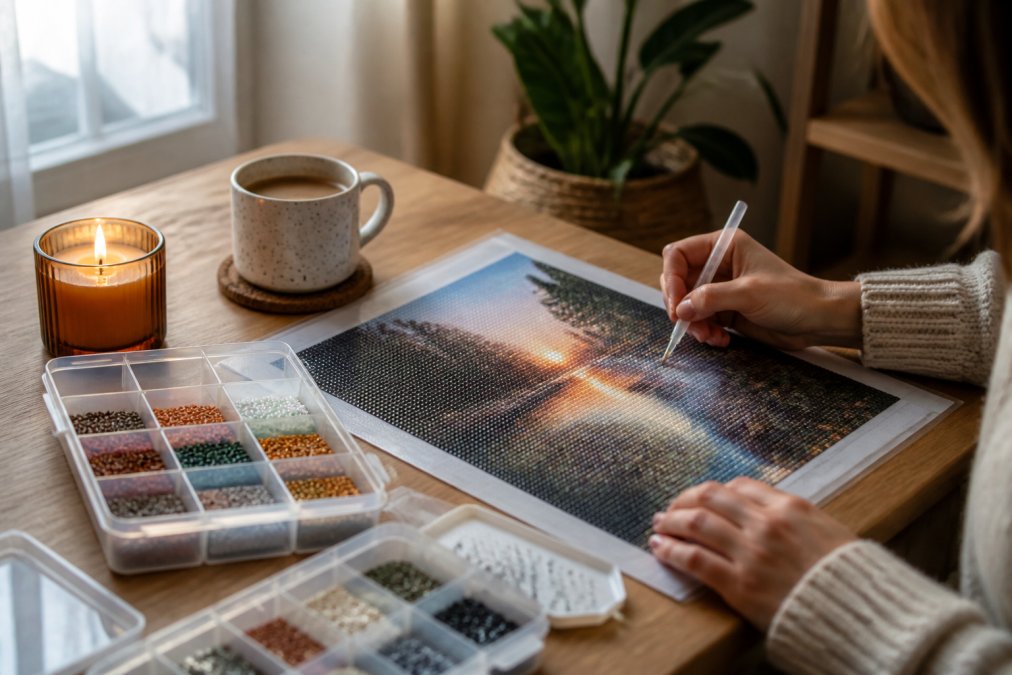
Table of Contents
- Understanding Diamond Painting for Mindful Relaxation
- Diamond Painting Benefits for Mental Health and Anxiety
- Choosing Diamond Painting Kits for Beginners
- Setting Up Your Space for Mindfulness Crafts
- Art Therapy at Home: Diamond Painting as Creative Meditation
- Techniques for Deepening Your Diamond Painting for Mindful Relaxation
- Conclusion
Last Updated: July 31, 2026
Understanding Diamond Painting for Mindful Relaxation
Diamond painting for mindful relaxation has emerged as a powerful therapeutic hobby for adults seeking screen-free creative activities and stress relief. This meditative craft combines the repetitive satisfaction of placing tiny resin diamonds with the artistic fulfillment of creating detailed, gallery-worthy artwork. Unlike passive stress-relief methods, diamond painting engages your hands, eyes, and mind in a coordinated flow that naturally quiets racing thoughts and grounds you in the present moment.
You don't need prior artistic training, expensive equipment, or years of practice to experience the calming benefits. A quality diamond painting kit gives you everything needed to begin your first meditative session tonight. Many practitioners report that diamond painting sessions provide the same mental clarity and emotional regulation benefits as traditional meditation, but with the added satisfaction of creating something tangible.
What Makes Diamond Painting a Meditative Practice
Diamond painting qualifies as a form of active meditation because the repetitive motion of picking up a diamond, applying adhesive, and placing it on the canvas creates a rhythmic pattern that quiets the prefrontal cortex, the part of your brain responsible for self-criticism and worry. Your attention naturally narrows to the immediate task, leaving little mental space for rumination or anxiety.
The tactile satisfaction is profound. Each diamond placement produces immediate sensory feedback: the soft click of the drill against the canvas, the slight resistance of the adhesive, the visual transformation of a blank section into a completed pattern. This multisensory engagement anchors your awareness to the present moment, the cornerstone of mindfulness practice.
The Science Behind Repetitive Motion and Stress Relief
Repetitive, rhythmic motion activates the parasympathetic nervous system, your body's natural relaxation response. Diamond painting requires just enough cognitive engagement to prevent your mind from wandering into worry patterns, but not so much that it feels effortful or stressful. Neuroscientists call this "optimal challenge," the sweet spot where your brain functions most efficiently and calmly.
Dopamine, the neurotransmitter associated with reward and motivation, increases with each completed section. Unlike scrolling social media, which provides dopamine hits without effort or creation, diamond painting ties that neurochemical reward to something you've actually made. The satisfaction is genuine and grounded in reality.
Diamond Painting Benefits for Mental Health and Anxiety
Regular practitioners report improvements in emotional regulation, reduced anxiety symptoms, better sleep quality, and a heightened sense of purpose. These are measurable outcomes of sustained engagement with a meditative creative practice.
Achieving Flow State Through Focused Crafting
Flow state is a psychological condition where you become so absorbed in an activity that self-consciousness and time awareness fade. Diamond painting is uniquely positioned to trigger flow state because the difficulty curve is entirely within your control. You choose the canvas size, complexity, and color palette. A 20x20-inch full-drill canvas might take 40-60 hours to complete, while a smaller partial-drill kit finishes in 8-12 hours.
The visual feedback is immediate and constant. Every few minutes you see tangible completion, keeping your motivation high and your attention locked on the present moment.
Anxiety Reduction and Emotional Regulation
Anxiety thrives on uncertainty and the illusion of uncontrollable outcomes. Diamond painting provides the opposite: a structured, completely predictable process with guaranteed results. Every canvas has a solution. Every diamond has a designated spot. Progress is linear and measurable.
This structure is therapeutic for anxiety-prone individuals because it temporarily removes the cognitive burden of decision-making and outcome uncertainty. Many practitioners report using diamond painting as a replacement for anxiety-driven behaviors like excessive social media checking or restless pacing.
Choosing Diamond Painting Kits for Beginners
Your first kit sets the tone for your entire experience with this hobby. A poorly designed kit can frustrate you into abandonment before you've experienced the meditative benefits. A thoughtfully designed kit removes obstacles and lets you focus entirely on the calming, creative work.
What to Look for in a Quality Beginner Kit
The foundation of any good diamond painting kit is the canvas. The printed design should be crystal clear with easily distinguishable symbols, colors, and boundaries. Look for canvases with high-contrast symbols and generous spacing between color blocks.
The adhesive quality matters far more than most beginners realize. Premium kits use a tacky, consistent adhesive that holds diamonds firmly without being so sticky that placement becomes difficult. Cheap adhesives either fail to hold diamonds or become so gummy that placing diamonds feels laborious.
Included tools make an enormous difference in hand comfort during long sessions. A quality diamond painting pen should have an ergonomic grip that distributes pressure across your palm rather than concentrating it on your fingers. The tip should be precisely calibrated, not so loose that diamonds fall off, not so tight that placement requires excessive force.
The diamond quality itself matters. Resin diamonds should be uniform in size, cut consistently, and have a reliable shine.
Canvas Clarity and Tool Comfort for Long Sessions
Canvas clarity directly impacts your ability to enter a meditative state. If you're constantly squinting to identify symbols, your attention fragments and anxiety can creep in. Beginners should prioritize canvases with large, distinct symbols and clear color gradations.
Tool comfort becomes critical after the first hour of work. A poorly designed pen creates strain that builds into pain, forcing you to take breaks or stop entirely. This disrupts the flow state and reduces the therapeutic benefit.
| Feature | Beginner Priority | Why It Matters |
|---|---|---|
| Canvas Symbol Clarity | Critical | Prevents misplacement and frustration |
| Adhesive Consistency | Critical | Ensures diamonds stay placed without excessive force |
| Drill Pen Ergonomics | High | Prevents hand pain during extended sessions |
| Diamond Quality | High | Improves visual satisfaction and display appeal |
Setting Up Your Space for Mindfulness Crafts
Your physical environment directly influences your ability to achieve a meditative state. Poor lighting strains your eyes, uncomfortable positioning creates pain, and environmental distractions fragment your attention.
Ergonomic Positioning and Lighting
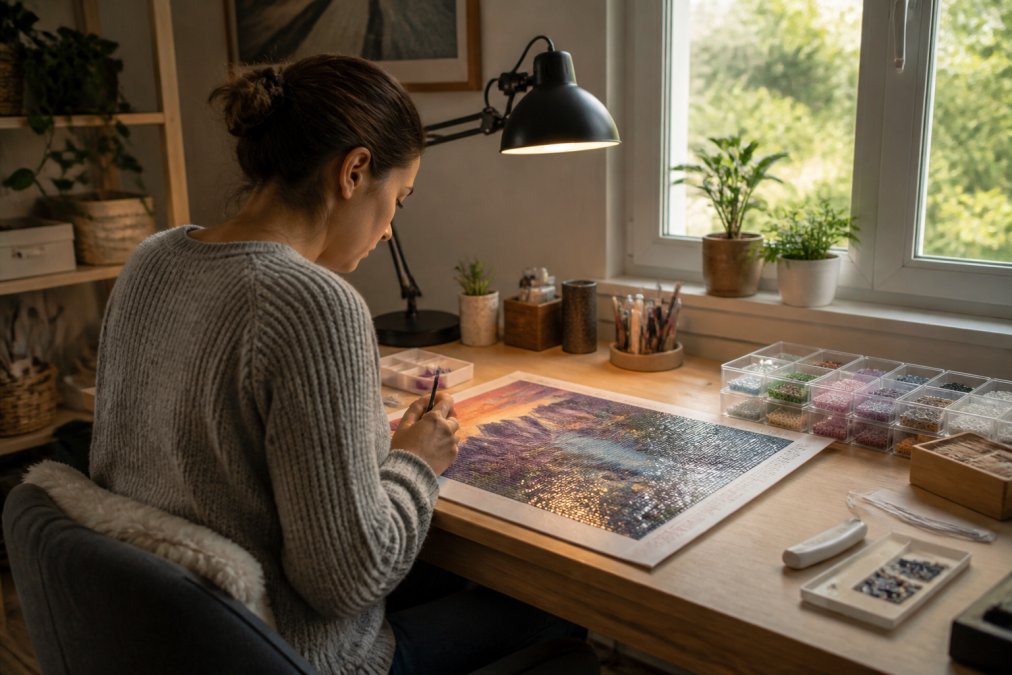
Your work surface should be at elbow height when you're seated comfortably. If it's too high, your shoulders rise and create neck tension. If it's too low, you'll hunch forward, straining your lower back. The ideal setup has your forearms parallel to the ground, with your wrists in a neutral position.
Lighting is non-negotiable. Your eyes need to distinguish thousands of tiny symbols and colors. Natural light is ideal, but a high-quality LED desk lamp with adjustable brightness works well. Position the light source to the side of your work area to minimize glare on the canvas.
A cushioned chair supports your lower back during sessions that may last 2-3 hours. Your feet should rest flat on the floor or a footrest, keeping your thighs parallel to the ground.
Creating a Distraction-Free Environment
Your environment should signal to your brain that this is a protected time for focus and calm. Put your phone in another room or set it to airplane mode. Close unnecessary browser tabs. Let household members know you're unavailable for the duration of your session.
Ambient sound matters. Some people work best in complete silence. Others find that soft background music or nature sounds enhance focus. Avoid music with lyrics, as words engage your language centers and fragment attention. Temperature control also impacts focus, aim for a comfortable 68-72 degrees Fahrenheit.
Art Therapy at Home: Diamond Painting as Creative Meditation
Diamond painting sits at the intersection of art therapy and mindfulness meditation. Art therapy leverages the creative process to support emotional healing and self-expression. Mindfulness meditation develops present-moment awareness and emotional regulation. Diamond painting activates both mechanisms simultaneously.
Color Therapy and Emotional Engagement
Colors influence emotion and psychology in measurable ways. Cool colors like blue, teal, and purple activate the parasympathetic nervous system and promote calm. Warm colors like orange, red, and yellow stimulate the sympathetic nervous system and increase alertness and energy.
Many practitioners choose designs based on their current emotional needs rather than aesthetic preference alone. On high-stress days, a design with predominantly cool, soothing colors provides additional calming support. On days when you're depleted and need motivation, a design with warmer tones energizes your creative process.
Building a Daily Mindful Practice
The real power of diamond painting emerges when it becomes a consistent practice. A daily 30-minute session creates a reliable anchor point in your day, a protected time when you step away from demands and enter a state of calm focus.
Consistency trains your nervous system to associate the activity with relaxation. Over time, simply sitting down to work becomes a trigger for your parasympathetic nervous system to activate. A sustainable daily practice doesn't require hours, even 20-30 minutes provides meaningful stress relief and creative satisfaction.
Techniques for Deepening Your Diamond Painting for Mindful Relaxation
Once you've experienced the basic meditative benefits of diamond painting, you can deepen your practice with specific techniques that amplify the therapeutic effects and extend your flow state.
Breath Awareness and Pacing
Conscious breathing is the foundation of meditation practice. While working on your diamond painting, bring gentle awareness to your breath. You're not trying to control it or change it, simply noticing the natural rhythm of your inhalation and exhalation as you place diamonds.
Pacing yourself intentionally also deepens the meditative quality. Rather than rushing to complete sections, slow your pace deliberately. Some practitioners use a simple counting technique: inhale while picking up a diamond, exhale while placing it.
Sensory Engagement and Tactile Satisfaction
Expand your awareness beyond the visual to include all sensory input. Notice the texture of the diamonds, their smooth faceted surfaces, the way they catch light. Feel the slight resistance of the adhesive as you press each diamond down. Hear the soft click of the diamond against the canvas.
This sensory expansion transforms diamond painting from a task into a true mindfulness practice. You're fully inhabiting the sensory experience of creation.
Common Mistakes That Break the Meditative State
Working with poor lighting forces you to squint and lean forward, creating physical tension that prevents relaxation. Multitasking during sessions divides your attention and prevents the unified focus that generates flow state. Working too quickly activates your sympathetic nervous system (the stress response) rather than your parasympathetic system (the relaxation response).
Perfectionism can also undermine the practice. If you're constantly checking whether each diamond is perfectly aligned or worrying about mistakes, you're activating your critical mind rather than your creative mind.
Conclusion
The challenge many people face is finding a stress-relief practice that actually works, something that doesn't require special skills, expensive equipment, or hours of time, yet delivers genuine therapeutic benefits. Diamond painting for mindful relaxation offers a tangible, immediately rewarding path to calm focus and creative satisfaction.
Jeanne Argent Atelier's premium diamond painting kits are designed for a high-quality creative experience. Each kit includes crystal-clear canvases, specialized ergonomic drill pens and trays, and high-quality adhesive. The designs are created from original artwork with intentional color progressions.
If you're ready to experience the profound calm that comes from meditative crafting, explore Jeanne Argent Atelier's diverse collections to find the perfect kit to bring your next masterpiece to life. Set up your space properly, commit to 30 minutes of focused work, and let the repetitive, creative process quiet your mind and ground you in the present moment.
Frequently Asked Questions
Is diamond painting good for anxiety and stress relief?
Yes, diamond painting for mindful relaxation offers significant anxiety reduction through its meditative, repetitive motion. The focused attention required engages your mind in a way that interrupts anxious thought patterns, while the tactile satisfaction of placing each drill provides immediate sensory feedback. Many practitioners report feeling calmer after even 20-30 minute sessions, making it an accessible tool for managing daily stress without screens or substances.
What diamond painting benefits should beginners expect?
Beginner diamond painting kits offer multiple benefits: improved focus and concentration, reduced mental chatter, enhanced fine motor skills, and a sense of accomplishment. You'll also experience color therapy benefits as you work with soothing or vibrant palettes. The meditative state achieved during crafting promotes emotional regulation and provides a healthy escape from digital devices, supporting overall mental wellness and creative expression.
How do mindfulness crafts like diamond painting differ from other hobbies?
Mindfulness crafts like diamond painting combine repetitive, tactile engagement with intentional focus in a way that naturally promotes flow state. Unlike passive activities, they require active sensory participation, hand-eye coordination, color selection, and rhythmic motion, while remaining low-pressure. This balance makes art therapy at home uniquely effective for anxiety reduction and mental clarity, as you're simultaneously engaging your hands, eyes, and mind in a purposeful, creative act.
What makes a quality diamond painting kit better for relaxation?
Quality diamond painting kits for beginners feature clear, easy-to-read canvas symbols that reduce frustration, premium adhesive that keeps drills secure throughout your session, and ergonomic drill pens designed for comfort during extended crafting. Premium tools minimize hand fatigue and allow you to enter flow state more easily. Original artwork designs also enhance the meditative experience by offering meaningful, visually engaging images that hold your attention and emotional interest throughout the project.
[EXTERNAL_LINK: American Art Therapy Association research on creative practices and mental health | arttherapy.org]
[EXTERNAL_LINK: Mindfulness-Based Stress Reduction studies from the Center for Mindfulness at University of Massachusetts | umassmed.edu]
[EXTERNAL_LINK: Psychology Today article on flow state and optimal experience in creative activities | psychologytoday.com]
This article was written using GrandRanker