17 August 2026
7 Benefits of Diamond Painting for Anxiety Relief
Table of Contents
- 1. Activates Mindfulness Through Repetitive Motion
- 2. Induces Flow State and Hyperfocus
- 3. Reduces Cortisol and Triggers Dopamine Release
- 4. Builds Fine Motor Skills and Hand-Eye Coordination
- How to Start Diamond Painting for Beginners
- Best Diamond Painting Kits for Relaxation
- Mindfulness Through Diamond Painting
- 5. Provides Emotional Regulation and Creative Expression
Last Updated: August 18, 2026
7 Benefits of Diamond Painting for Anxiety Relief
Diamond painting has become one of the most effective screen-free activities for managing anxiety. Unlike passive consumption, this craft demands full attention, quieting racing thoughts and grounding you in the present moment. At Jeanne Argent Atelier, we've seen how quality kits transform diamond painting into genuine therapeutic practice.
The 7 benefits extend far beyond distraction. This activity rewires how your brain processes stress, engages your hands meaningfully, and creates a psychological "off switch" that modern life rarely offers. Whether managing chronic anxiety or seeking an evening ritual that calms your nervous system, understanding these benefits helps you approach the craft intentionally.
1. Activates Mindfulness Through Repetitive Motion
Mindfulness is any activity anchoring your attention to the present moment. Diamond painting does this through repetitive, tactile engagement that naturally quiets the anxious mind.
The rhythm of picking up a diamond, dipping it in adhesive, and placing it on canvas occupies your prefrontal cortex, the brain region responsible for rumination and worry. Each placement prevents your mind from wandering to future concerns or past regrets.
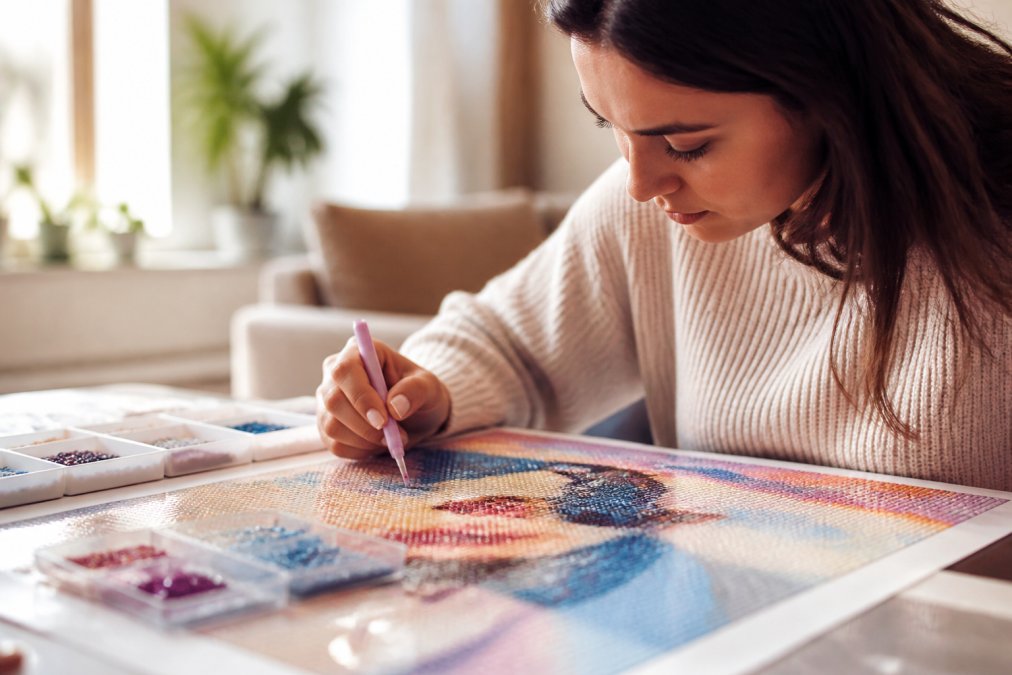
The sensory feedback loop is key. Your fingers feel the texture of diamonds, the resistance of adhesive, the satisfaction of perfect placement. This tactile stimulation anchors you in your body rather than anxious thoughts. Neuroscientists call this proprioceptive engagement, your brain receives constant input from your hands, creating a grounding effect similar to weighted blankets.
The meditative state emerges naturally because the activity requires just enough cognitive load to prevent anxiety spiraling, but not so much that it feels stressful. You're simply placing one diamond after another, and your nervous system gradually downregulates.
2. Induces Flow State and Hyperfocus
Flow state, complete absorption in an activity, is one of the most powerful anxiety-reduction mechanisms available. Diamond painting triggers flow reliably because it has the exact conditions psychologists identify as flow-inducing: clear goals (complete the painting), immediate feedback (you see each diamond placed), and matched challenge level (not too easy, not impossible).
As you progress, your hands move faster and placements become automatic. Your conscious mind steps back, attention narrows to the canvas, and external stressors cease to exist in your awareness. During flow, your brain releases dopamine and suppresses the default mode network responsible for worry. When in flow, you literally cannot think about your problems.
A beginner can enter flow during their first session. The activity scales with experience, so it never loses therapeutic power.
3. Reduces Cortisol and Triggers Dopamine Release
Chronic anxiety means chronically elevated cortisol, the stress hormone that damages sleep, weakens immunity, and perpetuates the anxiety cycle. Diamond painting interrupts this by creating conditions that lower cortisol while triggering dopamine, the reward neurotransmitter.
The repetitive, rhythmic nature calms your nervous system similarly to breathing exercises. Your heart rate slows, blood pressure normalizes, and your body recognizes the activity as safe. Over time, regular sessions train your nervous system to downregulate more easily.
Dopamine release happens through immediate rewards (placing each diamond correctly) and progress toward completion (your brain recognizes you're moving toward a goal). Unlike unpredictable dopamine hits from social media, diamond painting provides consistent, predictable dopamine, an effective tool for managing dopamine dysregulation accompanying anxiety disorders.
4. Builds Fine Motor Skills and Hand-Eye Coordination
Fine motor skill development engages the cerebellum and motor cortex in ways that promote neuroplasticity, your brain's ability to rewire itself. This rewiring extends beyond motor control to emotional regulation and cognitive flexibility.
When developing skills, your brain enters heightened neuroplasticity. New neural pathways form, existing connections strengthen, and your brain becomes more adaptable. This adaptability transfers to emotional processing. People who regularly engage in skill-building show greater resilience to anxiety because their brains are literally more flexible in processing stress.
Hand-eye coordination also trains the prefrontal cortex, responsible for executive function and emotional regulation. As coordination improves, so does your ability to regulate emotions and tolerate discomfort.
How to Start Diamond Painting for Beginners
Starting your first project is straightforward, but setup decisions determine whether you'll have a genuinely relaxing experience or a frustrating one.
Choosing Your First Kit
Your first kit should match your actual commitment level, not aspirational identity. Start with a medium-sized kit (around 30x40cm or smaller), which takes 10-20 hours to complete, finishable in 2-3 weeks of regular sessions. Finishing something matters psychologically, providing closure and genuine accomplishment.
Look for kits with clear symbols on the canvas. Blurry symbols force squinting and second-guessing, introducing frustration into what should be calming. Jeanne Argent Atelier's kits feature crisp color printing designed for clarity, so you spend mental energy on meditative placement, not deciphering symbols.
Full-drill kits (diamonds cover the entire canvas) are more therapeutic than partial-drill because they create continuous flow state. The finished piece also looks more polished, increasing psychological reward.
Setting Up Your Workspace
Your workspace should be ergonomic, organized, and distraction-free. Physical setup directly affects whether diamond painting reduces or increases anxiety.
Lighting matters enormously. Natural daylight is ideal; a bright desk lamp works if positioned to avoid glare. Poor lighting forces eye strain and creates tension that undermines therapeutic benefits.
Organize diamonds by color in separate trays before starting. Multi-compartment systems speed workflow and prevent frustration. When supplies are organized, your mind relaxes into the activity.
Use a comfortable chair with back support. You'll sit for 30-90 minute sessions, and poor posture creates physical tension manifesting as anxiety. Ergonomic setup is necessary for the activity to calm your nervous system.
Your First Session: What to Expect
Your first session should last 30-45 minutes. A focused, bounded session creates anticipation for the next one and prevents fatigue.
Start with a small section, one color or one corner. Completing a defined area gives you progress and accomplishment, reinforcing reward pathways. Expect to place 200-400 diamonds in 45 minutes once you find your rhythm. By the 15-minute mark, your conscious mind quiets down.
Best Diamond Painting Kits for Relaxation
Not all kits are equal. The difference between mediocre and premium directly affects whether the activity remains therapeutic or becomes frustrating.
Premium Full-Drill Kits for Serious Crafters
Jeanne Argent Atelier's premium full-drill kits represent the top tier. Each kit is crafted from original artwork rather than generic designs, meaning you're creating something genuinely unique and meaningful.
The kits include specialized drill pens with ergonomic grips and balanced weight distribution. After an hour of placing diamonds, a poorly designed pen creates hand fatigue. Jeanne Argent Atelier's pens are designed for extended sessions, keeping hands comfortable during 90-minute periods.
The canvas features high-tack adhesive that grips diamonds securely without excessive pressure. Cheap kits use weak adhesive causing diamonds to pop off, which is demoralizing. Premium kits solve this entirely.
The variety of themes, animals, fantasy, florals, means you can choose artwork that resonates with you. This emotional connection deepens therapeutic benefit.
Ergonomic Tools That Support Long Sessions
For extended sessions (60-90 minutes), ergonomic tools become essential. Multi-compartment trays with magnetic lids offer superior organization and secure storage. The tray design spreads diamonds for faster, easier pickup, reducing micro-frustrations during long sessions.
A quality drill pen is non-negotiable for extended use. Look for rubberized grips, balanced weight, and comfortable diameter. The pen should feel like an extension of your hand, not a tool you're gripping tightly. Tension translates to shoulder and neck tension, undermining anxiety-relief benefits.
Consider a lap desk or painting stand that props your canvas at a slight angle. This prevents hunching, the primary cause of neck and shoulder tension during crafting. Many people don't realize anxiety is partly physical; tension feeds back into the nervous system and amplifies anxiety.
Mindfulness Through Diamond Painting
Mindfulness is bringing full, non-judgmental awareness to the present moment. Diamond painting does this naturally.
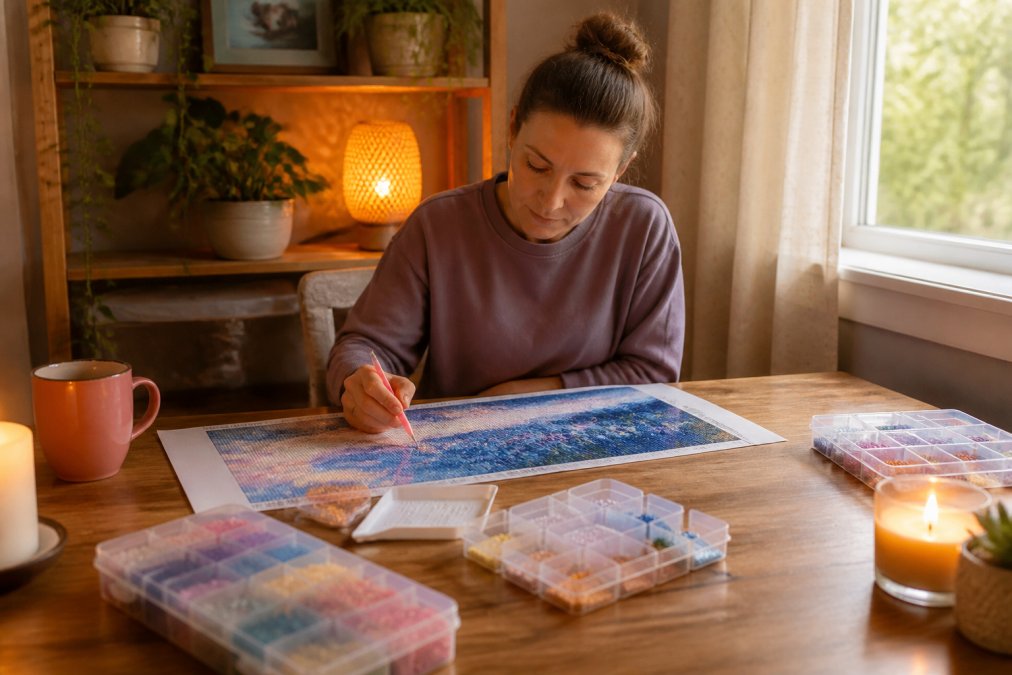
True mindfulness requires three elements: attention to the present moment, acceptance of what is, and non-judgmental stance toward your experience. Diamond painting activates all three. Your attention anchors to the canvas and diamond in your hand. You accept imperfect placements and move forward. You observe thoughts without judgment.
This is why diamond painting is effective for anxiety specifically. Anxiety thrives on judgment, judging yourself as inadequate, the future as threatening, your thoughts as uncontrollable. Mindfulness interrupts this pattern. When fully present with the canvas, you're not engaging in habits fueling anxiety.
All 7 benefits flow from this foundational mindfulness practice. The dopamine, flow state, and motor skill development emerge from bringing full attention to a simple, repetitive task. Regular practitioners report that mindfulness skills transfer to other areas of life, they catch anxious thoughts earlier, ground themselves better, and tolerate discomfort without spiraling.
5. Provides Emotional Regulation and Creative Expression
Anxiety involves emotional dysregulation; emotions feel too big, too intense, too uncontrollable. Diamond painting provides two mechanisms: a container for emotional expression and a regulating activity that calms the nervous system simultaneously.
Creating something beautiful is inherently emotionally regulating. You're not just sitting with anxiety; you're channeling it into something tangible and beautiful. Choosing artwork that resonates emotionally, a calming landscape, inspiring animal, or beautiful pattern, creates a direct link between emotional state and creative output.
Emotional expression through diamond painting is non-verbal, which matters for people struggling to articulate feelings. Many anxious people have difficulty naming emotions. Diamond painting bypasses this limitation through non-verbal creative processing.
The finished piece becomes a tangible representation of your emotional work. Hanging it on your wall or gifting it transforms the private anxiety-management activity into something shared and meaningful.
Diamond painting works for anxiety relief because it addresses the problem at multiple levels: neurological (dopamine, cortisol, flow state), psychological (mindfulness, emotional regulation), and physical (fine motor engagement, ergonomic comfort). It's not a distraction from anxiety; it's genuine rewiring of how your nervous system processes stress.
Starting with a premium kit from Jeanne Argent Atelier, designed with original artwork, quality materials, and ergonomic tools, ensures your first experience sets you up for success. When you invest in materials supporting extended, comfortable sessions, you're investing in a tool that meaningfully reduces anxiety over months and years of regular use.
Frequently Asked Questions
Does diamond painting help with anxiety?
Yes. Diamond painting reduces anxiety by engaging your mind in repetitive, focused activity that triggers a meditative state. The combination of tactile stimulation, hand-eye coordination, and concentration on a single task activates your parasympathetic nervous system, which counteracts the stress response. Many practitioners report lower cortisol levels and improved emotional regulation after sessions.
How does repetitive motion in diamond painting affect mental health?
Repetitive motion in diamond painting creates a cognitive offloading effect, where your conscious mind quiets and your hands perform the familiar task automatically. This triggers flow state and hyperfocus, allowing anxious thoughts to fade into the background. The rhythmic placement of diamonds also provides sensory engagement and tactile stimulation, which research shows calms the nervous system and reduces stress responses.
What makes diamond painting better for relaxation than other hobbies?
Diamond painting combines multiple therapeutic elements: mindfulness through repetition, fine motor skill engagement, creative expression, and immediate visual progress. Unlike passive relaxation, it actively occupies your attention while producing a tangible finished piece. The combination of tactile feedback, concentration demands, and artistic reward creates a stronger psychological shut-off mechanism from daily stressors than many other hobbies.
Can diamond painting help with ADHD and neurodivergent anxiety?
Diamond painting can be particularly beneficial for neurodivergent individuals. The structured, repetitive nature provides cognitive scaffolding that helps with attention regulation. The hyperfocus state many experience during diamond painting allows those with ADHD to channel their intensity productively. The immediate sensory feedback and clear progress markers also support emotional regulation and reduce anxiety-driven avoidance behaviors.
This article was written using GrandRanker